


Canada Let Its Prime Minister’s House Rot for a Decade and Nobody Ran the Numbers
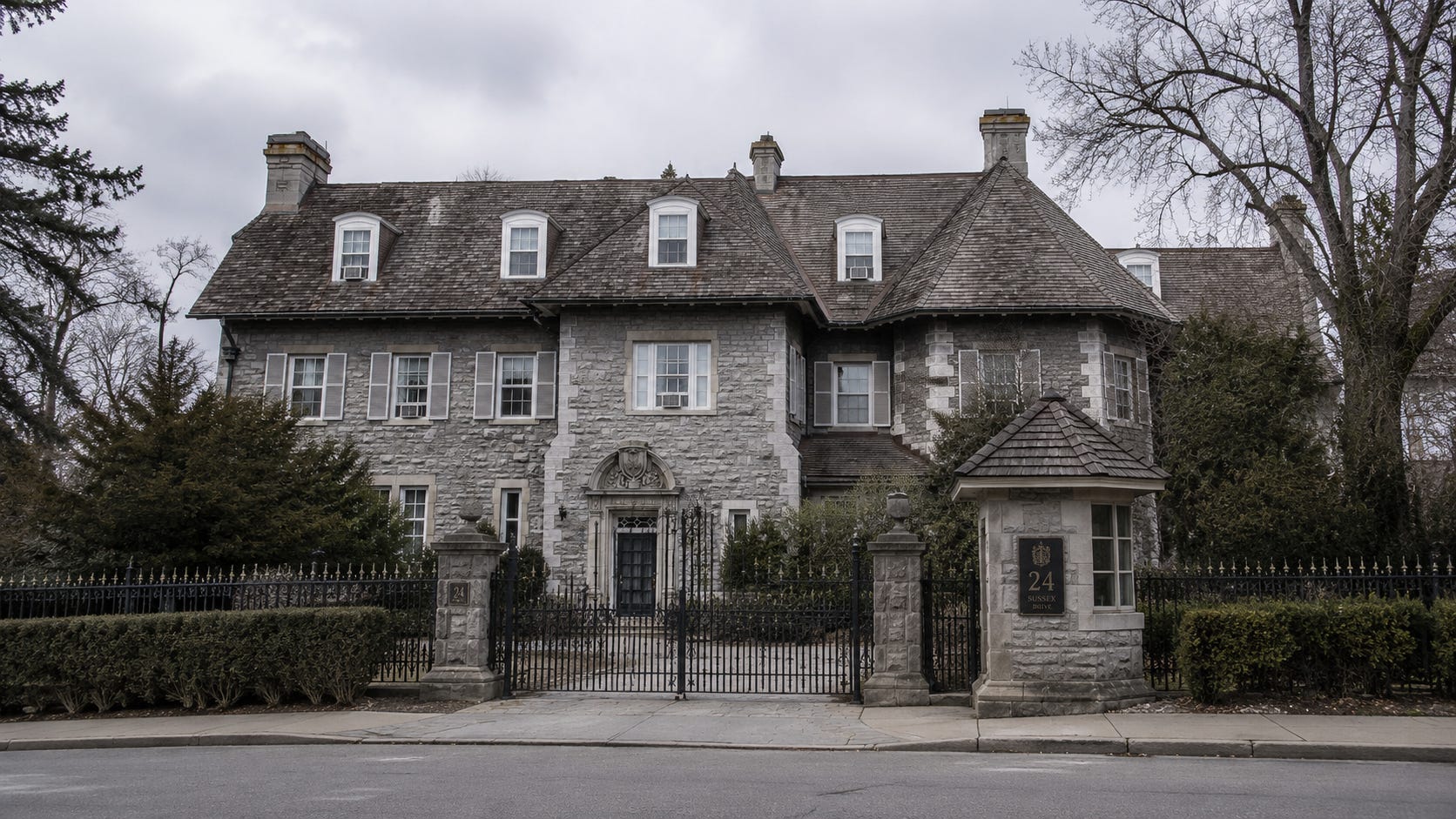
Canada’s prime minister has not lived at 24 Sussex Drive since Stephen Harper moved out in 2015. On June 26, Mark Carney announced a national design-and-build competition to rehabilitate the official residence, with a winning firm to be named by Canada Day 2027. It is the first serious decision in over a decade. The building, a classified federal heritage asset built in the 1860s, had to wait eleven prime ministerial years and one official condemnation to get there.
The National Capital Commission closed 24 Sussex in 2022 for health and safety reasons: asbestos, mould, and a rat infestation. The NCC’s 2021 estimate put deferred maintenance at $36.6 million before code upgrades, a number that has grown every year since. Carney’s plan includes a fundraising campaign targeting $50 million in private donations through the Rideau Hall Foundation, with donor caps and full public disclosure of contributors — no single donor can cover more than 10 percent of the final cost.
The people who argued for leaving it alone always called it fiscal restraint. It was not. Between January 2018 and June 2023, taxpayers spent more than $680,000 maintaining a building no one lived in, covering elevator upkeep, janitorial services, boiler maintenance and pool cleaning for a vacant property.
Rideau Cottage, never designed to function as a prime ministerial residence, received over $5 million in upgrades just to be workable. The cost of inaction was never zero. It just appeared in different budget lines.
Every dollar of deferred maintenance became two. A 2025 internal memo flagged 24 Sussex as a security risk, citing inadequate functional space. The building got worse while the governments that inherited the problem handed it to the next ones.
There is a harder dimension here than the maintenance ledger captures. Canada just concluded the G7 Presidency, secured more than 20 new economic and security partnerships, and is hosting the Canada Investment Summit in Toronto this September. Canada carries the lowest net debt-to-GDP ratio in the G7. The argument that the country cannot afford to maintain its own institutions has never been credible, and it looks especially thin right now, when Canada is actively courting global investment while its PM’s official front door is a condemned ruin.
The competition, overseen by the Royal Architectural Institute of Canada and adjudicated by a jury chaired by architect Moshe Safdie, is the first real institutional response in over a decade. Whether the Rideau Hall Foundation hits its $50 million target will tell us something about whether Canadians believe public heritage is worth preserving. But the more honest question is simpler: how did a classified federal heritage building at the centre of the prime minister’s office get passed from government to government like a problem nobody wanted to own?
Neglecting a public asset does not make it cheaper. It makes the bill a punishment for whoever finally decides to act.
Poilievre needs to hush. He can't sit there talking about 'I don't think about it, I think about the families that can't afford a house," casting shade at the PM, while he (Poilievre) is sitting high and pretty in Stornoway!