


The Real Reason Alberta’s AI Data Centre Needs a $4.6-Billion Gas Plant
Danielle Smith froze renewable energy over “land use concerns.” Two years later, she approved a gas plant nearly five times as expensive as the last one to power a data centre that never needed to run on gas at all.
Key Takeaways
Alberta approved the $4.6-billion Greenlight Electricity Centre, a gas plant built specifically to power Meta’s new $13-billion AI data centre in Sturgeon County
The same government halted renewable energy approvals for seven months in 2023, citing land use and visual concerns
Alberta’s “Bring Your Own Power” rules for data centres structurally exclude every generation source except gas, according to the Pembina Institute
Meta will claim “100 percent clean and renewable energy” through purchased certificates, even though the physical electricity comes from that gas plant
Analysts expect Alberta’s rising gas demand, layered onto new federal LNG export commitments, to push household electricity costs higher, not lower
Every government eventually finds the industry it’s willing to sacrifice for something bigger. Alberta found renewable energy in August 2023, when it froze approvals for wind and solar projects, citing land use and visual concerns. This week, that same government finished a very different kind of approval: another piece of its Alberta AI data centre strategy, and the $4.6-billion gas plant built to power it.
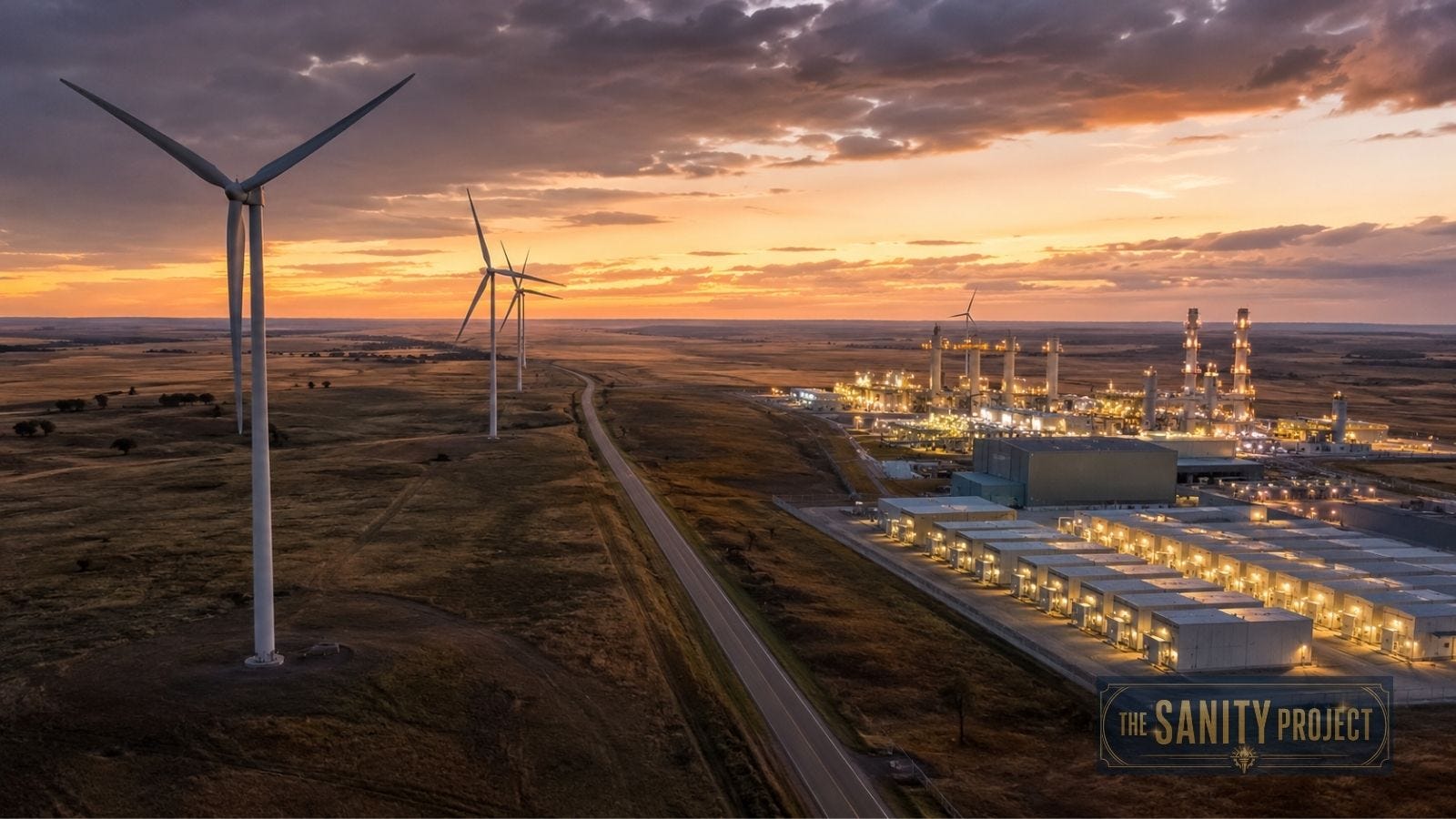
The plant is called the Greenlight Electricity Centre. It sits in Sturgeon County, in the same stretch of farmland Alberta once worried was too precious for wind turbines. Its entire purpose is to feed electricity to a single customer: Meta’s new data centre, a roughly $13-billion project and the company’s first in Canada.
Nobody paused this one over land use. Nobody asked whether the view would suffer. The gas plant moved at industrial speed, on the same land, in the same “industrial heartland” zone that renewable developers spent two years being told to slow down and reconsider.
If you’re starting to suspect the 2023 moratorium was never really about the land, you’re not alone.
Inside Alberta’s AI Data Centre Deal
Key Point: Alberta approved a $4.6-billion gas plant and a $13-billion data centre in roughly the time it took some wind farm applications to sit in a queue.
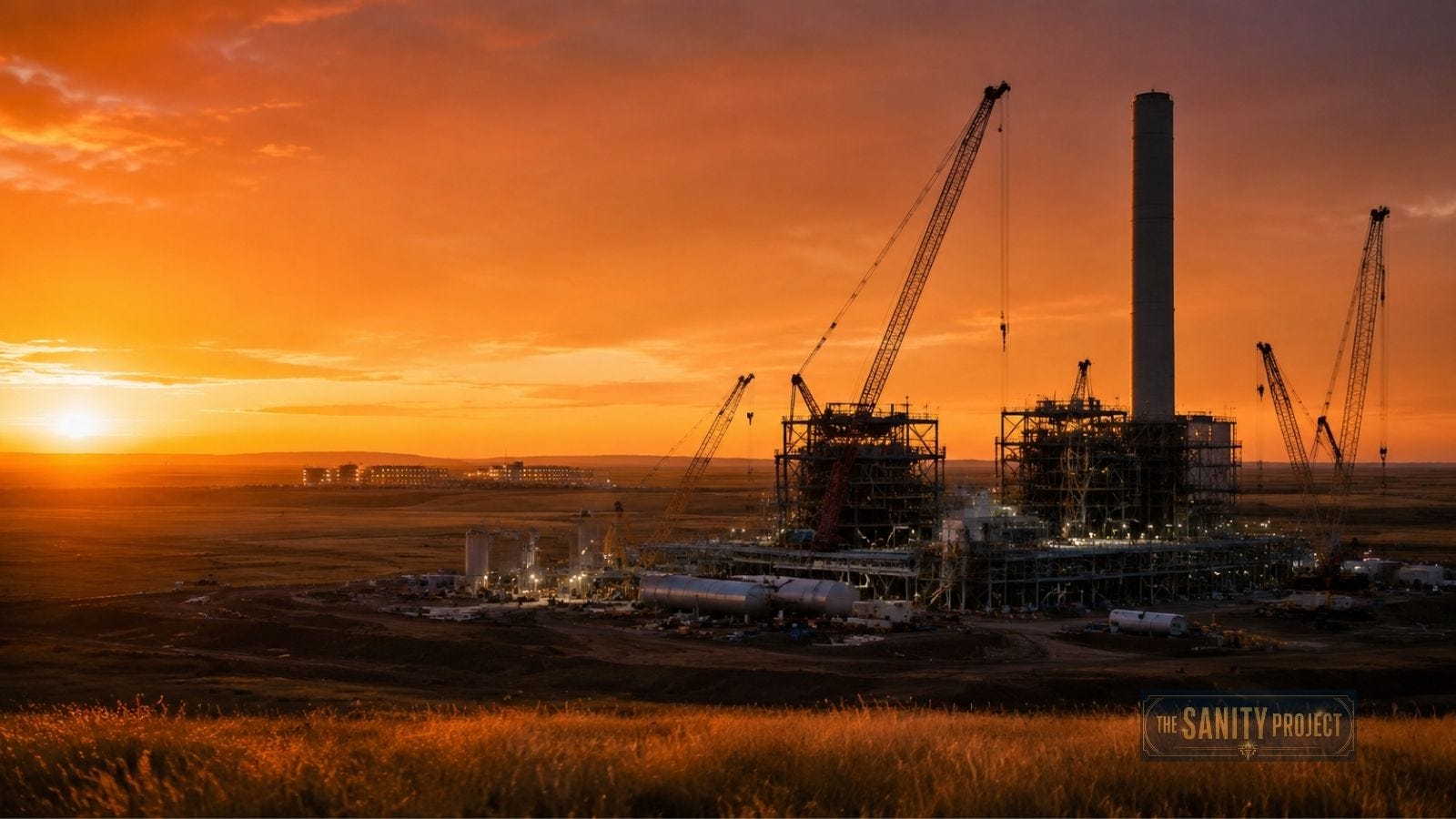
Meta broke ground on the Sturgeon County site in July 2026. The campus will eventually draw about one gigawatt of continuous power, roughly three-quarters of what the entire city of Edmonton uses. It sits on 1,750 acres, an area bigger than Vancouver’s Stanley Park, inside a zone the province calls its industrial heartland.
Powering it requires the Greenlight Electricity Centre, a natural gas plant being built by a consortium of Pembina Pipeline, Morgan Stanley Infrastructure Partners, and Kineticor Asset Management. The plant starts at 932 megawatts, with permits already in hand to expand to 1,864 megawatts. Its price tag is $4.6 billion, more than double what a comparable gas plant cost just two years earlier, according to the Pembina Institute. Until Greenlight comes online in late 2030, the data centre will lean on Alberta’s existing grid and on surplus capacity the system operator has set aside for large industrial loads.
None of this happened by accident. Alberta announced a $100-billion AI data centre strategy back in December 2024, built around one central pitch: cheap and abundant natural gas, light regulation, and a cold climate that keeps cooling costs down. Nearly a hundred hyperscale data centre projects are reportedly moving through the pipeline across Canada, and by some estimates, roughly 90 percent of them are headed for Alberta.
That is, to put it mildly, a lot of gas.
The Same Land That Was Too Precious for Wind Turbines
Key Point: Alberta halted approvals for renewable projects for 7 months in 2023. It has not paused a single gas project since.
Regular readers already know the shape of this part. In August 2023, Alberta froze approvals for new wind and solar projects, citing concerns about farmland, rural landscapes, and what officials called “responsible development.” By the time the freeze lifted seven months later, the damage was done. Developers pulled back. Investment stalled. By 2025, the province had lost an estimated 11 gigawatts of renewable generation capacity and nearly $20 billion in cancelled investment, all in the name of protecting the countryside.
Compare that to how Sturgeon County was treated this time around. The Greenlight Electricity Centre and Meta’s data centre campus sit within the same industrial heartland corridor, on farmland that apparently didn’t need the same level of protection once the machinery involved burns gas rather than catching wind. Nobody demanded a seven-month pause to study the visual impact of a natural gas plant several storeys tall. Nobody worried out loud about reclamation bonds slowing the timeline. The whole thing moved from proposal to groundbreaking in roughly the same two years renewable developers spent waiting for approvals that, for many of them, never came at all.
The land wasn’t too precious for turbines. It was too precious for
turbines that didn’t burn gas.
If you followed the original renewable energy moratorium story, this is the part where the plot thickens.
The Case Danielle Smith Would Make
Key Point: Alberta’s defenders have a real argument: data centres are covering their own power costs, and existing ratepayers aren’t footing the bill.
To be fair to Alberta’s government, there’s a genuine argument buried under the theatrics.
Every data centre approved under the province’s framework has to bring its own power, a rule known as Bring Your Own Power, or BYOP. Under BYOP, big new users like Meta pay for the generation their project requires rather than relying on the existing grid. Danielle Smith has argued this actually protects ordinary Albertans, insisting the framework ensures projects like this one reduce transmission costs on utility bills rather than raising them. Analysts at RBC Capital Markets praised the structure for similar reasons, describing it as a way to keep the buildout of demand and generation moving in step, rather than dumping new load onto a strained grid.
There’s an economic case too. Alberta is chasing a genuinely enormous prize, up to $100 billion in AI infrastructure investment, without handing out a single dollar in direct subsidy. The jobs are real, even if modest. The royalties and tax revenue are real. And unlike the years-long fight over who pays for pipeline infrastructure, this is private capital showing up on its own, betting on Alberta’s cold climate and cheap gas.
If the only goal is to attract investment while protecting existing ratepayers from new costs, BYOP is a defensible policy. That much deserves to be said plainly, before we get to the part where it falls apart.
Why Bring Your Own Power Only Ever Means Gas
Key Point: Alberta’s own rules for data centre power exclude every option except gas, according to the Pembina Institute’s David Pickup.
BYOP doesn’t advertise this next part: as written, it isn’t really a menu. It’s gas, or nothing.
David Pickup, who directs the electricity program at the Pembina Institute, a Calgary-based energy think tank unrelated to Pembina Pipeline, has said Alberta’s bring-your-own-generation rules for data centres “essentially exclude all options for generation other than gas-fired power.” Wind, solar, and storage, the same technologies the province spent 2023 treating as a threat to farmland, simply aren’t eligible inputs under the current framework.
That matters because the underlying economics have quietly flipped. Natural gas turbine costs have more than doubled since 2021, driven largely by the very AI data centre boom now demanding them, and developers are waiting up to four years just to get turbines delivered. Over the same stretch, wind and solar contract prices across Canada have fallen by roughly half. Left alone, the market might have started blending renewables into projects like Greenlight simply because it made financial sense. Alberta’s rules don’t allow that to happen.
So when Pickup argues that a project like Greenlight would have benefited from a mix of energy sources instead of gas alone, he isn’t describing a technical impossibility. He’s describing a policy choice. Alberta built a framework that funnels every new AI data centre onto the same fuel it spent two years protecting, then called it a free market.
Alberta built a rule that looks like a menu and functions like a single item: gas.
Meta’s Clean Energy Claim Runs on Paper, Not Electrons
Key Point: Meta will market its Alberta data centre as 100% clean-energy powered. The electrons come from a gas plant.
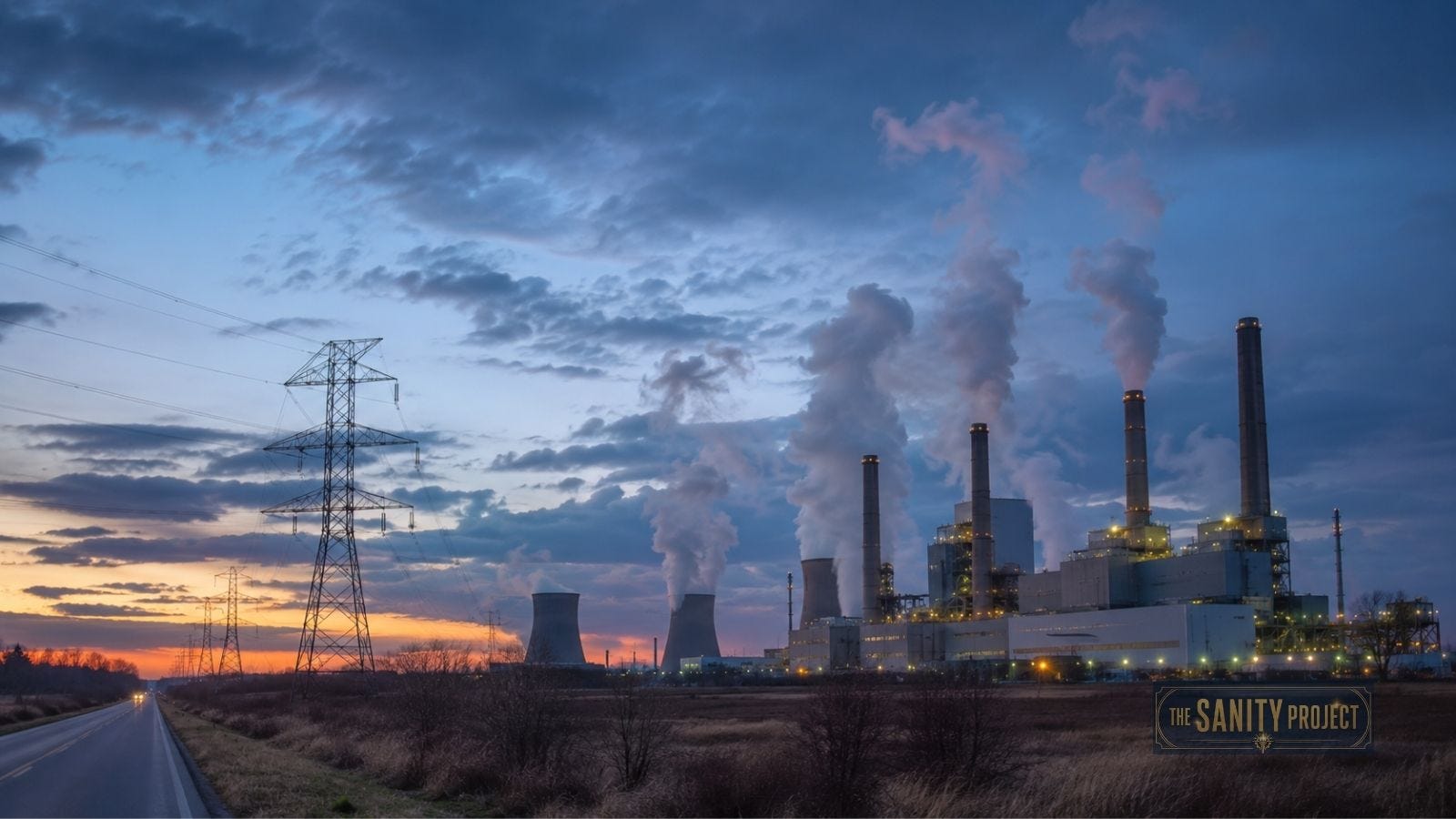
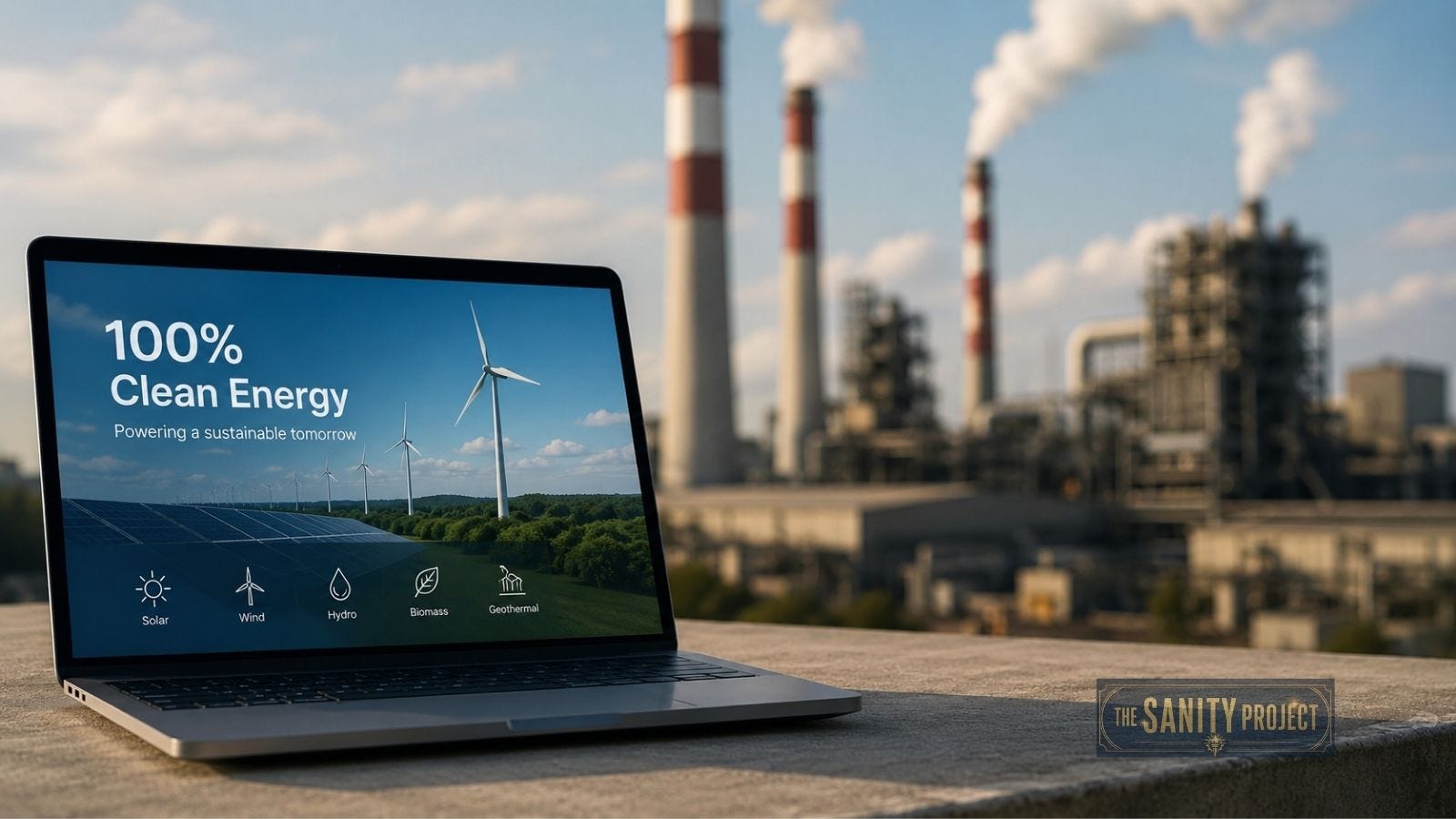
Meta has pledged that its Sturgeon County campus will run on 100 percent clean and renewable energy. Here’s the honest version of what that means: physically, the power reaching Meta’s servers comes from the Greenlight gas plant and from Capital Power’s existing gas fleet. On paper, Meta offsets that consumption by purchasing renewable energy certificates, credits representing renewable generation that happened somewhere else on the grid, sometimes nowhere near Alberta’s clean energy programs at all.
It’s a legally recognized accounting method, used across the industry. It’s also, according to Greenpeace Canada’s Keith Stewart, closer to an “accounting game” than an actual emissions reduction. A peer-reviewed study published in Nature Climate Change reached a similar conclusion, finding that this style of certificate purchase is unlikely to yield meaningful emissions reductions.
None of that stops the marketing. Somewhere, a slide deck exists listing Alberta’s coldest, gassiest data centre as 100 percent clean. Honestly? That’s not really a data centre problem. It’s a truth-in-advertising problem, and Alberta’s own policy choices are the reason the gap between the claim and the electrons had to get this wide in the first place.
Enjoying the receipts? There are more where this came from, twice a week.
What This Means for Alberta Electricity Prices
Key Point: Analysts expect this deal to raise Alberta electricity prices for ordinary households, not lower them.
Smith’s government says Albertans will actually save money on transmission once Greenlight comes online, citing a projected decrease in transmission costs reflected on utility bills. Maybe. But transmission is only one line on the bill, and Pickup’s broader warning is about the other lines.
Adding a gas plant this size to the grid, he argues, will meaningfully increase demand for the gas itself, in a province where households already rely on that same gas to heat their homes. Layer on Prime Minister Mark Carney’s separate commitment to triple Canada’s LNG exports over the next decade, and Alberta’s gas supply suddenly has a lot more competition for a limited resource. Pick up points to Australia as a cautionary tale: wholesale gas prices there roughly tripled within a few years of the country ramping up LNG exports, then spiked again during the 2022 global energy crunch.
There’s also a jobs math problem worth sitting with. The Greenlight plant alone will cost $4.6 billion and create roughly 30 long-term, permanent positions. Do the arithmetic, and that works out to something like $153 million per job, a number that says less about renewable energy and more about how little modern gas infrastructure actually needs human beings to run it.
Add it up, and the picture looks less like a free market picking a winner on the merits, and more like a government building the winner a private highway, then asking everyone else to help pay for the on-ramp.
A $4.6-billion power plant, thirty permanent jobs, and one very expensive lesson in what “free market” means.
Editor’s View
I don’t think Danielle Smith is secretly anti-renewable on principle. I think she’s pro-whoever’s writing the biggest cheque, and for two years, that wasn’t wind and solar developers. It was gas.
What gets me isn’t the hypocrisy, honestly. Governments contradict themselves constantly, and most of us have made an uneasy peace with it. What gets me is the confidence. Nobody on that Calgary stage seemed worried they’d get called on it, and so far, mostly, they haven’t been.
My prediction: within two years, someone in Alberta’s government starts talking about a “balanced” or “all-of-the-above” energy strategy again, right around the time gas turbine backlogs make wind and solar look cheap and fast by comparison. Watch for it.
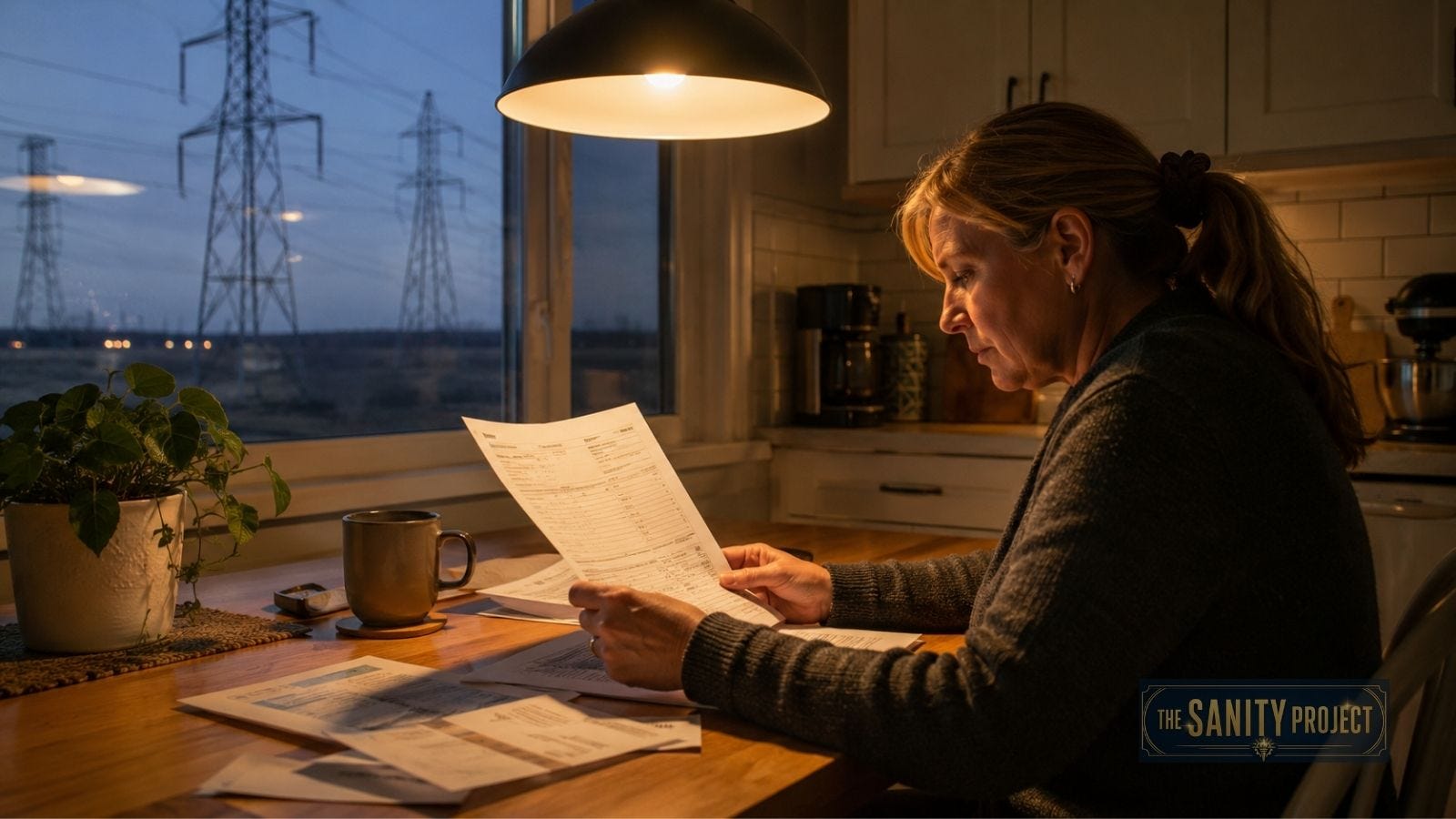
In the meantime, if you’re an Albertan wondering why your power bill keeps climbing while officials insist it’s all under control, you’re not imagining things. You’re just watching the bill for a decision that was never really about protecting the land.
If Alberta’s “Bring Your Own Power” rules quietly required a mix of gas, wind, solar, and storage instead of gas alone, would companies like Meta still choose Alberta, or would the province lose its edge to jurisdictions like Texas and Minnesota, which are already blending renewables into their own data centre deals?
Want the next angle on this story as it develops? Subscribe free.
Corrections and Updates Protocol: This article reflects publicly reported figures as of July 12, 2026, drawn from Alberta government statements, Pembina Institute releases, and reporting by CBC, The Globe and Mail, The Energy Mix, BetaKit, TechTimes, and other outlets linked throughout. Figures related to the Greenlight Electricity Center’s cost and capacity, and Meta’s total investment, are as reported at the time of publication and may be revised as the project proceeds toward its projected late-2030 in-service date. Any factual corrections will be added here as “Update (Month Year):” entries.
Update (August 2026): The $20 billion investment figure cited alongside Alberta's 11-gigawatt renewable energy loss was originally modeled against a 15-gigawatt loss scenario from the Business Renewables Center Canada, not the 11 GW actually confirmed by the Pembina Institute's AESO queue analysis. Scaled to the confirmed figure, the associated investment loss is closer to $14-$15 billion. The 11 GW figure itself remains accurate and unchanged.
Thanks for reading The Sanity Project (Canadian Edition)! Subscribe for free to receive new posts and support my work.
I disagree strongly with the editors comment that Smith not anti renewable energy.
I discussed her anti green attitude well before she implemented that six month halt for 25 billion in proposed wind and solar. And she will allow Grassy Mountain Coal to go ahead in spite of most Albertans not wanting coal mining . And her corruption goes further with denying the request for an anti coal referendum question
It's her life line, she believes the o n ly future for Alberta is fossil fuels and is willing to help burn up the planet to do it. The farm land scam and view scam is there to promote fossil fuels not protect class2 land.
I used to work with CLI agriculture maps and am now requesting online access which is free but this old guy hasn't figured it out yet. But I look at the acreage proposed to build data centres vs renewable energy. Data centre acreage of farm land is not even considered , yet some of figures far exceed any solar farm. Plus Denmark studied putting solar collection panels vertically and farm between the panels. Huge bonus for farmers and rural municipalities. And very little loss in collecting those rays. And for those who don't know, Denmark is north of Cold Lake Alberta.
20 data centres, 40,000 + acres, not a peep from anyone. It's a scam to promote profit for fossil fuels as our electrical and heating bills will go up. In spite of my MLA denying the following: any search of electricity prices will show Albertans pay the highest by far electricity rates of any market electricity rates in Canada and higher than the majority of USA states. Every province has a different market rate and they are all lower, several less than half of Alberta.
And next scam being worked on right now is gerrymandering our provinces electoral districts so that another party could never be elected. Our 87 will become 91 and my bet is 60 safe seats for the UCP. Rural voters won't, perhaps can't change how they vote after 75 years of marking their x by conservative. And most rural folks i listen to truly believe that climate change is just a cycle. They are not aware how many thousands died in the European heat, nor the 10s of thousands in India from heat and floods.
Smith could care less about climate change, just keep those rural voters high on fossil fuels while the world moves to renewable generation. Investment in electricity production by renewable generation now exceeds investment in electricity by fossil fuels world wide
China itself installs more renewable energy than the rest of world yearly and here in Alberta we are using agriculture land to build and use more fossil fuels. A gap in reality and vision.
Alberta needs her!