


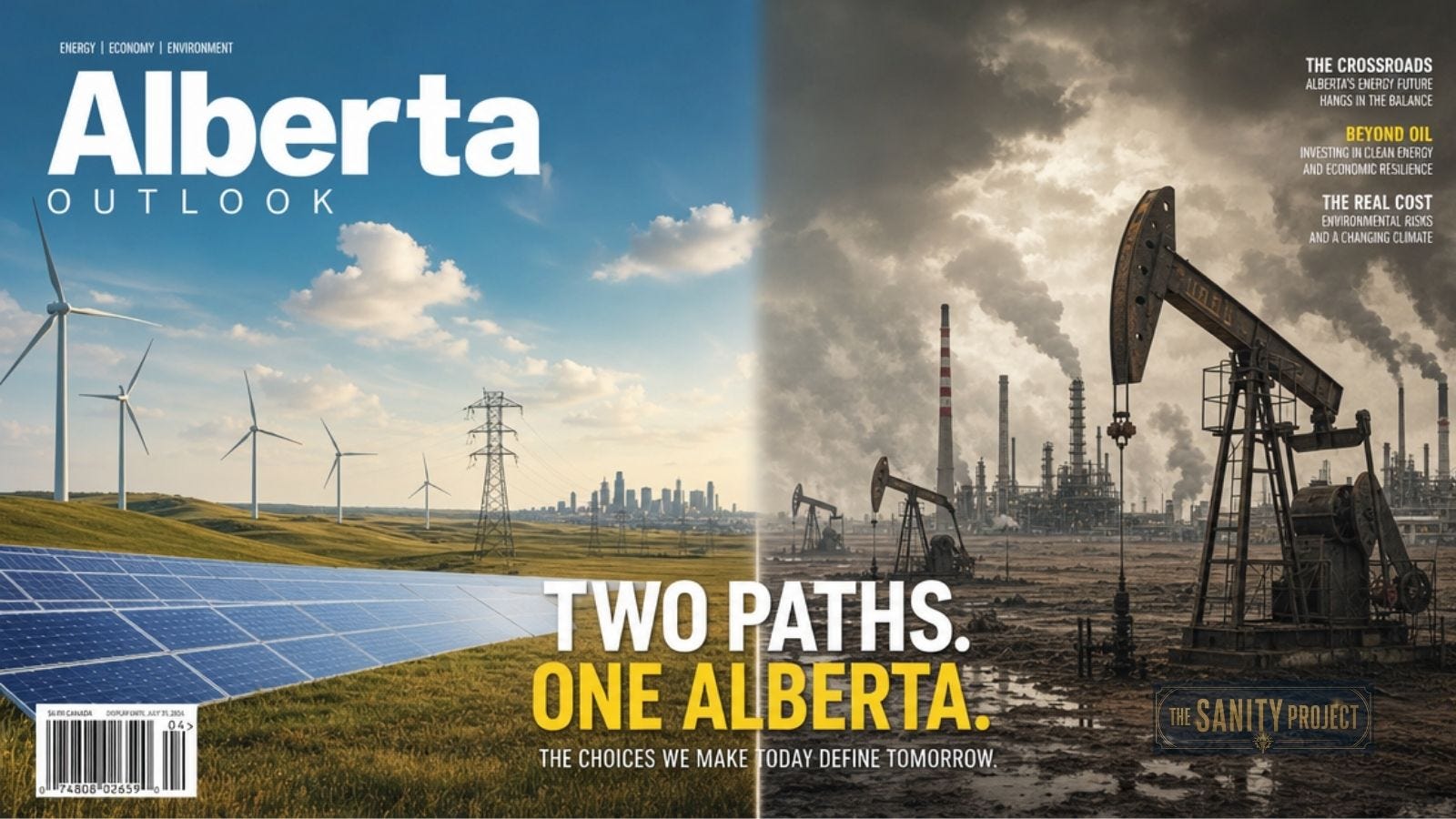
For years, Alberta was held up as proof that renewable energy did not have to emerge from government planning or ideological activism. The boom was happening inside Canada’s most oil-and-gas-oriented province, driven largely by private capital, market demand, and geography itself. Investors saw wide-open land, enormous wind corridors, abundant sunlight, and a deregulated electricity market uniquely suited for rapid expansion.
And then, almost overnight, the province slammed on the brakes.
That contradiction is difficult to ignore. Alberta’s political identity has long revolved around free enterprise, private investment, and skepticism toward government intervention. Yet in August of 2023, the provincial government abruptly paused approvals for new renewable energy projects across the province. What followed was not merely a slowdown. It was the unravelling of one of the fastest-growing sectors in the Canadian economy.
The official explanation sounded procedural and temporary. Officials said they needed time to review land use concerns, reclamation policies, and the visual impact of wind and solar developments on rural communities. At first glance, that framing seemed reasonable enough. Governments review regulations all the time.
But the numbers that followed painted a very different picture.
The Boom Alberta Suddenly Abandoned
Before the moratorium, Alberta had quietly become the center of renewable energy development in Canada. By the end of 2022, the province accounted for roughly 75 percent of all new renewable energy construction nationwide.
This was not a symbolic transition or a niche environmental initiative. It was large-scale industrial growth.
Billions of dollars in private investment flowed into the province. Construction firms expanded. Engineers relocated. Rural municipalities are prepared for long-term tax revenue streams tied to wind and solar infrastructure. For many communities, renewable development represented something Alberta had struggled with for years: economic diversification that did not require abandoning the province’s energy identity.
That is what made the government’s intervention so unusual.
The province did not nationalize the industry. It did not gradually tighten regulations. It simply froze approvals.
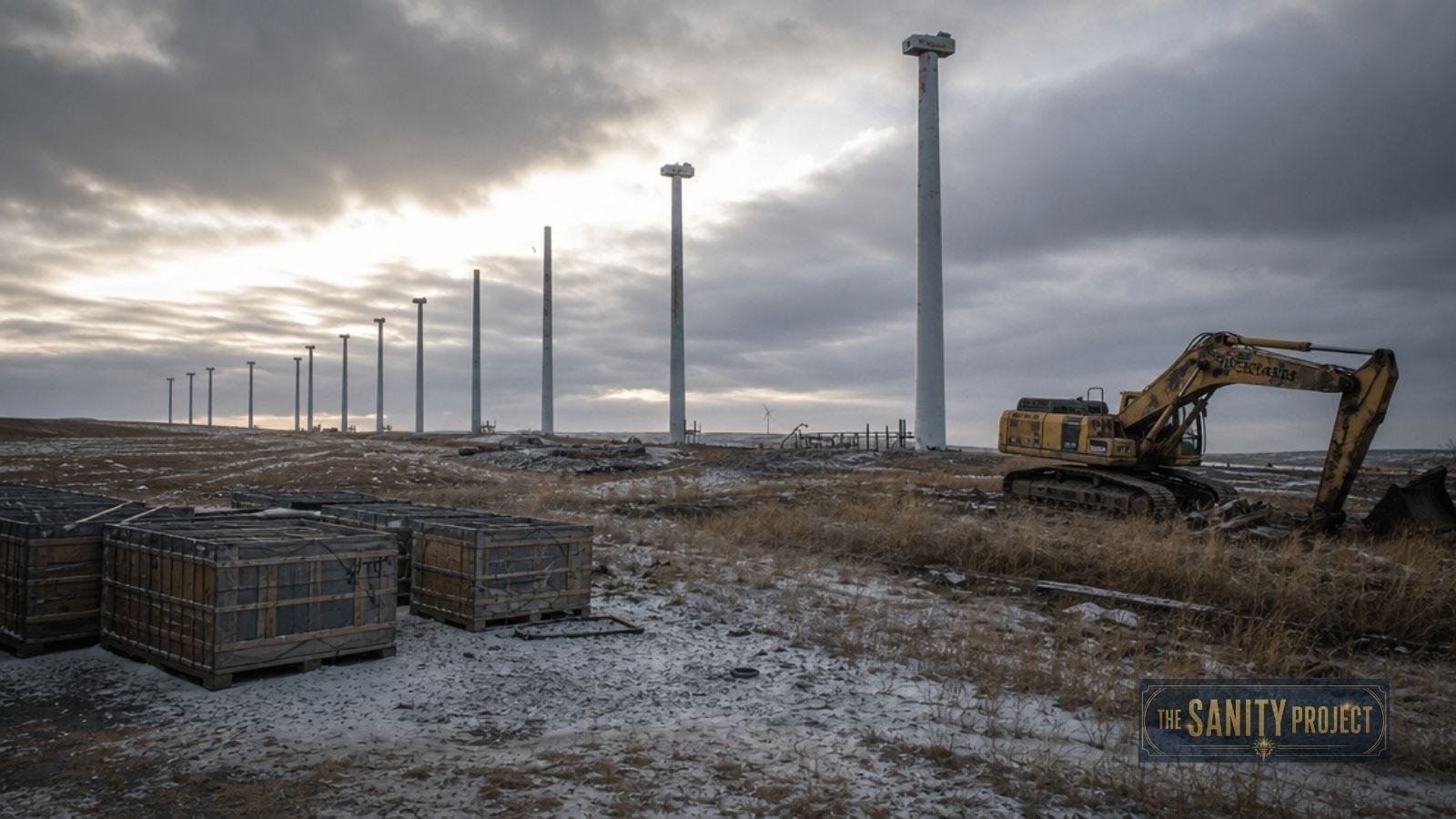
Almost immediately, uncertainty spread through the sector. According to the report, 118 projects were halted, putting approximately $33 billion in investment at risk. Over the following year, developers withdrew dozens of projects entirely. By 2025, the estimated loss had reached nearly 11 gigawatts of cancelled generation capacity and nearly $20 billion in lost capital investment.
What makes this story unsettling is not simply the scale of the damage. It is the ideological contradiction underneath it.
This was not a government intervening against an industry accused of failure.
It was intervening against an industry that appeared to be succeeding too quickly.
The Public Explanation Begins to Crack
At the center of the government’s public case was the idea of “responsible development.” Officials repeatedly emphasized concerns about farmland, rural landscapes, and environmental responsibility.
On paper, those concerns sound prudent. Large infrastructure projects should face scrutiny. Communities deserve input. Reclamation obligations matter.
But critics began noticing something uncomfortable when they compared how renewable projects were treated with how Alberta continued to handle legacy fossil fuel liabilities.
The contrast was difficult to reconcile.
Renewable developers suddenly faced stricter reclamation requirements, heightened scrutiny of visual impact, and additional regulatory uncertainty. Meanwhile, Alberta’s oil and gas sector continued operating within a system already burdened by thousands of orphaned wells and massive cleanup liabilities.
One bankruptcy alone reportedly left behind a cleanup bill approaching half a billion dollars. More than 4,000 orphaned wells were transferred onto the public balance sheet.
That asymmetry changed the emotional texture of the debate.
The renewable moratorium no longer looked merely cautious. It began looking selective.
And once that perception took hold, people started asking a more dangerous question:
If the stated reasons do not fully explain the policy… what does?

The Ideology Beneath the Policy
The answer may lie less in economics than in narrative.
In November 2024, members of Alberta’s governing United Conservative Party passed a policy resolution declaring carbon dioxide to be a “foundational nutrient for life” rather than a pollutant. The language was not politically incidental. It reflected a worldview that increasingly framed climate policy itself as fundamentally illegitimate.
What makes that detail especially striking is where the rhetoric appears to originate.
According to the report, the “CO2 is plant food” framing traces back to the Greening Earth Society, a coal-industry-funded American advocacy group from the 1990s.
That connection changes the shape of the story entirely.
Because now the issue is no longer simply whether Alberta slowed renewable development.
The deeper issue becomes whether imported ideological narratives helped justify the dismantling of a rapidly growing competitor to the fossil fuel economy.
And that is where the story stops feeling provincial.
It begins feeling systemic.
When Economic Incentives Collide With Political Identity
One of the most fascinating tensions in this story is that Alberta’s renewable boom did not emerge in opposition to capitalism. It emerged because of it.
Private investors saw an opportunity. Developers followed profit signals. The market moved toward cheaper generation technologies. In many regions, wind and solar projects became economically attractive not because consumers were forced into them, but because the numbers increasingly made sense.
That creates a difficult political dilemma for governments closely aligned with incumbent industries.
When a disruptive technology fails, the market quietly solves the problem.
When a disruptive technology succeeds, entire political ecosystems become destabilized.
Jobs shift. Lobbying power shifts. Investor expectations shift. Public narratives about the future begin to change.
And perhaps most importantly, the emotional monopoly held by legacy industries starts to weaken.
That may explain why renewable energy debates so often become emotionally charged long before they become economically rational. The conflict is not only about electricity generation. It is about identity, power, and control over the story a region tells about itself.
Alberta’s moratorium increasingly feels less like a technical policy dispute and more like a struggle over which future was allowed to become real.
The Real Cost of Narrative Protection
One of the most revealing aspects of the report is how often language itself becomes the battleground.
Renewable energy projects were framed as threats to landscapes. Carbon reduction efforts were reframed as ideological extremism. Climate science language was replaced with narratives emphasizing resilience, sovereignty, and economic survival.
None of this happened accidentally.
Modern political conflicts are rarely fought purely through policy anymore. They are fought through framing. Through emotional associations. Through carefully repeated narratives that shape what feels trustworthy and what feels threatening.
Once a population emotionally accepts a narrative, contradictory evidence often becomes secondary.
That is what makes the Alberta story larger than Alberta.
Because similar patterns are now visible everywhere:
industries defending themselves through cultural identity,
governments reframing economic transitions as ideological attacks,
Information ecosystems are increasingly designed not to clarify reality, but to stabilize political loyalty.
The renewable energy debate simply exposed the machinery more clearly than most.
What Happens When a Government Stops Acting Like a Referee?
Healthy markets require competition. They require rules that apply consistently across sectors. They require governments willing to tolerate disruption, even when disruption threatens politically connected industries.
But the Alberta story raises a more uncomfortable possibility.
What happens when governments stop acting as referees and begin acting as protectors of incumbents?
Not protectors of workers.
Not protectors of communities.
Protectors of existing power structures.
That distinction matters.
Because once governments begin selectively intervening to suppress emerging competitors while insulating established industries from equivalent scrutiny, the language of “free markets” starts becoming more symbolic than real.
And once citizens notice that contradiction, trust begins eroding far beyond the energy sector itself.
The real danger in stories like this is not merely economic loss. It is institutional cynicism.
People begin suspecting that public narratives are constructed first… and justified second.
The Uneasy Question Underneath All of This
Perhaps the strangest part of Alberta’s renewable energy reversal is how unnecessary it initially seemed.
The province had managed to become both an energy superpower and a leader in renewable growth simultaneously. For a brief moment, it looked as though Alberta might chart a uniquely Canadian path through the global energy transition: pragmatic, market-driven, and economically opportunistic rather than ideologically rigid.
Instead, the province turned inward.
And in doing so, it revealed something much larger than a dispute over wind turbines or solar farms.
It revealed how fragile economic narratives become when they threaten entrenched political identities.
Because once an industry stops being viewed merely as an industry and becomes a symbolic threat to an existing order, the rules surrounding it begin to change.
Quietly at first.
Then all at once.
And once you start noticing how narratives are constructed to protect one form of power, you begin noticing the same machinery almost everywhere else, too.