


Beyond the Dutch Test: Building Canadian Vegetable Resilience
The Netherlands didn’t build a food powerhouse by putting plants under glass. It built an integrated system, and Canada can borrow plenty of that playbook without becoming a colder version of the country that wrote it.
Key Takeaways
Canada has more than two hundred times the land area of the Netherlands, and that fact alone explains almost nothing about why Canada still imports so much fresh produce.
The Dutch advantage isn’t greenhouse glass. It’s a named, government-backed cluster model, the Dutch Greenport model, linking growers, research, energy and logistics into one system.
Canada’s own National Food Security Strategy explicitly points to that Dutch model as inspiration, while backing $750 million in domestic controlled environment agriculture funding across two distinct programs.
Canadians import 88 percent of the fresh fruit and 72 percent of the vegetables they eat, with 40 percent of that coming from the United States alone.
Resilience, sovereignty, self-sufficiency and autarky are four different goals, and Canada’s food debate keeps collapsing them into one.
A practical Canadian food strategy borrows the Dutch habit of integration and applies it to Canadian geography, not the other way around.
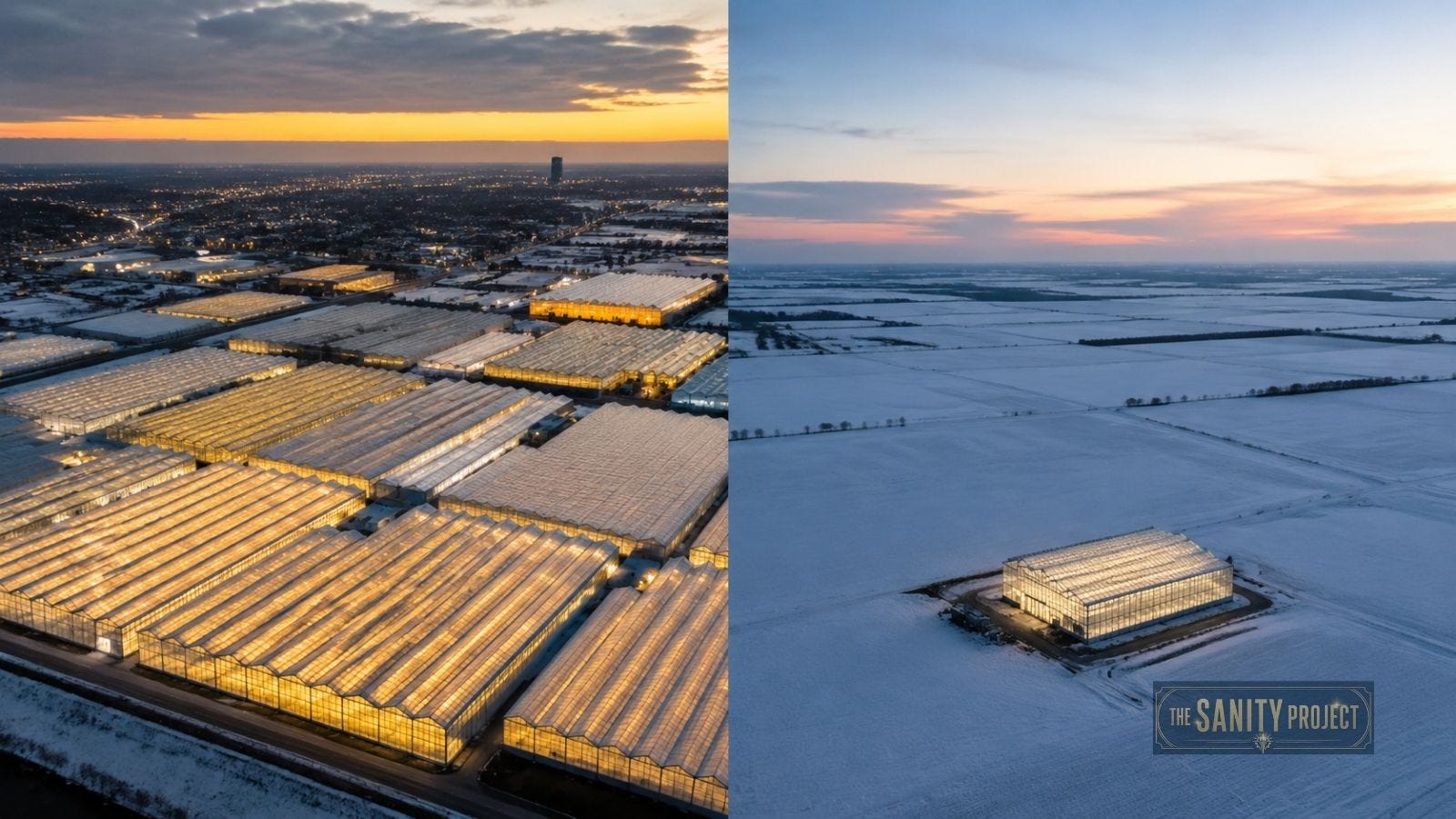
Canada has more than two hundred times the land area of the Netherlands. Put that number in a room with anyone frustrated about grocery store imports, and you’ll hear some version of the same question within about thirty seconds: if a country the size of a few Canadian counties can become a horticultural powerhouse, why can’t we just do what they did, except bigger?
It’s a fair question, and it deserves a better answer than “it’s complicated.” The honest answer is that the Netherlands didn’t get where it is by building greenhouses. Greenhouses are the visible part. Underneath them sits a tightly wired system of science, engineering, automation, logistics, skilled labour, energy management, water recycling, finance and proximity to tens of millions of customers, built up over decades and pointed in the same direction.
Canada can borrow real, specific pieces of that system. What it cannot do is import the whole thing wholesale and expect it to fit a country with this much land, this little density, and winters the Dutch have never had to plan around. This is where the Dutch Test this series has been building toward lands, not as a copy-paste instruction, but as a lesson in what integration looks like when it works.
Subscribe to catch every angle of this series, free →
What the Dutch Actually Built
Key Insight: The Dutch advantage was never the glass. It’s a named, government-backed cluster model that ties growers, researchers, energy suppliers and logistics companies into one system.
Start with the scale, because it’s genuinely striking. In 2025, Dutch agriculture produced roughly 5.91 billion kilograms of vegetables, including 1.86 billion kilograms grown under glass, from a population of about 18.13 million. Canada’s entire greenhouse vegetable sector produced 866,484 metric tonnes in 2024, with more than 41 million people to feed. The comparison isn’t perfectly clean; the reporting years and categories don’t line up exactly, but the scale gap is real.
What produces that scale isn’t a secret. Canada’s own National Food Security Strategy names it directly: the Dutch Greenport model, which groups controlled-environment agriculture together to share infrastructure, energy, logistics, and innovation spillovers, backed by a €20 billion national growth fund aimed at precision agriculture, controlled-environment production, processing, and logistics. Layer on decades of work from institutions like Wageningen University on automated climate control, water recycling and energy-neutral greenhouse design, and the result is a system where no single grower has to solve every problem alone.
“That’s the actual lesson from the Netherlands. Not glass. Coordination.”
What Canada Cannot Copy
Key Insight: Canada isn’t failing to build a Dutch system. It’s solving a geography problem the Dutch never had to face.
The Netherlands packs 18 million people into a country you could tuck inside Nova Scotia several times over, within a few hours of some of Europe's densest consumer markets. Canada spreads more than 41 million people across the second largest country on Earth, with huge distances between where food grows and where most people actually live.
That single difference cascades into everything else. Canadian winters are longer and colder across most of the country, meaning more heating, more artificial light and a harder economic case for any greenhouse north of the warmest population centres. Transportation distances are longer, so even a successful greenhouse cluster in southern Ontario doesn’t automatically solve access in Nunavut or rural Newfoundland. Energy economics differ by province, not just by country; provincial electricity system costs in 2023 ranged from roughly $76 per megawatt hour in Quebec to $225 in Alberta, a gap the Dutch simply don’t have to think about inside one national grid. And Canada’s trade and regulatory structure runs through CUSMA, provincial jurisdiction and interprovincial trade rules the Netherlands never has to navigate, since it sells into one connected European market.
None of this means Canada is worse at agriculture. It means Canada is solving a different problem, at a different scale, with a different set of tools available.
What Canada Can Actually Borrow
Key Insight: Canada doesn’t need Dutch greenhouses. It needs the Dutch habit of treating every part of the system as connected to every other part.
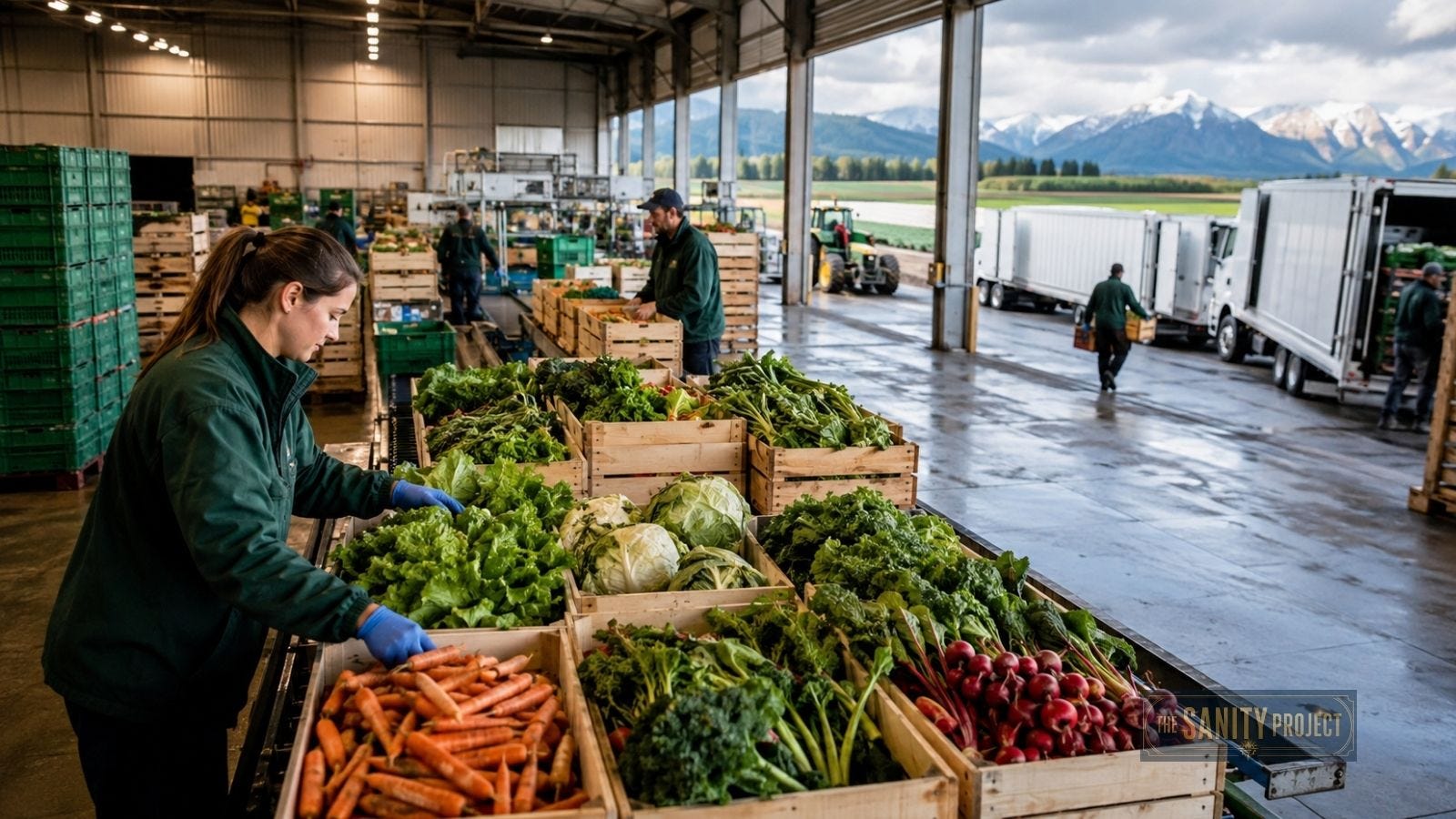
Strip out the parts of the Dutch model that depend on Dutch geography and a real list of transferable lessons remains. Crop specialization, matching tomatoes, cucumbers and peppers to sunlit greenhouses while reserving vertical farms for lettuce and herbs, rather than treating every crop as interchangeable. Automation and precision climate control, which reduce labour dependency and improve consistency regardless of what country a greenhouse sits in. Water recycling, since hydroponic systems cut water use dramatically no matter the climate outside. Better logistics between growers, processors and retailers, so a harvest doesn’t sit in a truck longer than it needs to.
Research partnerships between universities, government and industry round out the list, the same three-way collaboration Wageningen represents in the Netherlands, alongside regional production hubs sized to the market they serve, instead of one enormous facility trying to reach an entire country. Integration with low-carbon or waste energy systems belongs on the list too, whether that means industrial waste heat or a cleaner provincial grid, the same opportunity this series has already picked apart in detail.
They don’t require Dutch weather. They require Canadian coordination.
Get the full series free, subscribe to The Sanity Project →
The Layered Canadian Model
Key Insight: The right answer isn’t one technology. It’s matching each layer of Canada’s food system to the job it’s suited for.
Put those transferable pieces together and a workable Canadian model looks less like a single greenhouse strategy and more like a stack. Field agriculture keeps growing what fields already grow efficiently: potatoes, carrots, onions, cabbage, with storage and processing carrying the harvest through winter instead of demanding it grow in winter. Large sunlit greenhouses handle high-value vegetables that reward the extra light and long growing season a glass roof provides.
Selective indoor farming covers leafy greens, herbs and microgreens close to urban markets, and makes a different, stronger case in northern and remote communities where the alternative isn’t cheap field agriculture; it’s flying in lettuce. Cold storage and processing extend whatever gets harvested, rather than letting a good year rot into a bad one.
Regional facilities serve remote communities at a scale that matches local demand. And strategic imports keep filling the gaps a Canadian winter will always leave, because refusing to trade at all was never the realistic goal.
What Ottawa Is Already Betting On
Key Insight: Canada’s own National Food Security Strategy points to the Dutch Greenport model by name, then backs it with $750 million split across two very different bets.
This isn’t a hypothetical policy wish list. Canada’s National Food Security Strategy, launched in June 2026, commits $750 million over seven years to a Controlled Environment Agriculture Growth Pathway, split into a $650 million stream for technology adoption, automation, robotics, lighting and digital growing tools, and a $100 million stream aimed specifically at rural and northern production.
The strategy sets three measurable targets: doubling the value of domestic controlled environment production from $774 million in 2024 to $1.55 billion by 2032, cutting Canada’s dependence on imported crops that could be grown domestically by 20 percent, and reducing the labour and energy costs of that production by 10 to 20 percent, all by 2032.
The same document is explicit that the Netherlands is a reference point, not a template, citing the Dutch Greenport model directly as an example of how other countries are strengthening food self-sufficiency. Beyond controlled environment agriculture, the strategy also funds food terminals and hubs to improve distribution, and treats processing capacity and interprovincial trade friction as separate problems worth their own money. Whether $750 million spent this way beats $750 million spent purely on more greenhouses is exactly the kind of question a program like this should have to answer with results, not announcements.
Resilience Is Not the Same as Self-Sufficiency
Key Insight: Wanting less dependence on the United States is not the same as wanting no dependence on anyone, and collapsing those two goals into one makes the whole debate harder than it needs to be.
There’s a real, understandable instinct behind a lot of this conversation: a desire to depend less on the United States and other suppliers, especially after watching how quickly trade disputes and tariffs can move. That instinct deserves a straight answer, not a dismissal.
But resilience, sovereignty, self-sufficiency and autarky are four different things, and Canada’s food debate keeps treating them as one. Resilience means a system that bends without breaking when something goes wrong, a drought, a tariff, a border slowdown.
Sovereignty means having meaningful control over decisions that affect your own food system, not necessarily growing every calorie inside your own borders. Self-sufficiency means producing enough of something domestically to meet demand without imports. Autarky means refusing outside trade almost entirely, and it’s the one goal nobody serious is actually proposing, however the conversation sometimes sounds.
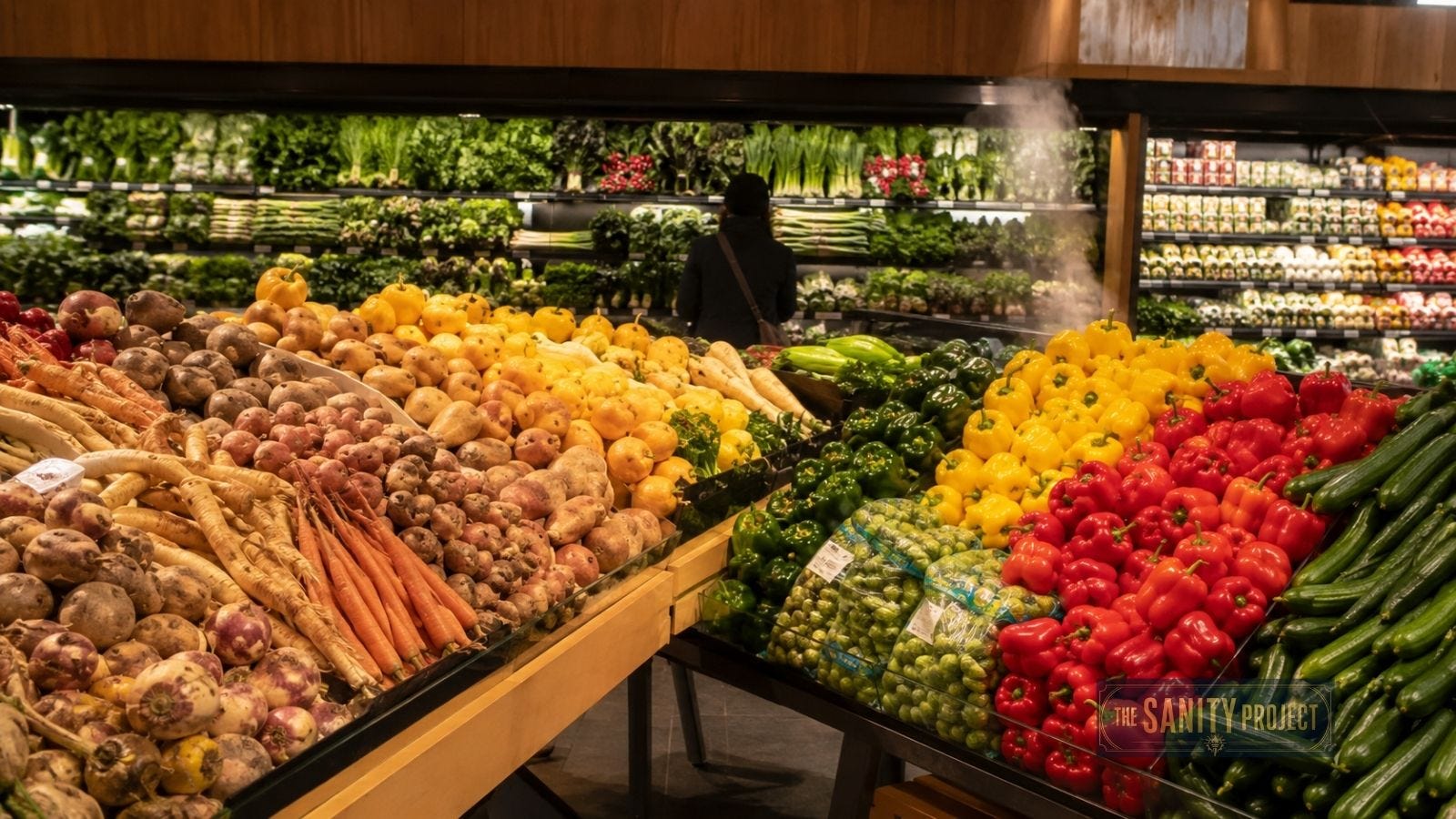
Canadians currently import 88 percent of the fresh fruit and 72 percent of the vegetables they eat, and 40 percent of that comes from the United States specifically. That’s a real vulnerability worth addressing. It is not, on its own, evidence that Canada has failed at food sovereignty, because sovereignty was never about eliminating trade. It’s about making sure a single disrupted relationship can’t take down the whole system.
A Practical Canadian Roadmap
Key Insight: The next useful step isn’t a bigger ambition. It’s a shorter, more measurable list.
A realistic path forward doesn’t need a hundred priorities. It needs a handful, done well.
Measure domestic vegetable vulnerability directly. Which crops, which regions and which trading partners represent the biggest single points of failure, rather than treating “imports” as one undifferentiated risk.
Invest in storage, processing and distribution at the same scale as new production. A harvest that can’t be stored or moved efficiently doesn’t actually improve availability.
Expand greenhouse and indoor production only where energy costs and market access genuinely make sense. Not because a project looks innovative.
Fund research and energy integration together. Treat waste heat, automation and crop science as one connected problem instead of separate grant programs.
Reduce unnecessary interprovincial trade barriers that make it harder to move Canadian food between Canadian regions.
Protect genuinely productive agricultural land from paving and sprawl, without resorting to blanket land-use rules that ignore regional differences in soil, climate, and existing farm infrastructure.
The Verdict
Canada should not try to become a colder, more expensive version of the Netherlands. That comparison was never fair to either country, and chasing it would waste money the Dutch spent decades earning back through density and market access Canada simply doesn’t have.
What Canada can do is borrow the Dutch habit that actually matters: treating a food system as one connected machine instead of a pile of separate farms, technologies and subsidies competing for attention. Applied to Canadian conditions- colder winters, longer distances, a more dispersed population and a very different energy map- that habit still works.
The realistic goal was never total self-sufficiency, and this series hasn’t been building toward one. It’s a food system resilient enough that a drought, a trade dispute, an energy shock or a border disruption doesn’t automatically become a grocery crisis. That’s a smaller, harder to put on a bumper sticker goal than “grow it all here.” It’s also the one worth building.
Editor’s View
I started this series expecting to land somewhere closer to a verdict on the Dutch comparison itself: is it fair, is it useful, does Canada measure up? What I ended up with instead is a stronger sense that the comparison was always a bit of a distraction from the real question, which was never about matching another country’s numbers. It was about whether Canada’s own food system is wired together well enough to survive its own bad weeks.
Three pieces in, my honest read is that Canada already has most of the pieces: the greenhouse capacity, the research institutions, a genuinely serious federal strategy, real vertical farming successes. What’s missing isn’t ambition. It’s the unglamorous connective tissue- storage, distribution, interprovincial trade, energy integration- that turns separate pieces into an actual system. That’s less exciting to announce at a press conference than a new greenhouse. It’s also the part that would matter most.
Corrections and Updates Protocol
This article will be updated if new data changes the picture. Corrections are noted inline using the format “Update (Month Year):” followed by the change. No corrections have been issued at the time of publication.
Publications Consulted
Agriculture and Agri-Food Canada, Statistics Netherlands (CBS), Statistics Canada, Wageningen University and Research, C.D. Howe Institute
Priorities should include long term cold storage facilities and getting rid of inter provincial trade barriers. In this day and age those barriers make absolutely no sense to me.
Appreciate you keeping your readers updated on the/our progress on our nations tackling "food security". Concur with what you succinctly noted "Canada already has most of the pieces: the greenhouse capacity, the research institutions, a genuinely serious federal strategy, real vertical farming successes. What’s missing isn’t ambition. It’s the unglamorous connective tissue- storage, distribution, interprovincial trade, energy integration- that turns separate pieces into an actual system".