


Canada Built the Gordie Howe Bridge. So Why Did Washington Get to Decide When It Opened?
Canada built the Gordie Howe Bridge. Financed it, owned it, chased down every construction invoice for over a decade, and by February 2026 the thing was basically finished: six lanes of cable-stayed concrete slung across the Detroit River, ready for trucks, ready for commuters, ready for everything except, as it turned out, permission.
Not permission from an engineer. Not permission from a safety inspector. Permission from Washington.
That’s the part of this story that keeps getting flattened into a simpler argument about whether Mark Carney negotiated a good deal or a bad one in 2026. It’s a fair question. It’s just not the important one. The important one is how a country spends $6.4 billion of its own money building a border crossing, completes it, and still ends up needing a side agreement with a foreign government just to flip the switch.
The short answer is that Canada’s original deal was with the wrong government. The longer answer explains why that gap took fourteen years to become obvious, and why calling it anyone’s simple failure is harder to defend than it sounds.
Key Takeaways
Canada financed and built the Gordie Howe Bridge in full under a 2012 agreement with the State of Michigan, not the U.S. federal government.
That deal secured ownership, financing, and construction. It never secured a binding promise that Washington would let the finished bridge open and operate.
In February 2026, President Trump threatened to block the opening until the U.S. was compensated, including a disputed claim about Canadian steel.
The bridge sat essentially complete from February through a cancelled June opening before a new side agreement was reached in July.
Under that agreement, Canada sends 50 percent of net bridge revenue to a U.S.-controlled fund for 15 years and gives Washington a say over future toll changes.
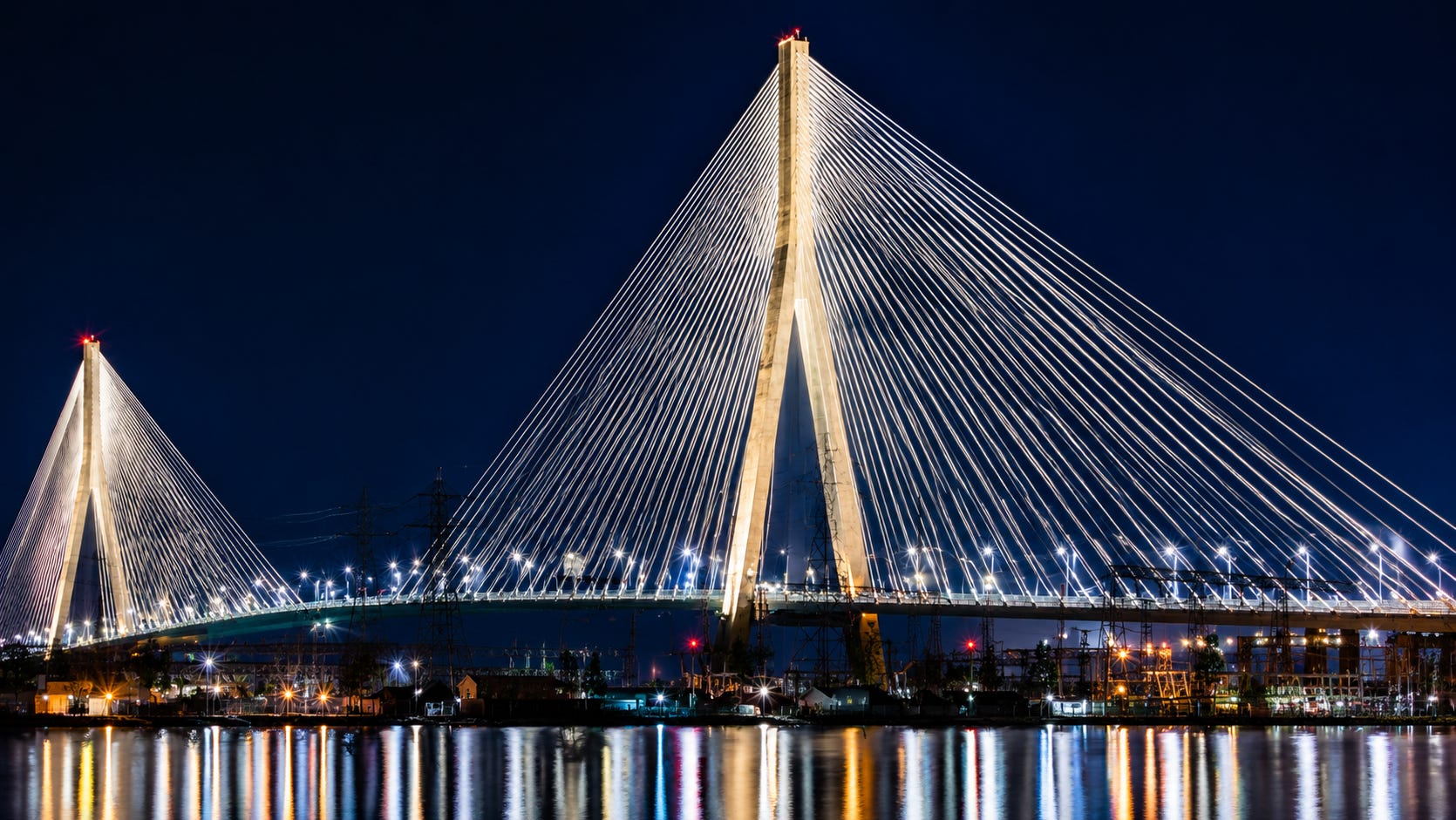
The Gordie Howe Bridge, fully built and paid for by Canada, sitting there waiting on a green light from somebody else.
Enjoying this? Subscribe to The Sanity Project for more reporting like this, before the next story breaks.
What the 2012 Gordie Howe Bridge Deal Actually Bought Canada
Key Insight: The 2012 Canada-Michigan Crossing Agreement gave Canada ownership, financing control, and toll authority over the bridge. It never touched Washington, because Washington was never a party to it.
Michigan wanted a second crossing at Windsor-Detroit for years and couldn’t pay for it. Canada could, and had its own reasons to want one badly: the corridor carries close to 30 percent of all Canada-U.S. trade moved by truck, and the only existing option was a single, privately owned bridge with zero backup capacity. So Ottawa agreed to fund the whole project, land acquisition and Michigan interchange included, with toll revenue eventually paying the money back.
The 2012 Canada-Michigan Crossing Agreement is a genuinely well-built deal for what it was designed to do. It set up joint ownership between Canada and Michigan, put a Canadian Crown corporation, the Windsor-Detroit Bridge Authority, in charge of delivery, gave Canada control of toll collection in both directions of traffic, and locked in the public-private partnership structure that got the bridge built.
What it did not do, because nobody thought to ask for it, was secure a promise from the U.S. federal government that Washington would actually let the bridge open.
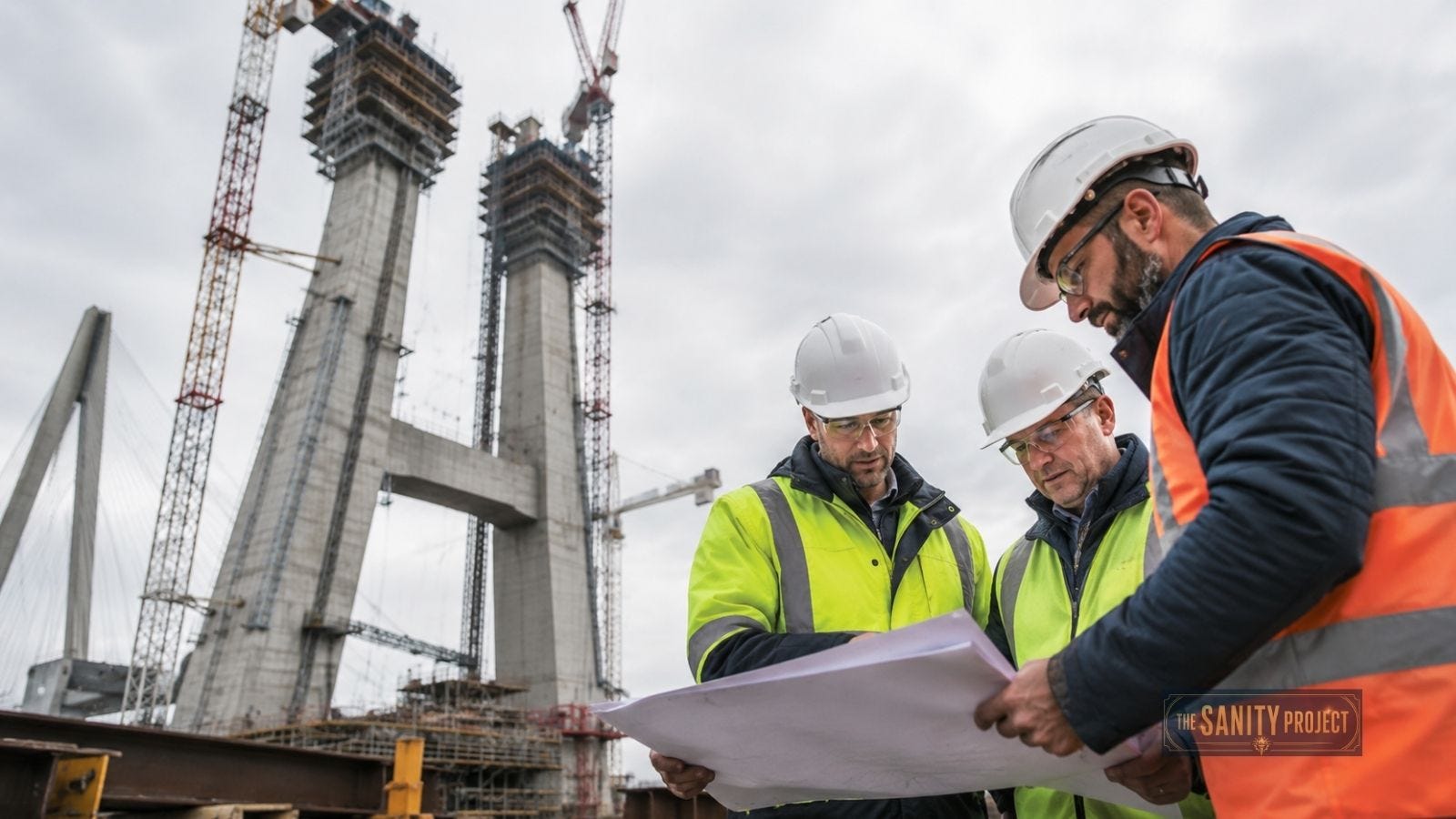
Everything the Windsor-Detroit Bridge Authority built here, Canada financed. Every last invoice.
The Piece Nobody Locked Down
Key Insight: Michigan could co-own a bridge. It could never bind a future president, a future commerce secretary, or a future Congress to anything.
Here’s the distinction that matters and keeps getting lost. Michigan is a state. Opening an international border crossing involves customs, immigration, and federal border agencies on both sides, all of which answer to Washington and Ottawa, not to Lansing. The 2012 agreement solved who builds and owns the bridge. It never touched who gets to decide when, or whether, it opens.
This also wasn’t the first outside threat to the bridge’s existence, just the loudest. Over the past two decades, the private owners of the rival Ambassador Bridge have mounted 22 separate legal challenges against it. Canada has won 19. Three remain active, including a case built on a 1921 piece of legislation that a judge has already ruled deserves a full trial, currently scheduled for late 2027 or 2028, well after the bridge itself finished construction.
Once the concrete is poured, the only leverage left belongs to whoever can still say no to opening the doors.
So the vulnerability here was never hypothetical, and it was never only about Trump. It was structural. Canada built a public asset in a corridor where a private competitor had every incentive to keep fighting it in court, and where the real authority to open a border crossing sat with a federal government that had signed nothing.
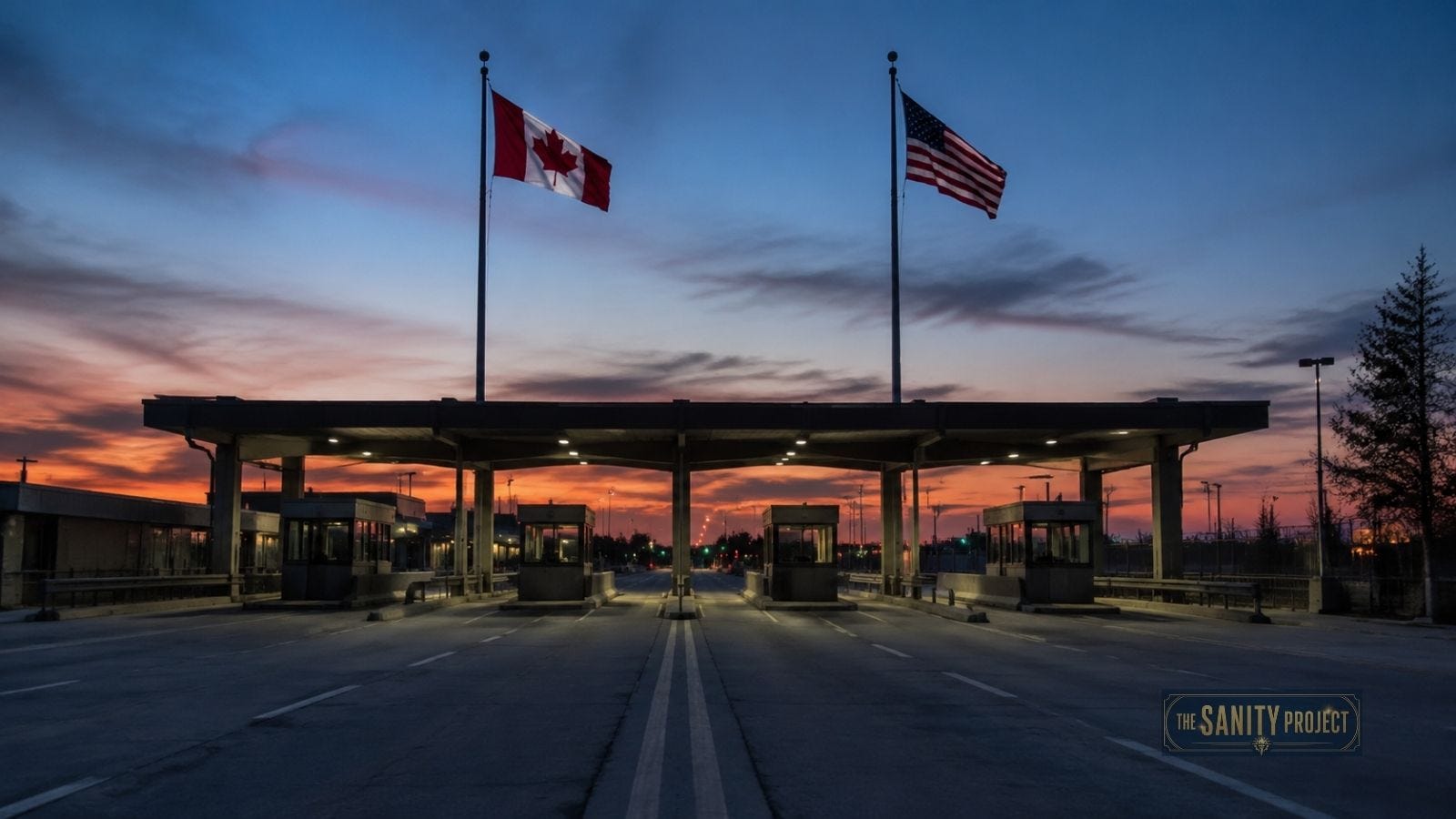
A finished bridge and empty booths. The Gordie Howe Bridge opening was never just an engineering question.
Was This a Harper-Era Blind Spot?
Key Insight: The evidence supports calling the 2012 deal operationally incomplete. It does not support calling it a Harper-government failure.
The partisan version of this story says the Harper government should have gone straight to Washington in 2012 instead of settling for a deal with Michigan. There’s a real argument underneath that criticism. Michigan could support construction and share ownership, but it could never guarantee the future cooperation of U.S. federal agencies, or a future administration that didn’t exist yet.
That’s a much easier thing to say in hindsight than it would have been to fix at the time. Getting a state government to co-fund and co-own a bridge is hard enough. Getting a binding, multi-decade commitment out of the U.S. federal government, one that would survive several changes of administration and hold up against a future president’s whims, was never realistically on the table for anyone to negotiate in 2012. The fairer conclusion isn’t that Harper failed. It’s that the deal solved the problem in front of it and left the next one for somebody else to discover, fourteen years later.
Halfway through? Subscribe now so the next installment lands in your inbox, not buried in your feed.
The Gordie Howe Bridge Opening Washington Almost Blocked
Key Insight: In February 2026, Trump threatened to block the bridge’s opening outright. By July, Canada had agreed to give Washington 50 percent of net bridge revenue for 15 years and a say over future tolls.
In February 2026, President Trump said publicly he wouldn’t allow the bridge to open until the United States was, in his framing, fully compensated and treated fairly, an argument that included a claim that the project used only Canadian steel. Canadian officials, including Carney, disputed that claim. True or not, the threat worked. The bridge, already sitting essentially complete since February, had its June 2026 opening called off at the last minute so both sides could, in the Windsor-Detroit Bridge Authority’s own words, resolve outstanding issues.
By July 10, there was a new agreement in principle, and the terms are specific enough to be worth reading closely. Canada will pay 50 percent of net bridge and crossing-related revenue (revenue minus operating costs) to a United States-Canada Economic Development Fund controlled entirely by the U.S. government, for the first 15 fiscal years of operation. Canada also has to notify Washington of proposed toll changes and get its consent, deemed automatically granted after 30 days, whenever a toll hike tops 10 percent and pushes rates above the regional average, or a toll cut drops rates below it.
Even the description of the deal got tangled after it was signed. Carney initially told reporters the split was of “net profits.” Days later he corrected himself to “net revenues after operating costs,” a meaningfully different number, and opposition MPs demanded to see the actual text. Then Ottawa pulled out of the joint ribbon-cutting ceremony entirely, after Washington announced new tariffs on Canadian goods. Nothing says cross-border partnership quite like skipping your own ribbon-cutting.
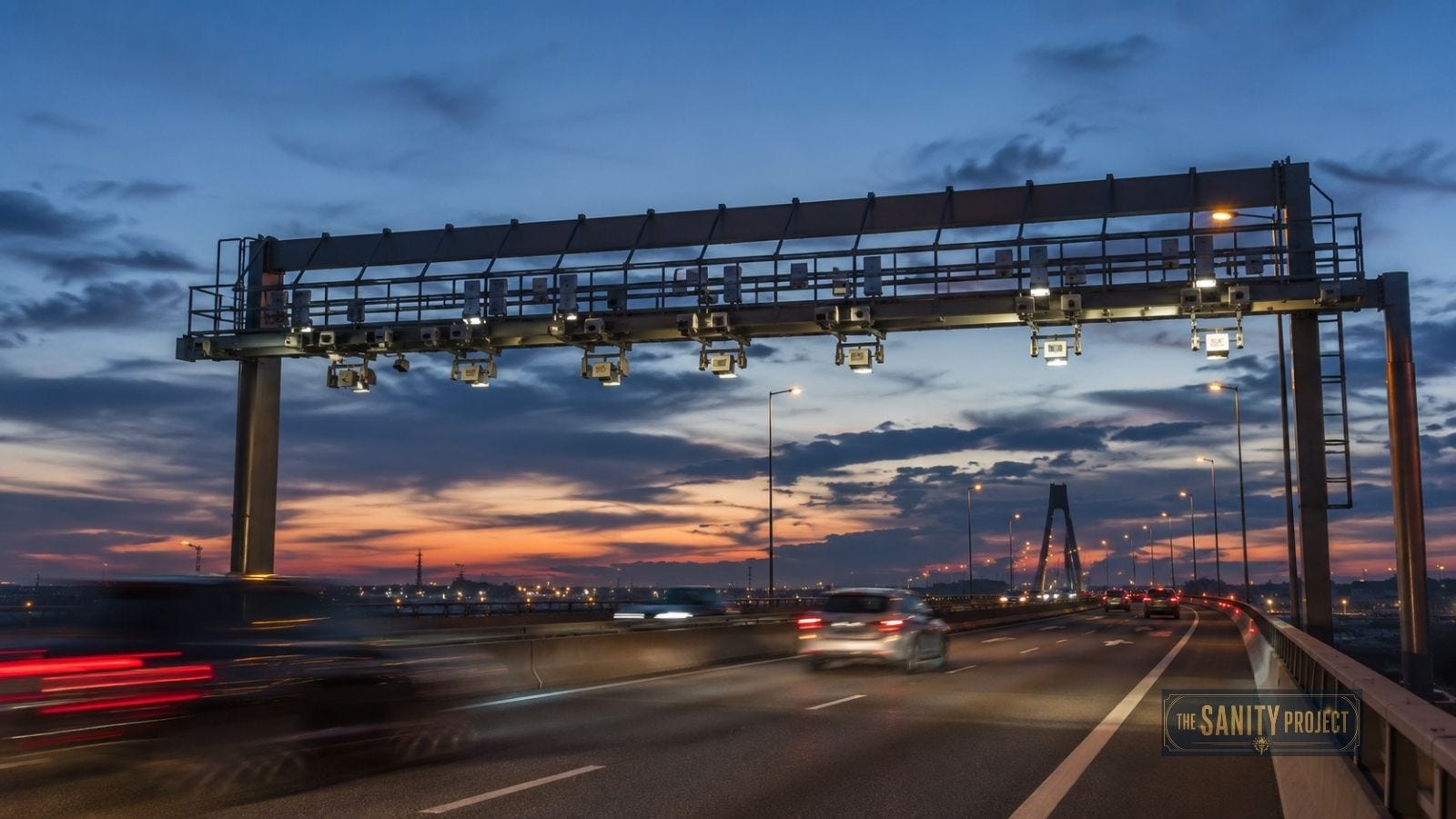
Every Gordie Howe Bridge toll dollar now carries an asterisk attached for the next fifteen years.
Why Canada’s Leverage Evaporated the Moment the Concrete Dried
Key Insight: Once a bridge is physically finished, rejecting the deal stops being a real option. It just becomes keeping the bridge closed indefinitely.
This is the part that should bother people more than the dollar figure does. Canada’s actual choice in 2026 wasn’t between a good deal and a great deal. It was between accepting Washington’s terms or sitting on a completed, non-operating, $6.4-billion asset with no toll revenue coming in and no clear end date for how long that would last.
That’s not much of a negotiation. Once the money is spent and the concrete is poured, the only leverage left belongs to whoever can still say no to opening the doors, and in this case, that was Washington, not Ottawa. It’s a useful thing to know before the next major cross-border project puts its first shovel in the ground.
Editor’s View
Here’s where I land on this, and it’s messier than either side wants to admit. The 2012 deal wasn’t naive or badly built. It solved a genuinely hard problem and got a needed bridge built when Michigan alone never could have managed it. But pretending that deal left Canada fully protected is its own kind of wishful thinking, and 2026 proved it. The gap wasn’t corruption or incompetence. It was the far more boring reality that nobody wrote “what happens if a future U.S. president just says no” into a contract signed in 2012, because that’s an almost impossible thing to contract around in the first place.
What actually worries me isn’t the 50 percent. It’s that Canada will build more cross-border infrastructure before this decade is out, and right now, nobody in Ottawa has said what’s different next time.
Canada still built the bridge. That part never changed, and nobody in Washington poured a single yard of concrete. But building something and controlling it turned out to be two separate achievements, and only one of them was ever fully in Canada’s hands.
Building something and controlling it turned out to be
two separate achievements.
The switch got flipped eventually, on Washington’s terms, on Washington’s timeline, with Washington’s name on part of the revenue for the next fifteen years. The bridge opened. The lesson didn’t come free.
The next piece in this series looks at what it would have actually cost Canada if that side deal had never happened at all, and the bridge simply stayed closed. Read it at thesanity.org.
One more thing. If this kind of fact-checked, sourced skepticism is your thing, subscribe. That’s the whole business model.
Corrections and Updates Protocol. This piece reflects publicly available reporting and official government sources as of late July 2026. The full legal text implementing the 2026 agreement in principle had not been finalized or released in full at the time of writing, and several details, particularly the precise revenue-split language, were still being clarified by officials after the announcement. This article will be updated if the finalized text changes any of the terms described above.
Update (July 2026): No corrections issued yet.
Bo, another interesting aspect that nobody's talking about: Just as Washington controls (their side) as to whether the bridge opens -- specifically, border crossing, etc. -- Ottawa has the same leverage, but with the Ambassador Bridge!
If they jerk us around more with Howe, couldn't Canada just say "well, we're concerned about safety of the Ambassador Bridge, and are hereby closing it to traffic until the owners repair it."
Further side note: I hope the Bridge Authority does whatever it can to keep the tolls as low as possible. Puts financial pressure on the Ambassador Bridge, drives more traffic to Howe, and guarantees (for the first several years at least) no money given to the US-Controlled "Economic Development Fund" (which you can bet is going to be used for Ambassador Bridge upgrades).
In fact, if we're splitting the "net" 50/50, and if there's a LOSS (which is expected for at least the first two years, if not longer), then doesn't the US actually OWE Canada money (50% of the loss)? (Okay, we won't see any money from them -- but to me, that means the Economic Dev Fund starts off with deficits, so that any future "profit" has to cover those losses first).
Guess we'll see at some point.
I have no problem saying that Harper failed. If you make an agreement like this one and build something this massive that starts in one country and ends across the border in another country, I’d say you better have all your legal details tied up beforehand. I’d even risk suggesting that Harper, being the Chairman of the IDU, had the forethought to undermine Canadian interests, or at least ignore ramifications that could potentially put us at risk.