


The Canadian Manufacturing Jobs Story Too Quiet to Go Viral
Nobody trended it. Nobody yelled about it on cable news. Somewhere in Hamilton, Ontario, this week, roughly two hundred people locked in real, permanent, highly skilled jobs, and the loudest thing that happened was a ribbon cutting. If you’re looking for the strangest part of this year’s Canadian manufacturing jobs story, it isn’t the jobs themselves. It’s how quiet the country gets when the news is actually good.
Key Takeaways
AtomVie’s new Hamilton facility represents an investment of more than $160 million and a tenfold jump in manufacturing capacity.
The plant is targeting over 200 employees by the end of 2026, growing from an existing base of 131.
McMaster’s reactor already supplies more than 60 per cent of the world’s iodine-125, treating over 70,000 patients a year.
The company’s growth capital came primarily from Avego Management, a US private equity firm, rather than from Canadian investors.
The research, jobs, manufacturing, and export activities all remain based in Canada.
Global demand for radiopharmaceuticals is projected to nearly double by 2030.
We’ve spent a lot of time in this space on trade wars, interprovincial trucking walls, and a separatist petition tied to a data breach. This story has none of that. It has a nuclear reactor, a 72,300-square-foot factory, and a private equity firm from Atlanta. Stay with me; that last part matters more than you’d think.
What AtomVie Actually Makes (Hint: Not a Pill)
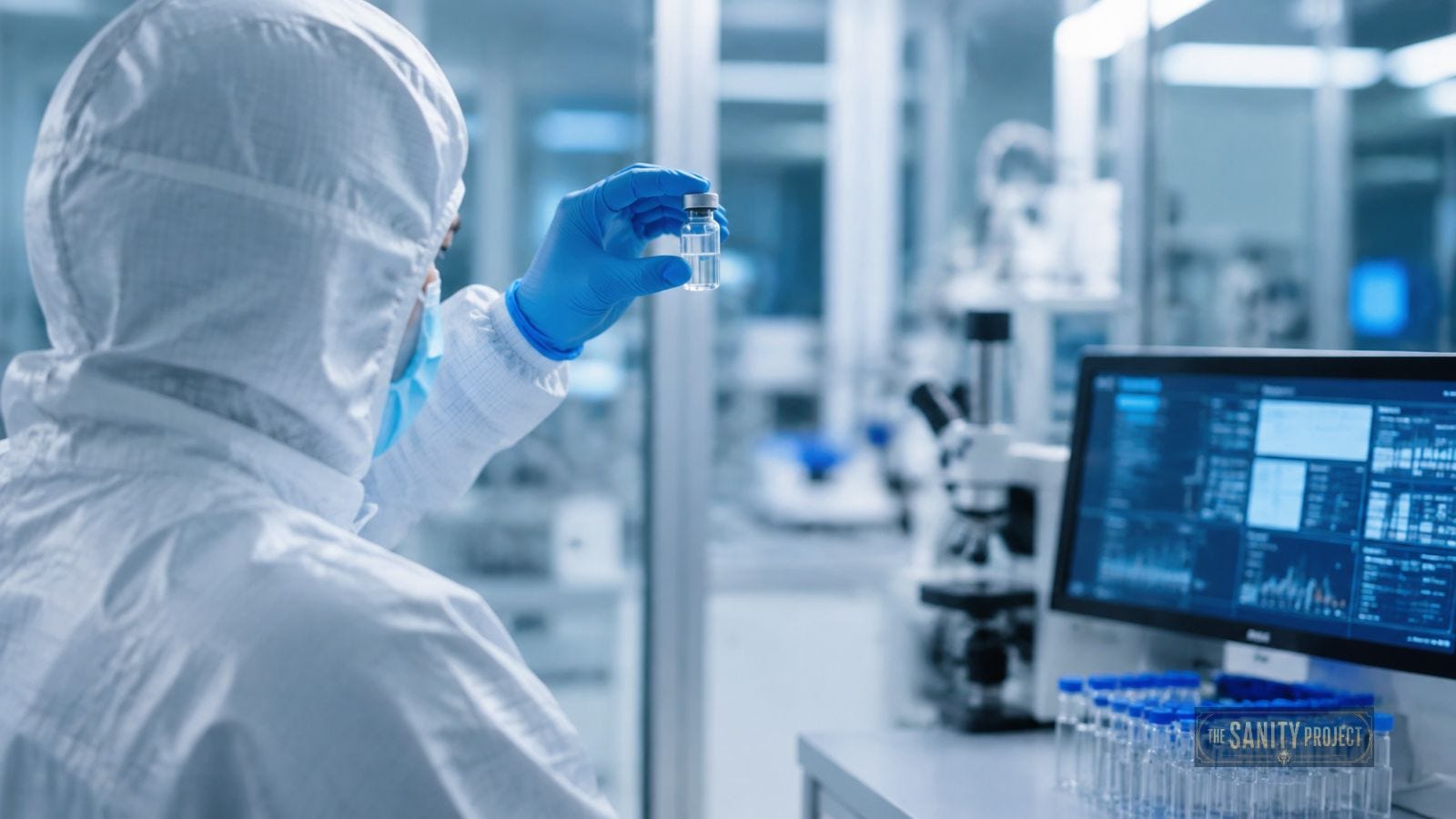
AtomVie doesn’t manufacture medicine you swallow. It manufactures radioactive doses that travel through the bloodstream, find cancer cells on their own, and destroy them from the inside, a category of medicine called radiopharmaceuticals.
The company is known in the industry as a CDMO (contract development and manufacturing organisation), and the product it makes is called a theranostic. The same molecule that lights up a tumour on a PET scan can carry a lethal microdose of radiation directly to that cell and to any metastasis hiding elsewhere in the body. It’s precision cancer treatment delivered through an IV line instead of a scalpel.
None of this is easy to build. Every dose has to be made sterile under strict cGMP standards, packed, and shipped within a narrow window before the isotope decays, with delivery reliability better than 99 per cent. That’s the job this new facility was purpose-built to do, from early clinical development all the way through commercial-scale manufacturing.
The Real Canadian Manufacturing Jobs Numbers Behind the Ribbon-Cutting
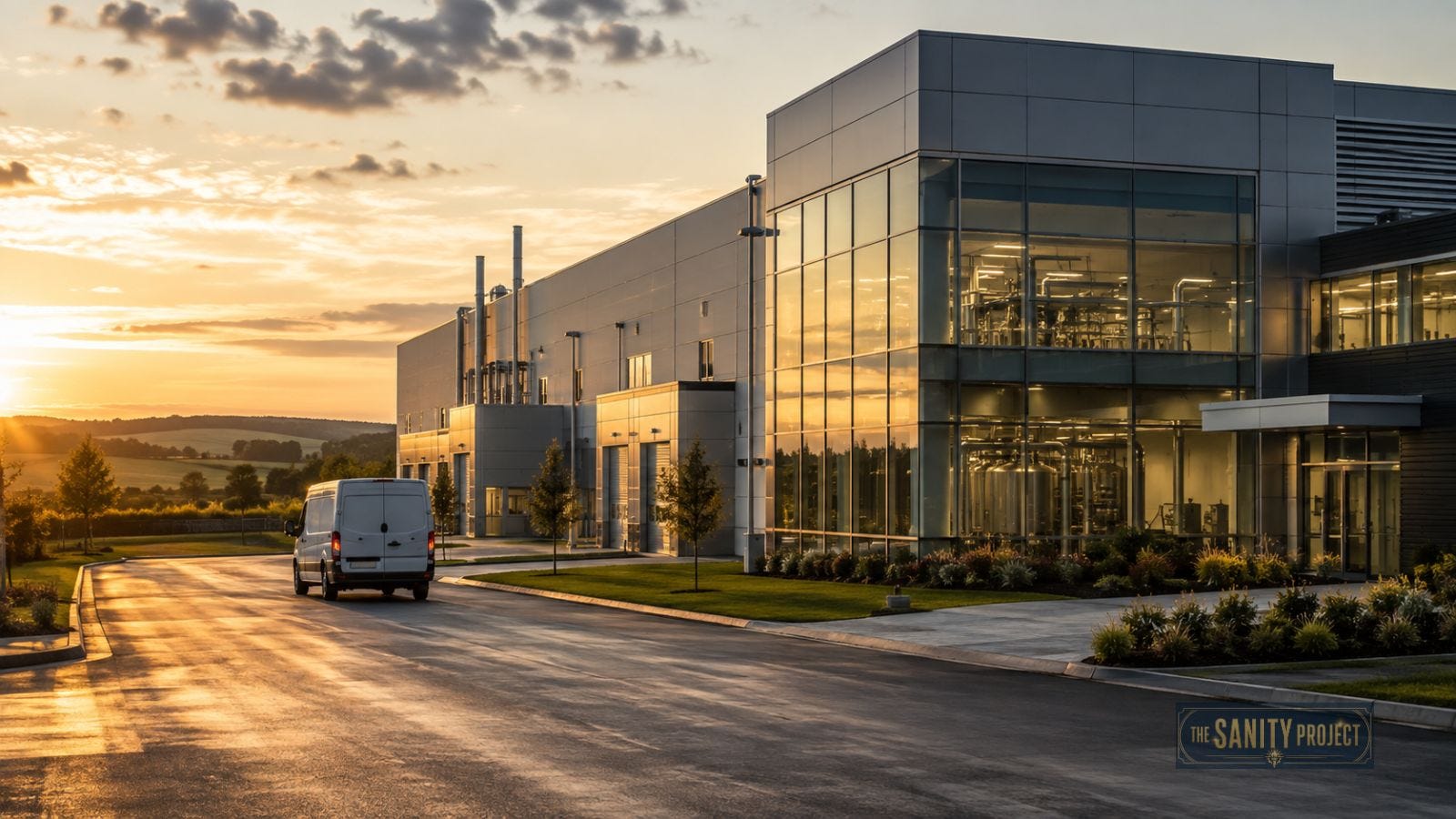
AtomVie’s new Hamilton plant represents an investment of more than $160 million, spans 72,300 square feet, delivers a tenfold jump in manufacturing capacity, and is targeting over 200 employees by the end of 2026.
Those figures come straight from the company’s grand opening announcement, and the timeline is worth walking through because it shows how these projects grow in the real world. In December 2025, the publicly announced commitment was $138 million, paired with a $5 million grant from the Invest Ontario Fund, expected to add 70 jobs on top of the existing 131. By the time the doors opened on September 5, 2026, the final project cost had climbed past $160 million, according to the official grand opening release. That’s not a contradiction. That’s what an 18-month construction buildout tends to do to a budget, and in this case, the project got bigger, not smaller.
What matters more than the dollar figure is what kind of jobs these are. Radiochemistry, cGMP manufacturing, quality assurance, logistics. These aren’t shifts that vanish when a contract ends. They’re the kind of skilled, specialised roles that stay in a city and build a career around them, which is exactly the sort of Canadian manufacturing jobs story that rarely gets a headline because it doesn’t come with a villain.
Why Canada Was Already Winning At This, Quietly
McMaster’s nuclear reactor already supplies more than 60 per cent of the world’s iodine-125, treating over 70,000 cancer patients a year, and most Canadians outside Hamilton have never heard of it.
Here’s the part of the story that makes AtomVie feel less like a lucky one-off and more like the missing piece of something that was already working. The McMaster Nuclear Reactor has quietly been the world’s leading supplier of iodine-125, the isotope used to treat prostate and other cancers, for years. It also produces a portion of Canada’s lutetium-177 supply, used against a wider range of tumours. Bruce Power adds its own contribution through Nordion, supplying isotopes for cancer therapies and diagnostics from a completely different reactor an hour down the road.
What Canada didn’t have, until this month, was enough finished-dose manufacturing capacity to turn all of that raw isotope production into commercial-scale therapies at home. That’s the gap AtomVie was purpose-built to close. Isotope, to finished dose, to patient, without the product ever leaving Southern Ontario. It’s the kind of supply chain story that would be a national talking point in almost any other country. Here, it’s Tuesday.
The Money Came From Atlanta. Everything Else Stayed in Hamilton.
AtomVie’s growth was largely funded by Avego Management, a healthcare-focused private equity firm based in Georgia and New York, rather than by Canadian capital, though the company’s research, jobs, manufacturing, and exports remain firmly rooted in Canada.
Twenty-four years in law enforcement teaches you exactly one habit that never turns off: when a story looks this clean, you go find the paperwork. So I did. AtomVie’s 2022 Series A financing, the round that funded the buildout of this facility, closed with Avego Management, a private equity firm headquartered in Alpharetta, Georgia, with a second office in New York. That’s American money, not Canadian money, sitting behind a good chunk of this plant’s construction.
I want to be precise here because we draw a hard line on this site between “Canadian-owned” and “made in Canada,” and this story is a clean example of why the distinction matters. AtomVie is not a Canadian-owned company in any meaningful financial sense. But the science originated at McMaster University’s Centre for Probe Development and Commercialisation. The reactor supplying the raw isotopes is Canadian. The 72,300 square feet of concrete and cleanrooms sit in Hamilton. The 200 paycheques are deposited into Canadian bank accounts. And every dose shipped to 28 countries leaves from an Ontario airport corridor.
That’s not a scandal. It’s the boring, unglamorous truth about how a lot of serious manufacturing gets financed: with patient capital from wherever it’s willing to show up, wrapped around research and labour that stays exactly where it started. Canada didn’t need to own the money to keep the substance.
What Happens Next
The global radiopharmaceutical market is projected to grow from roughly $7.1 billion in 2024 to $12.7 billion by 2030, and Canada’s own nuclear medicine market is expected to nearly double over the same window.
None of this is hype riding on a single press release. According to MarkNtel Advisors, the global radiopharmaceuticals market is on track to grow by more than 10 per cent per year through the end of the decade, driven by a wave of new FDA-approved radioligand therapies. MarketsandMarkets projects Canada’s nuclear medicine market to follow a similar trajectory, roughly doubling in size by 2030.
AtomVie is already pre-selling capacity at the new facility before it’s fully operational, which indicates the demand is real rather than speculative. If even one client’s drug clears Health Canada or FDA approval out of that Hamilton plant, this becomes the kind of permanent global supply node that doesn’t get built twice. In the short term, it’s a ramp from clinical to commercial batches. Long-term, it’s Canada quietly becoming the CDMO of record for an entire category of cancer medicine that Big Pharma is racing to buy into.

Editor’s View
I spent twenty years selling houses in Winnipeg before this, and the lesson carries over surprisingly well: the deal that looks too clean is the one you check twice, and the deal that survives the checking is usually the one worth closing. AtomVie survived the checking.
Yes, the capital came from Georgia. No, that doesn’t make the jobs, the science, or the exports any less Canadian. My honest prediction is that in five years, this plant will be one of two or three places in North America you’d point to if someone asked where cancer medicine gets made, and almost nobody outside the industry will know that either.
Nobody trended this story, and honestly, nobody probably should. It’s not built for a hashtag. It’s built for a ribbon cutting, a payroll, and a decade of shipments to patients who will never know the name of the reactor an hour outside their city that made their treatment possible.
That’s what the real economy usually looks like: quiet, unglamorous, and only interesting if you bother to check the paperwork. Somebody did this week, and it held up.
Corrections and Updates Protocol
The Sanity Project corrects errors publicly. If a figure in this piece changes or is found to be inaccurate, it will be noted inline using the convention “Update (Month Year):” rather than silently edited. Readers who spot an error are encouraged to flag it in the comments.
Publications Consulted
BioSpace, PRNewswire, AtomVie Global Radiopharma, Pharmaceutical Technology, BioPharma APAC, McMaster University (Brighter World / Nuclear Reactor), Canadian Nuclear Safety Commission, Link2Build / Expansion Solutions Magazine, MarkNtel Advisors, MarketsandMarkets, Precedence Research, Avego.
A good article and a vital expansion for the fabrication of radio pharmaceuticals. At least the facility is here, the employees are ours. The ownership is unfortunate but must be acknowledged.
It is perhaps outside your scope but any discussion of radio isotopes should include mention of AECL and the Chalk River Laboratories. The National Research Universal Reactor produced decades of radio isotopes for medical use and was a major world supplier for same. Unfortunately the government elected to shutter the reactor in 2018 rather than funding a new one. Chalk River Laboratories continues research on targeted alpha therapies.
So it is good the Hamilton facility is expanding.
Great news