


Canada-EU Future — Part 2 of 3
Why Canada’s Social Contract Helps Us Live Longer

Key Takeaways
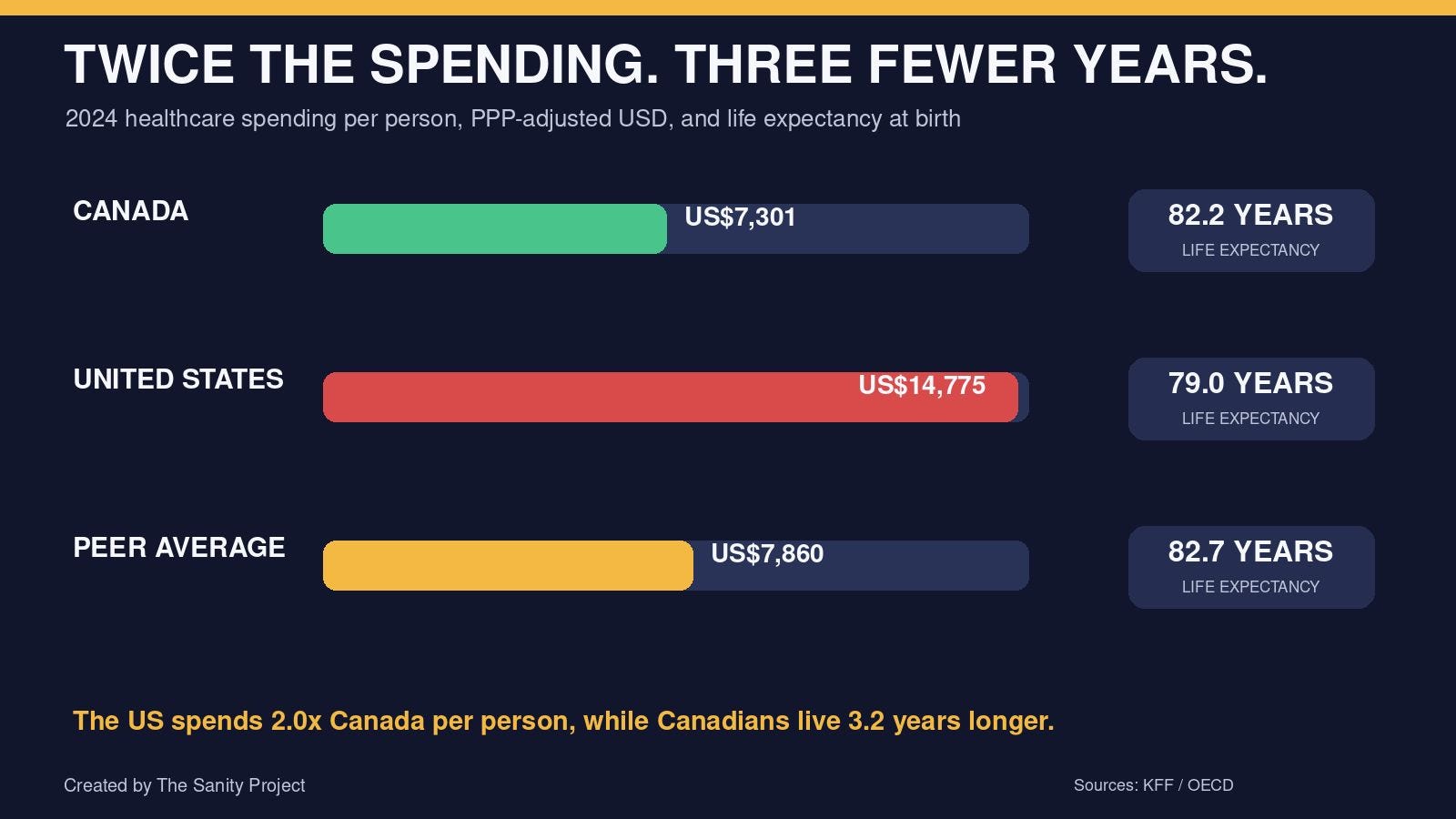
In 2024, life expectancy was 82.2 years in Canada and 79.0 years in the United States. The comparable-country average was 82.7 years.
In 2024, the United States spent US$14,775 per person on healthcare, adjusted for purchasing power. Canada spent US$7,301 and covered everyone.
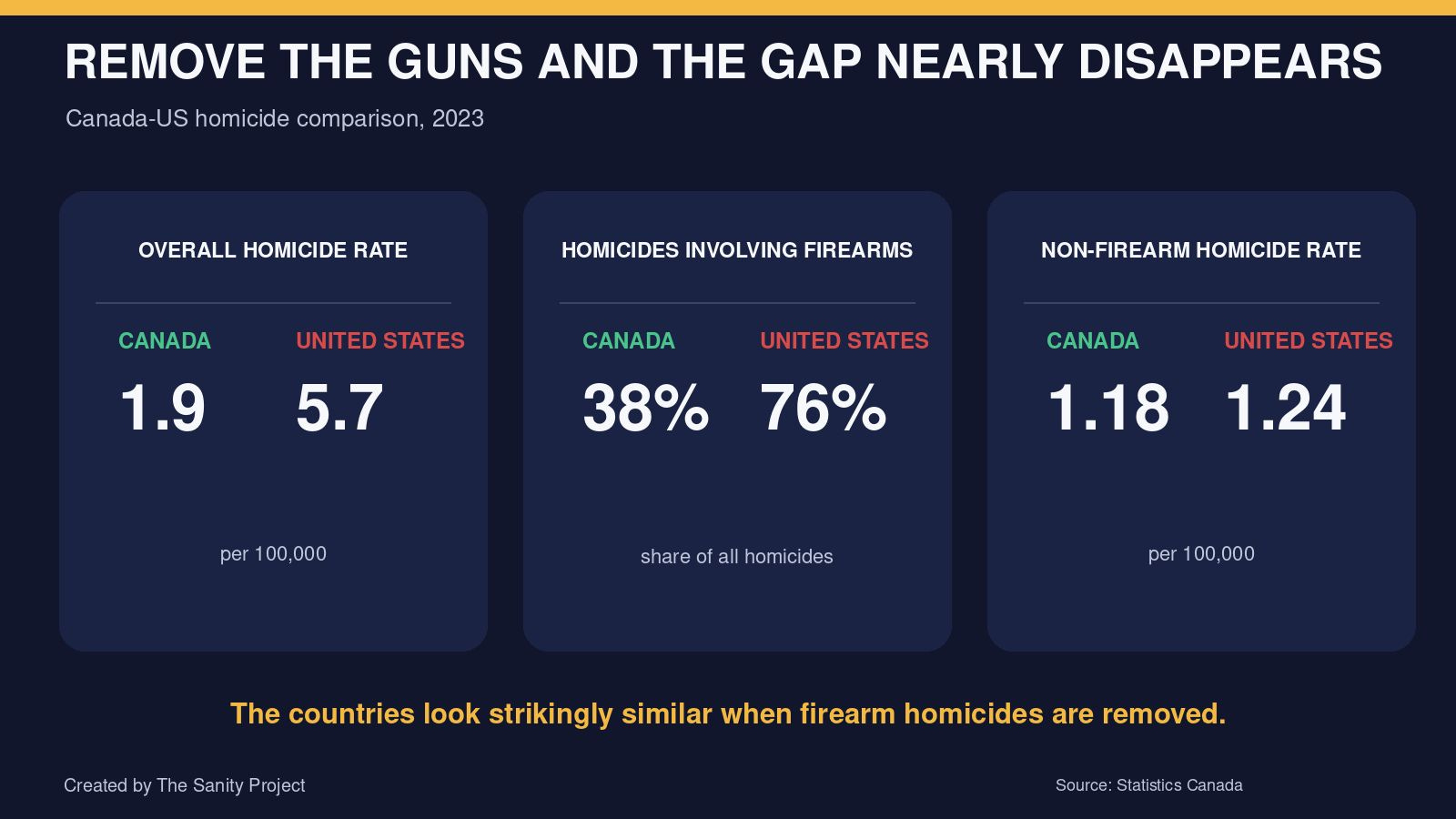
In 2023, the American homicide rate was three times Canada’s. Firearms were involved in 76 per cent of US homicides and 38 per cent of Canadian homicides.
Canada’s parental benefits can be taken for 12 or 18 months, although the longer option pays a lower weekly rate. The United States still has no universal federal paid parental leave.
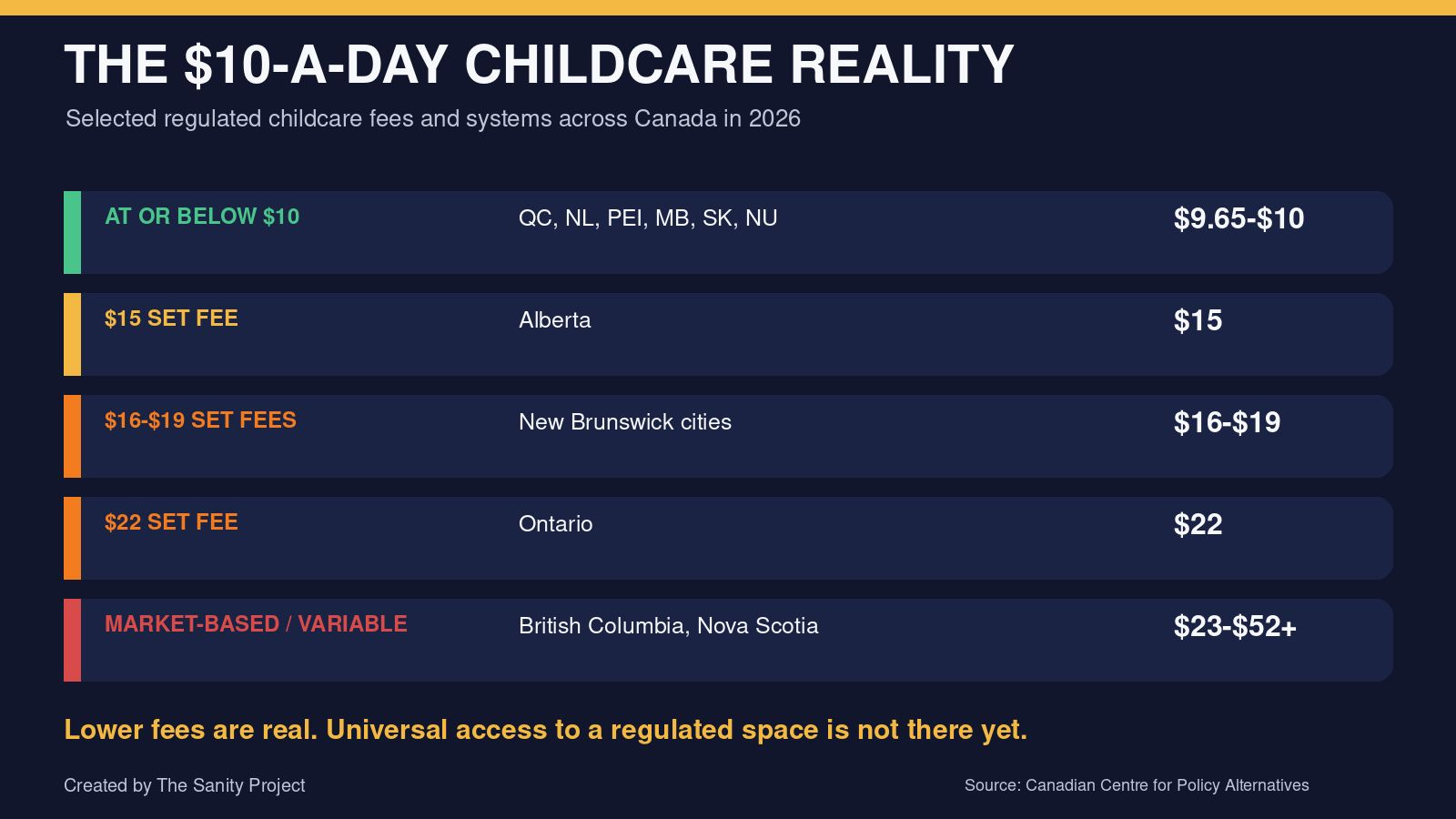
Canada’s childcare program has dramatically lowered fees, but the promise remains unfulfilled. Only six jurisdictions currently cap regulated fees at $10 a day or less.
Three years and a bit.
That is the statistical distance between two babies born on the same day, one in Canada and one in the United States. They may watch the same television programs, drive the same cars and grow up within an afternoon’s drive of each other. On paper, however, the Canadian child can expect to celebrate roughly three more birthdays.
In 2024, life expectancy in Canada was 82.2 years. In the United States, it was 79.0. Among a group of comparable wealthy countries, including Canada and several European nations, the average was 82.7 years.
That gap cannot be pinned on one hospital, law or program. Diet, poverty, drug deaths, inequality and chronic disease all matter. But underneath them sits a wider choice about what people should face alone.
Canada made a choice closer to Europe. Healthcare is treated as a public responsibility. Firearms are licensed and regulated. New parents can take extended leave, and childcare is increasingly treated as infrastructure rather than a private luxury.
Anyone who has tried to find a family doctor lately can explain Canada’s shortcomings, possibly while still on hold. But when we compare the Canadian healthcare system with its American counterpart, the difference isn’t simply how much each country spends. It is what each country believes about spending.
Every comparison in this series gets a full breakdown, including the parts Canada still needs to fix.
Subscribe to The Sanity Project so you do not miss Part 3.
The Most Expensive Healthcare Bargain on Earth
The United States does not spend too little on healthcare. It spends more than anyone else and still leaves millions of people outside the system.
According to the Commonwealth Fund’s 2026 international comparison, the United States devoted 18 per cent of its economy to healthcare in 2024, nearly twice the OECD average. About 27 million Americans, or 8 per cent of the population, remained uninsured.
The matched per-person comparison is even harder to explain away. Adjusted for purchasing power, the United States spent US$14,775 per person in 2024. Canada spent US$7,300.65, while the comparable-country average was US$7,860.
In other words, the United States spent slightly more than twice as much per person as Canada and had a life expectancy that was 3.2 years shorter. That does not prove healthcare alone created the gap, but it certainly makes the phrase “private-sector efficiency” work harder than it should.
Too many Canadians lack a regular primary-care provider. Emergency rooms are overcrowded, rural access is uneven, and some wait times are unacceptable. Pretending otherwise would not defend Medicare. It would make it harder to repair.
The difference shows up when illness arrives. Canadians may have to fight the system for timely access, but they do not normally have to ask whether an ambulance, surgery or hospital stay will bankrupt the family. In the United States, people can wait, pay enormous premiums and deductibles, and still find that the insurer has opinions.
Canada’s answer is more primary care teams, better use of nurse practitioners, faster credential recognition, and expanded training. A crowded waiting room argues for fixing capacity, not adding a cash register at the door.
The United States spends twice as much per person. Canadians live three years longer.
Fewer Guns, Fewer Funerals
Canada has not solved crime. Assaults have risen, organised crime is real, and many communities have legitimate safety concerns.
The measurable difference is guns.
A Statistics Canada comparison using Canadian and FBI data found that the United States recorded 5.7 homicides per 100,000 people in 2023. Canada’s rate was 1.9, exactly one-third as high.
Most of the gap was associated with firearms. Guns were involved in 76 per cent of American homicides, compared with 38 per cent in Canada. Strip out firearms, and the countries suddenly look remarkably similar: non-firearm homicide rates were 1.24 per 100,000 in the United States and 1.18 in Canada.
That does not make every Canadian firearm owner dangerous. Statistics Canada also cautions that many guns used in Canadian homicides were obtained illegally. It does show that licensing, background checks and storage rules shape the environment in which violence occurs.
Canada regulates guns more like European democracies do, as potentially dangerous tools rather than constitutional identity cards. We can debate individual rules, and we should. What we should not import is the American premise that virtually every restriction attacks freedom.
Freedom matters. So does getting home alive.
A Baby Is Not a Personal Financial Emergency
Imagine two couples welcoming a baby, one in Winnipeg and one in Minneapolis. Both are exhausted, both are trying to remember when the baby last slept, and neither knows what day it is. Only one couple lives in a country where paid parental benefits are part of the national system.
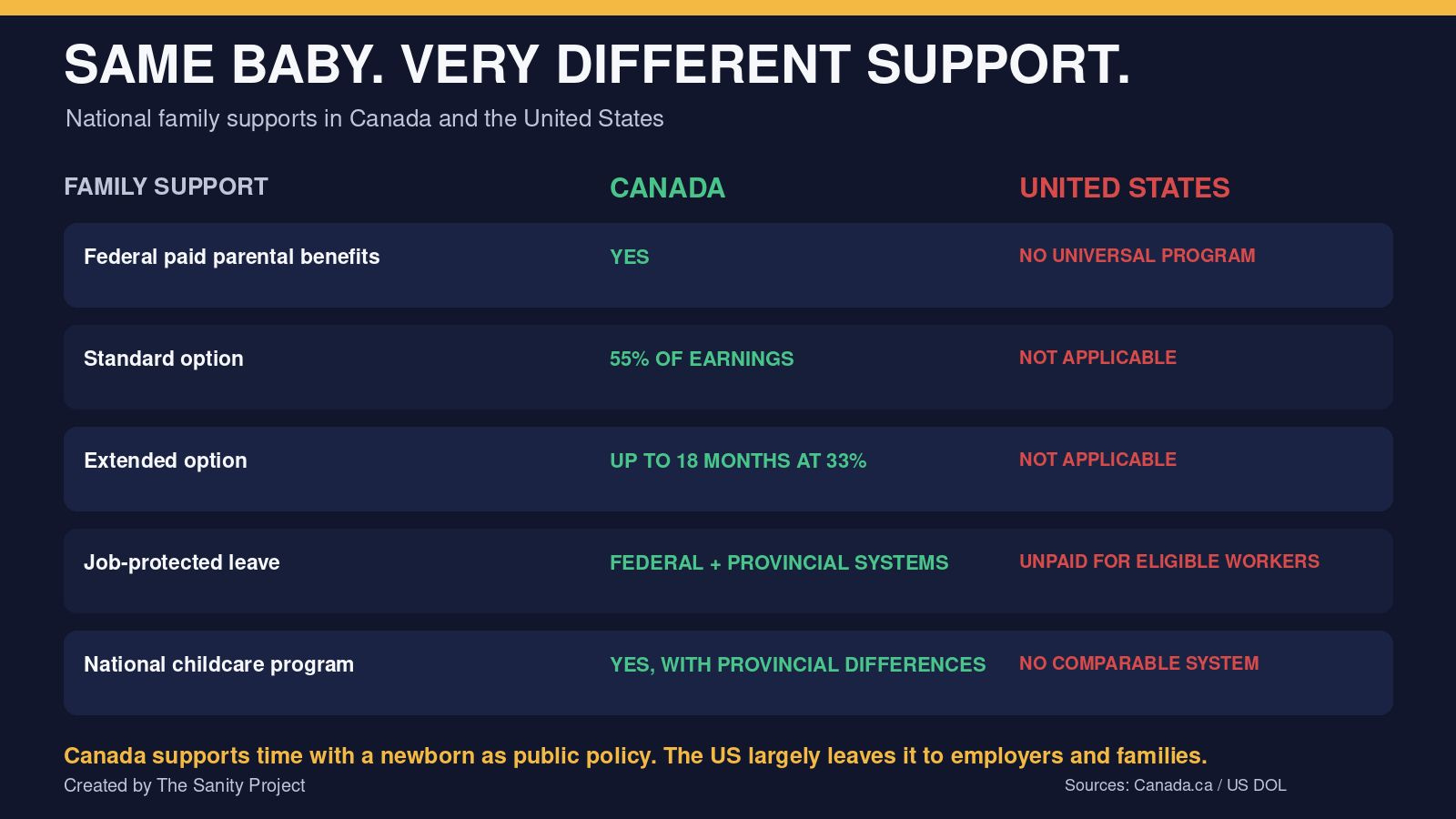
Outside Quebec, Canada’s Employment Insurance program offers maternity benefits followed by a choice between standard and extended parental benefits. The standard option pays 55 per cent of earnings, up to a weekly maximum, while shared parental benefits can be used within 12 months. The extended option stretches the period to 18 months at 33 per cent of earnings. Quebec operates its own parental insurance plan.
Benefits are capped, not everyone qualifies, and many families cannot live on 33 or 55 per cent of their wages. Job-protected leave and income benefits also come from different laws. “Eighteen months paid leave” sounds wonderfully simple until somebody opens the government website.
Still, the principle is clear. Canada treats time with a newborn as something society has an interest in supporting. The United States has job-protected unpaid leave for some eligible workers, but no universal federal paid parental-leave program.
Childcare extends the same idea. The Canada-wide early learning and childcare agreements have substantially cut regulated fees, but the familiar phrase “$10-a-day childcare” now needs an honest footnote.
According to the Canadian Centre for Policy Alternatives’ 2026 survey, Newfoundland and Labrador, Prince Edward Island, Manitoba, Saskatchewan and Nunavut cap fees at $10 a day. Quebec’s pre-existing program charges $9.65.
Alberta’s cap is $15, and Ontario’s is $22, while British Columbia and Nova Scotia still rely heavily on provider-specific market fees.
The savings are nevertheless substantial. Families with infants in most cities save between $500 and $1,000 a month compared with projected fees without the program. Toronto families save more than $1,800, yet access to regulated spaces remains a serious obstacle.
That distinction matters. An affordable space that does not exist is not childcare. The next phase has to expand capacity, train and properly pay early-childhood educators, and close the gap between the national promise and the provincial reality.
Canada did not finish building affordable childcare. It did prove that governments can lower the bill.
Canada Is Not Europe, but We Made the Same Choice
Canada does not copy Europe line by line. Many EU countries provide more vacation time, stronger family benefits, and broader public coverage. Canada often occupies the middle ground between Europe and the United States.
The deeper alignment is philosophical. Canada and Europe generally treat healthcare, parental leave, childcare and firearm regulation as legitimate public responsibilities. The United States is more likely to treat them as private purchases, employer benefits or individual rights that government should hesitate to touch.
That choice shapes whether losing a job also means losing health insurance, whether a new parent must return to work immediately, and whether violence is likely to involve a firearm. It does not make Canada utopian. It makes certain disasters less likely to become personal catastrophes.
This is the central lesson in any serious Canada vs USA comparison. The border separates more than two tax systems. It distinguishes between two answers to the question of what people owe one another.
What Canadians Can Actually Do About It
Fix Medicare instead of Surrendering It, and make measurable progress on primary care, training in the gaps, rural service, and recognition of qualified internationally educated professionals. Universal access is worth defending, but “universal” must eventually mean being able to find care.
Finish the Childcare System
Lower fees were the first step. Governments now need enough regulated spaces and properly paid early-childhood teachers to make the promise a reality for families still on waiting lists.
Keep the Gun Debate Canadian
Judge firearm rules by evidence, public safety and enforceability. Do not import America’s constitutional absolutism or pretend that its much higher rate of firearm homicide is simply the unavoidable price of freedom.
For more evidence-based, Canada-first analysis, visit The Sanity Project.
The Verdict
CLEAR WINNER: CANADA
Not because every Canadian has a family doctor, every parent finds childcare, or every firearm rule makes sense. Canada wins because we decided that illness, parenthood and public safety are shared concerns.
We spend far less per person on healthcare, live longer and experience far fewer firearm homicides. Our social contract is unfinished, occasionally infuriating and still demonstrably better than leaving every family to negotiate the hardest moments of life alone.
Editor’s View
I have heard public healthcare declared unsustainable more times than I can count. Oddly enough, it survives, while the country that treats healthcare most aggressively as a business spends twice as much per person and gets shorter lives in return.
That does not excuse Canada’s failures. Waiting months for a specialist is not a charming national tradition, and telling parents childcare is affordable when they cannot find a space is political advertising, not policy. We should be angry about those failures because the underlying programs matter, not because we want to abandon them.
The answer to a crowded emergency room is more capacity and more trained professionals, not copying the country where the same emergency can come with a five-figure invoice. The answer to incomplete childcare is to finish building it. The answer to gun crime is evidence and enforcement, not confusing firepower with freedom.
Canada is not Europe. But on the biggest question, whether citizens are consumers on their own or members of a society with obligations to one another, we made the European choice.
We should fix what is broken, defend what works and stop apologising for the difference.
Part 3 comes next: what Canada’s European connection can deliver through CETA, critical minerals, Arctic security and less dependence on the United States.
Subscribe at thesanity.org so you do not miss it.
This is Part 2 of a three-part Canada-EU Future series from The Sanity Project. Part 1 examined how Canada governs more like a European parliamentary democracy than an American presidential republic. Part 3 examines how shared values can become economic and military leverage.
Corrections & Updates Protocol
The Sanity Project corrects errors transparently. Any factual correction to this piece will appear here as an inline “Update (Month Year):” note rather than a silent edit.
Publications Consulted
Statistics Canada; Statistics Canada Life Tables; Peterson-KFF Health System Tracker; OECD health expenditure data; Commonwealth Fund; Government of Canada Employment Insurance; Canadian Centre for Policy Alternatives; US Department of Labour.