


Canada’s Internal Trade Problem Is Quietly Costing the Economy $210 Billion
While Ottawa fights Washington over tariffs, Canada has been running its own quiet trade war against itself for 159 years, and almost nobody in Parliament seems to be losing sleep over it.
Key Takeaways
The IMF says eliminating Canada’s internal trade barriers could add $210 billion, or nearly 7 percent, to the economy every year.
Those barriers act like a 9 percent national tariff, worse in some service sectors than anything Washington has threatened.
Manitoba dairy quota values have risen roughly 130 percent since 1998, a visible price tag on decades of protected trade.
Bill C-5 and CFIB’s 2026 report card show real progress, but most small businesses say it hasn’t changed their day-to-day operations yet.
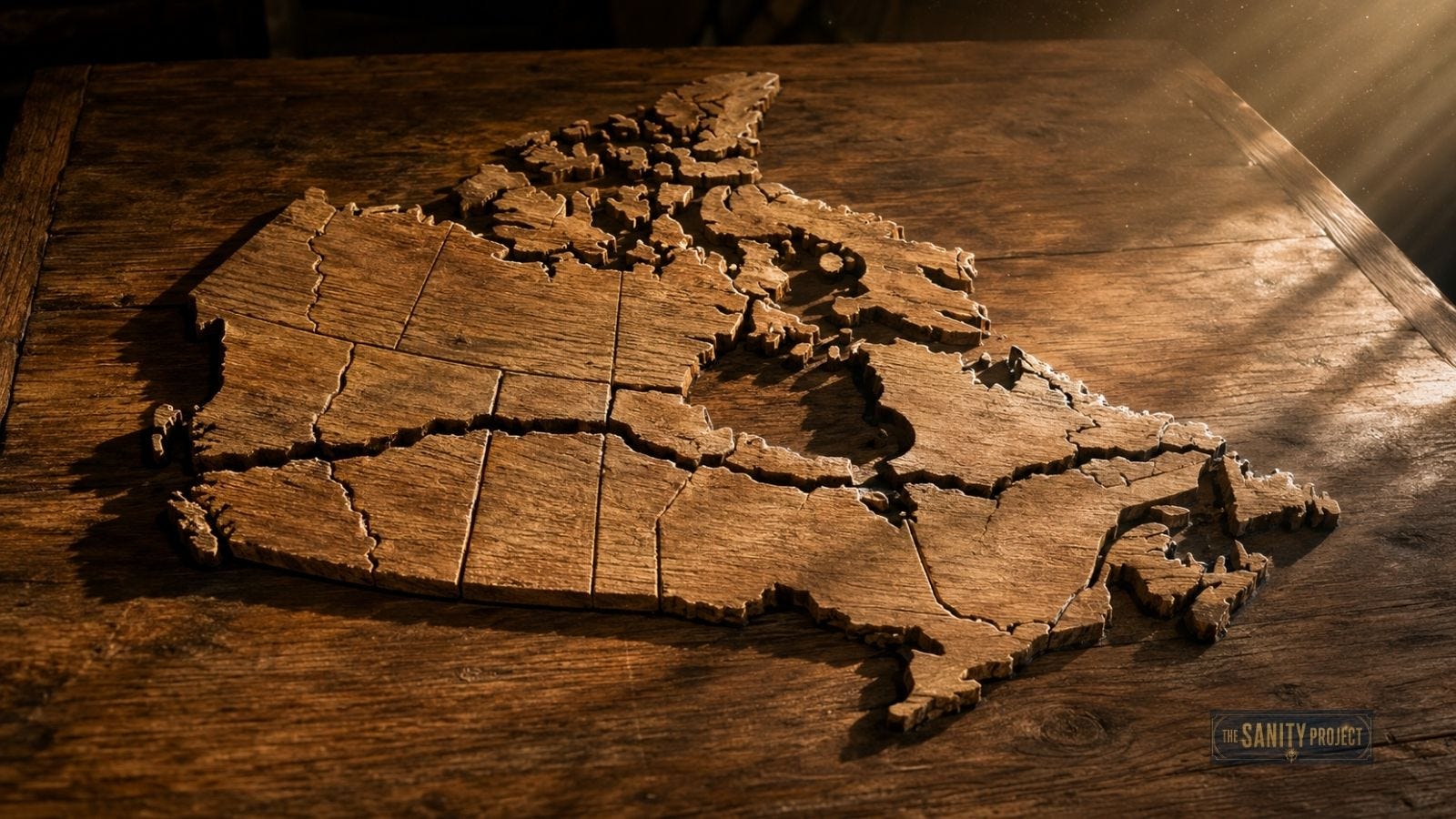
Every few weeks, another headline lands about Washington’s tariffs and what they might do to the Canadian economy. Emergency calls with premiers. A prime minister flying south to negotiate with a trading partner who changes his mind by Tuesday afternoon. It is exhausting, and, weirdly, not the biggest trade problem this country has.
Here’s the thing nobody puts on the evening news: while we’ve been white-knuckling every tariff threat from south of the border, Canada has been fighting its own internal trade war for a century and a half. Same drag on the economy. Same higher prices at the till. Except for this one, we started, we maintain, and we could end tomorrow if the political will actually showed up.
The number attached to that self-inflicted damage is not small. The IMF puts it at $210 billion a year, roughly seven per cent of GDP, sitting on the table uncollected because a trucker crossing from Saskatchewan into Manitoba still needs paperwork he shouldn’t need. Call it Confederation’s fine print. Whatever you call it, this country’s internal trade barriers are quietly costing more than any tariff Donald Trump has ever floated, and almost nobody treats it with the same urgency.

How Much Is Canada’s Internal Trade Actually Costing the Economy?
Key Insight: The IMF’s January 2026 report puts a hard number on decades of friction. Removing Canada’s internal trade barriers could grow the economy by nearly 7 per cent, close to $210 billion a year.
The report came from IMF economists Federico Díez and Yuanchen Yang, with contributions from University of Calgary economist Trevor Tombe. Their finding is that Canada trades more freely with countries on the other side of the ocean than it does with itself. Internal regulatory friction adds up to the equivalent of a 9 percent tariff nationally, and in some service sectors, like health care and education, that hidden tariff climbs as high as 40 percent.
None of that requires new spending, though. The IMF’s framing is that the gains come from letting existing productivity, competition, and labour move where they’re needed instead of stalling at a provincial line, what the economists called “the gift that keeps on giving,” since the growth compounds instead of showing up once and disappearing.
What makes the number sting a little more is how few businesses even try. A 2023 Statistics Canada survey found 65 percent of Canadian businesses reported no interprovincial sales at all, and while most cited a simple lack of interest, 8.6 percent said they avoided crossing provincial lines specifically because of the barriers involved. That’s not a market choosing to stay small. That’s friction doing exactly what friction does.
“Nine per cent. That’s the size of the tariff Canada quietly imposes on itself every time a good or a worker tries to cross a provincial line.”

If a number like $210 billion makes your blood pressure rise a little, you’re going to want the rest of this series.
Subscribe for free below so Part 3 doesn’t slip past you.
The $210 Billion Made Personal: Manitoba’s Dairy Quota
Key Insight: A kilogram of Manitoba milk quota sold for $12,000 in December 1998. By October 2018 it had climbed past $27,600, an increase of roughly 130 per cent, and Ottawa still protects the system that produced it.
Big abstract numbers are easy to nod along to and hard to feel. So here’s a smaller one, from closer to home. Supply management caps the amount of milk, eggs, and poultry that Canada allows its farmers to produce nationwide, largely to keep prices stable and keep imports out. To start or grow a dairy farm, you can’t just buy cows and start milking. You need a quota first: a government-issued permission slip that sets how much you’re allowed to produce.
Quota is priced in kilograms of butterfat produced per day, and one kilogram works out to roughly what a single dairy cow gives you, so think of it as a per-cow entry ticket into the business. According to figures compiled by the Library of Parliament, that ticket cost $12,000 in Manitoba in December 1998. By October 2018, it cost $27,640, a 130 percent jump in twenty years, none of it from cows producing more milk. It’s the price of the entry ticket itself, climbing because the government caps how many exist.
Defenders of supply management have a real argument. The system stabilizes farm income, insulates rural dairy communities from volatile global swings, and keeps thousands of family farms in business instead of consolidating everything under a handful of industrial operators. Those aren’t small things in a country with this much rural geography.

But the cost lands somewhere too, and it lands on grocery bills. A University of Manitoba study, cited by CBC News, found that supply management costs wealthier Canadian families an average of $554 a year and lower-income families more than $339 a year for milk, chicken, and eggs alone. Dairy is one protected corner of a much bigger pattern. Trucking rules, alcohol distribution, and professional licensing carry their own version of the same friction, just without a number as clean as $27,640 a ticket to point to.
Listen to the Sanity Project Podcast

What’s Actually Moving, and What You Can Do About It
Key Insight: Bill C-5, the One Canadian Economy Act, became law in 2025 promising to tear down federal internal trade barriers. CFIB’s 2026 report card shows real movement, with Manitoba ranked the country’s top-performing province.
It would be lazy to stop at the problem and skip the progress, so here’s the progress. Bill C-5, officially the One Canadian Economy Act, passed under Prime Minister Mark Carney, bundles two pieces of legislation together: the Free Trade and Labour Mobility in Canada Act and the Building Canada Act. The stated goal is to eliminate federal barriers to internal trade and labor mobility, with the cabinet meeting with Indigenous communities during the rollout to keep implementation collaborative.
The CFIB’s 2026 State of Internal Trade Report Card backs that up with actual grades. The federal government earned an A+. Ten provinces and territories earned an A. Manitoba was ranked the top-performing province in the country, including a perfect score on direct-to-consumer alcohol sales. Nine premiers have also signed on to allow wineries, breweries, and distilleries to sell directly to consumers across provincial lines, a small change with an outsized history: most of Canada’s internal trade friction has historically been channeled through liquor boards.
CFIB’s own researchers add an honest caveat worth keeping: high grades reflect commitments made, not always results delivered, and most small business owners say day-to-day operations haven’t gotten noticeably easier yet. Progress on paper isn’t the same as progress in practice. That gap is exactly where public pressure does the most good.
So, concretely: bookmark the CFIB Report Card and check it again when next year’s grades land. It takes two minutes and tells you whether your own province is following through. If you want to do more than watch, a short email or call to your provincial MPP or MLA asking where mutual recognition legislation for licensing stands takes less time than reading this sentence twice.

Bookmark the report card. Better yet, subscribe here, and I’ll flag next year’s grades for you the day they land.
All of that leaves out who’s still quietly digging in, though. Bill C-5 and the CFIB grades tell you what’s moving. They don’t tell you which industries, provincial holdouts, and lobbies have the most to lose if this actually finishes, or why some of the highest-value barriers are the ones nobody wants to touch first. That’s coming in Part 3.
Trump’s tariffs will end eventually, whatever number the two countries finally land on, and then they’ll fade into the next crisis the way these things always do. Canada’s tariff on itself won’t fade on its own. It’s been sitting there since Confederation, patient and mostly invisible, waiting for a country that keeps looking outward for threats to notice the one it built for itself, and to remember it’s the only one who can take it down.
Read Part 1 of this series, on the beer run that ended up at the Supreme Court, if you missed it. And if this piece bothered you the right amount, say so in the comments. I read every comment. Full sourcing for everything above lives at thesanity.org.

Follow for more fact checks that cut through the noise.
Publications Consulted: International Monetary Fund, CBC News, Yahoo News Canada, Business in Vancouver, Library of Parliament of Canada, Canadian Federation of Independent Business, Wikipedia, Human Resources Director Canada.
Domestic trade barriers are ass backwards and a reason why Canada can't be in the EU or have a proper association agreement with them
A very good article. I follow internal trade barrier resolution matters through the “Build Canada” site. We started out with a bang and since then we’re getting stuck in the weeds again. Our premiers should redouble their efforts and restrain from carving out niches for themselves.