


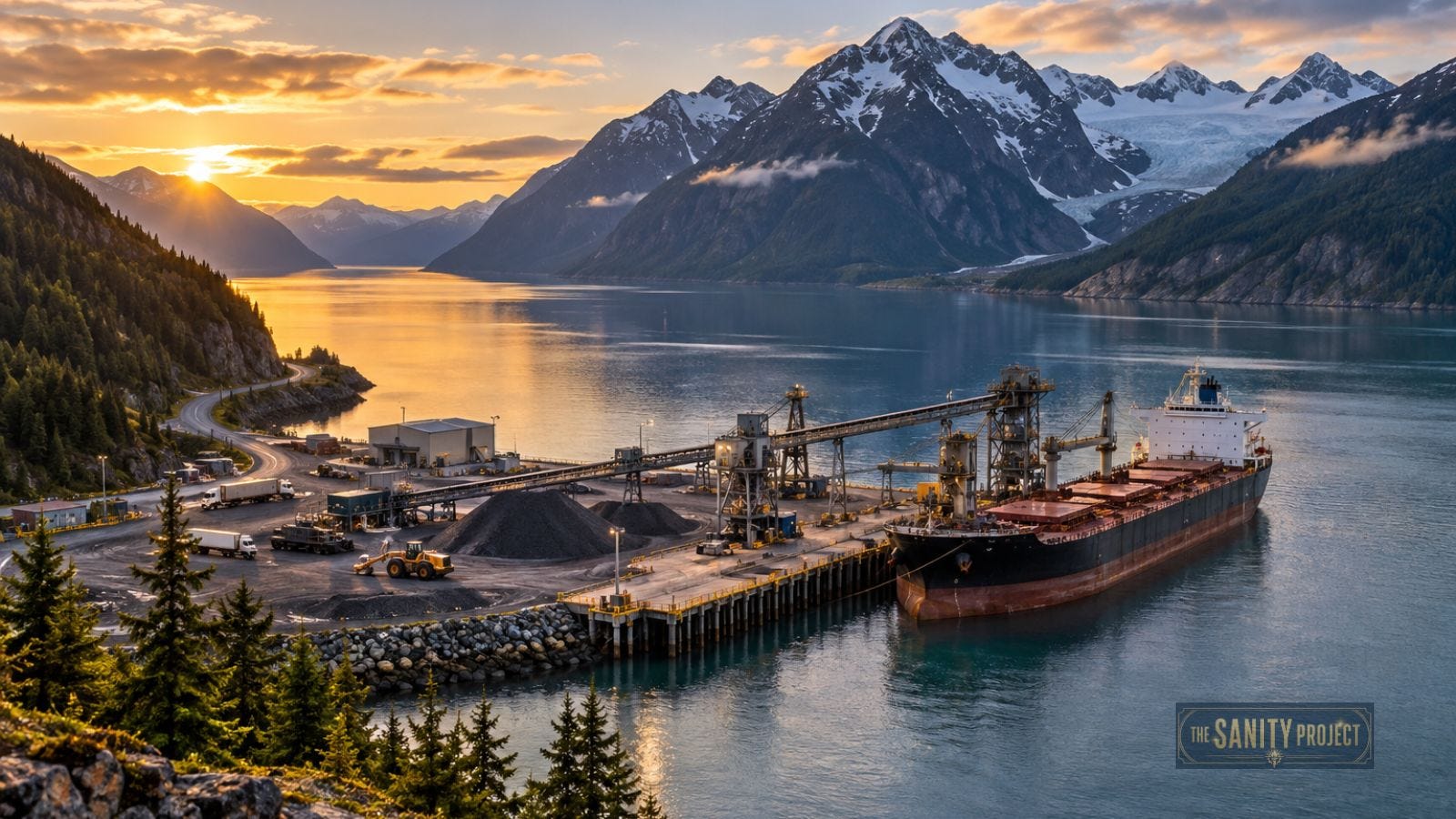
B.C.'s First Indigenous-Owned Port Ships Critical Minerals to Asia
Stewart, British Columbia, sits about 310 kilometres northwest of Terrace at the top of the Portland Canal, and on September 9 it officially became home to B.C.’s first majority Indigenous-owned port. The Nisga’a Lisims Government, the Tahltan Nation Development Corporation, and Arrow Transportation Systems opened the Portland Canal Marine Terminal through their joint venture, Portland Canal Holdings Limited Partnership, each holding an equal stake. No blockade forced this deal, and no injunction stopped it. Two First Nations simply bought in as owners.
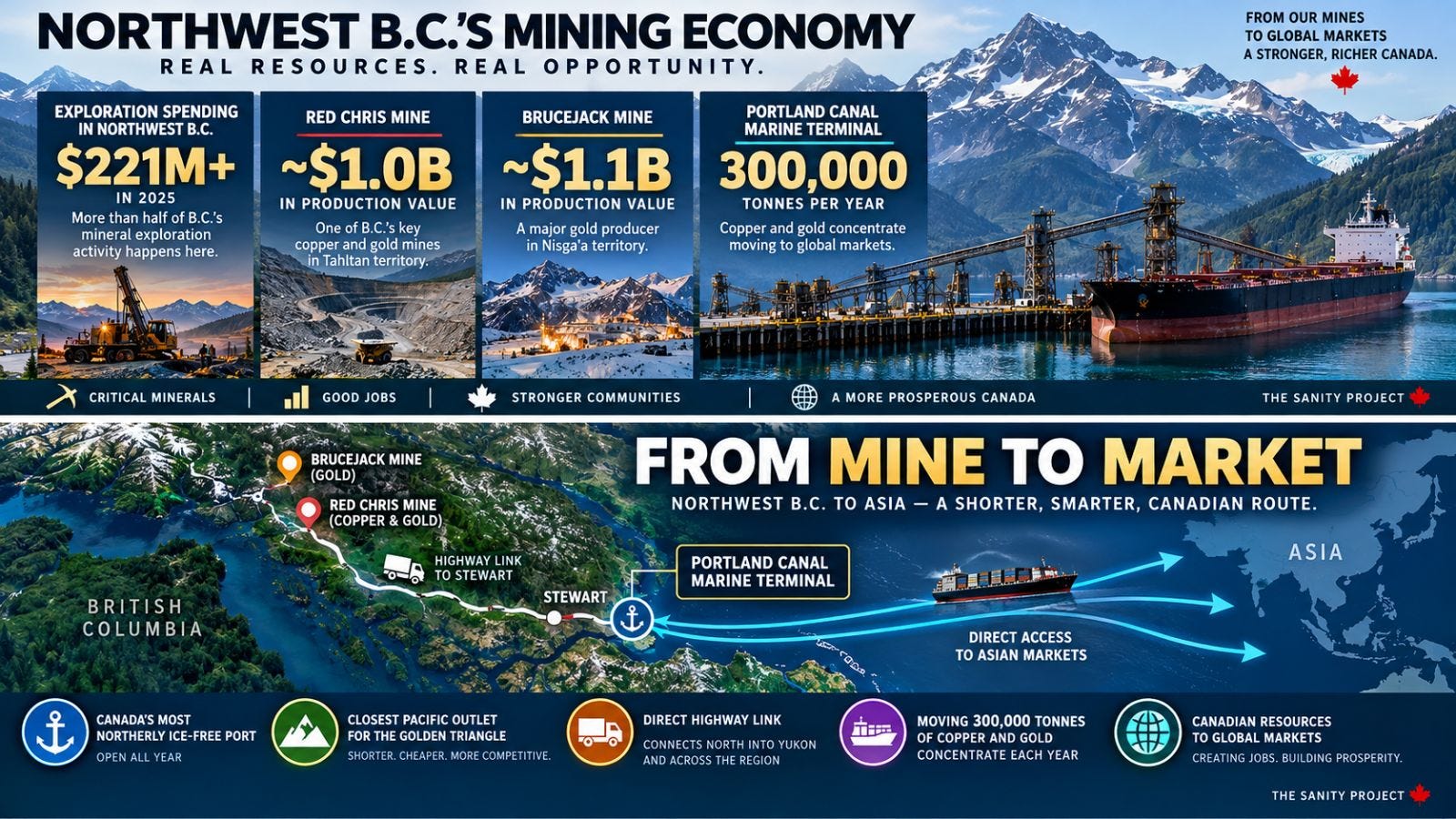
The terminal is fully permitted, deep-sea, and ice-free year-round, making it Canada’s northernmost ice-free port and the closest Pacific outlet for the Golden Triangle. Spread across roughly six acres, it already moves about 300,000 tonnes of copper and gold concentrate a year, most of it from Newmont’s Red Chris and Brucejack mines in Tahltan and Nisga’a territory. A direct highway link puts Stewart within reach of the entire Golden Triangle and connects north into Yukon, meaning a shorter, cheaper route to Asian buyers than shipping south.
The money behind the deal tells its own story. The partnership acquired the former Stewart Bulk Terminal in fall 2025 with a $5 million grant from the province through its Northwest Strategy. Ottawa followed with $672,134 through PacifiCan to fund engineering for the terminal’s expansion, while Arrow Transportation brought the private logistics capital and operating experience. Three partners, three kinds of capital, one asset.
Northwest B.C. accounts for more than half of the province’s mineral exploration activity and two of its ten operating metal mines. Exploration spending in the region topped $221 million in 2025, while Red Chris generated close to $1 billion in production value and Brucejack about $1.1 billion. The Portland Canal Group, port and trucking combined, already employs roughly 100 people full time, with thousands more mining jobs riding on it, the province says.
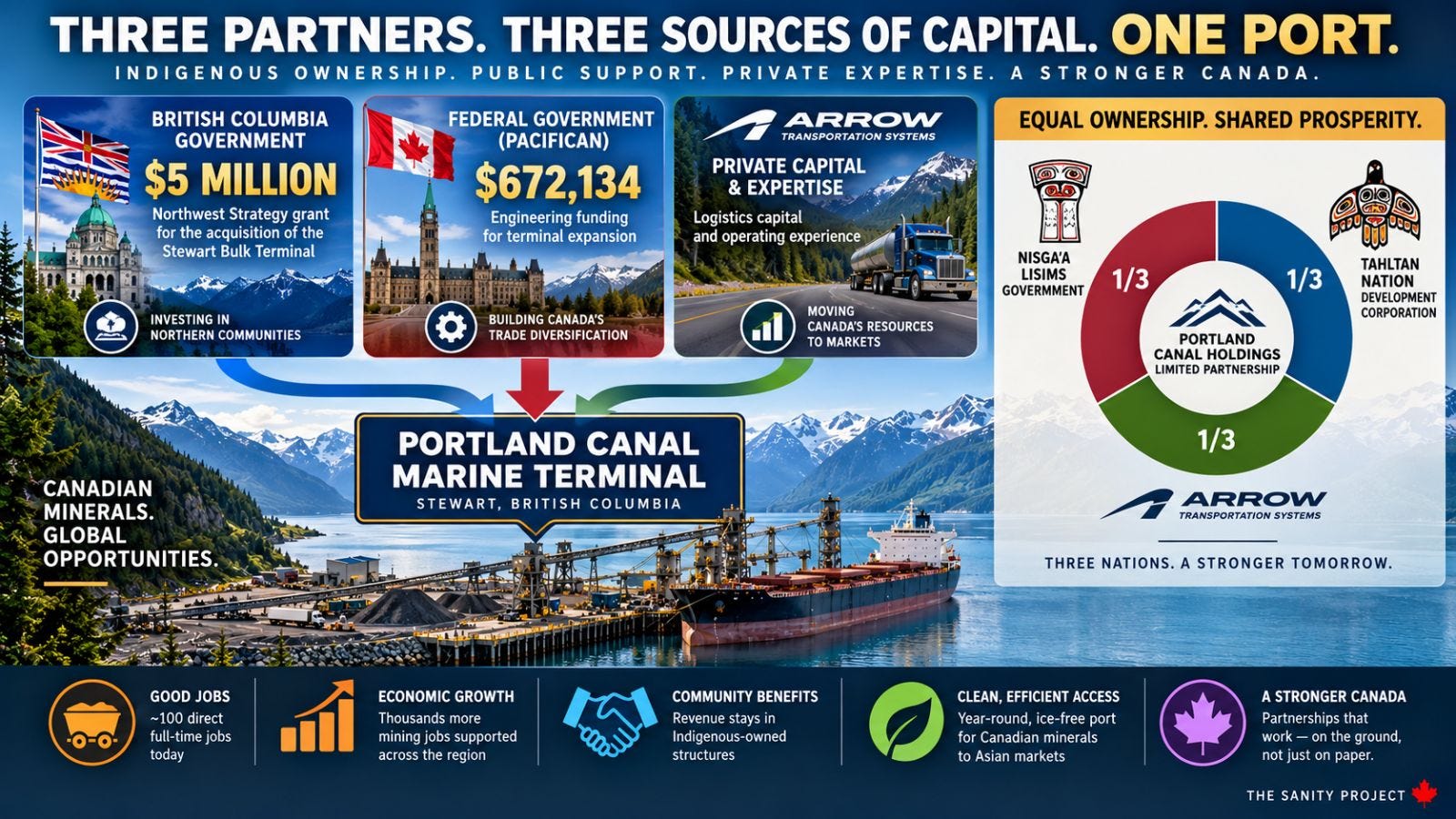
Ownership changes who captures that value. Tahltan Central Government President Kerry Carlick calls the terminal an economic engine for the region, linking Tahltan Territory and Northwest B.C. directly to global markets. Nisga’a Lisims Government President Eva Clayton frames it as economic self-determination, not a seat at someone else’s table. Revenue from shipping copper and gold to Asia now flows back through Indigenous-owned structures rather than leaking out to a third-party operator.
The Sanity Project broke down exactly that risk in the Gordie Howe Bridge, where Canada paid the full $6.4 billion and still needed American sign-off before it could open.

The next phase at Stewart is already funded. Wharf expansion, an inland terminal, long-term storage, and inbound cargo capacity for mines and infrastructure projects are all moving through engineering and construction, building toward a full mine-to-market logistics network stretching from Northwest B.C. into Yukon.
Premier David Eby summed it up: governments, First Nations, and private industry rowing together means good jobs, fast, and real ground under Canada’s trade diversification push. This is what that looks like away from the podium. Not a slogan out of Ottawa, but a Canadian-owned port moving Canadian minerals to Asian buyers on Canadian terms. Partnership built this gateway faster than protest ever blocked one, and Northwest B.C. is about to find out what it’s worth.
Great news Bo, thanks for highlighting this! What a great achievement, plus the new moves in Prince Rupert, really shows how partnerships can work for the benefit of all.
This is awesome! Congratulations!