


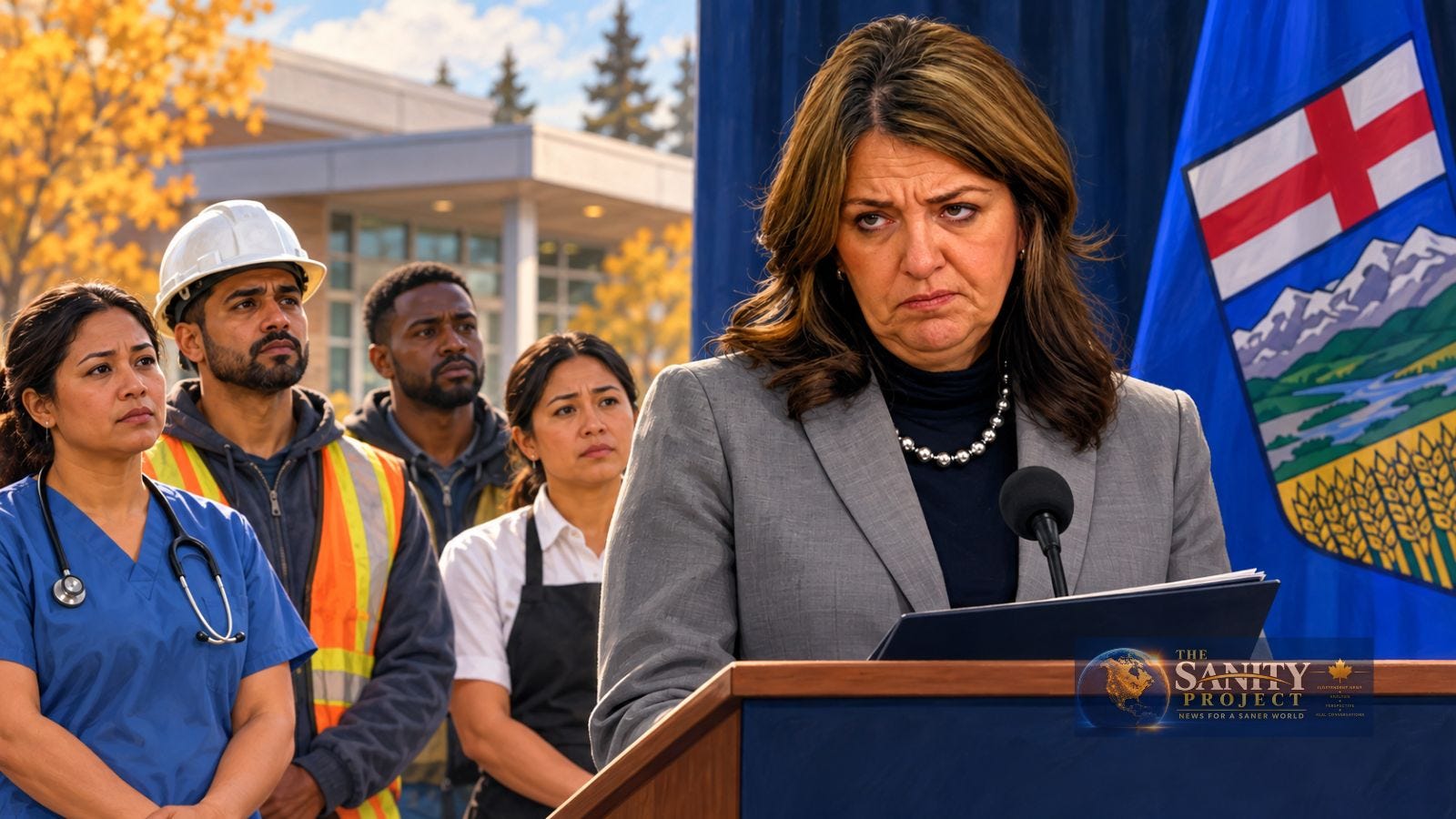
Danielle Smith Wants a $1,900 Fee. Alberta Needs Their Work.
Temporary papers. Real work. An extra bill.
Before we listen to Danielle Smith explain why temporary residents should pay more for health care, we should read what Danielle Smith said when she wanted more of them to stay.
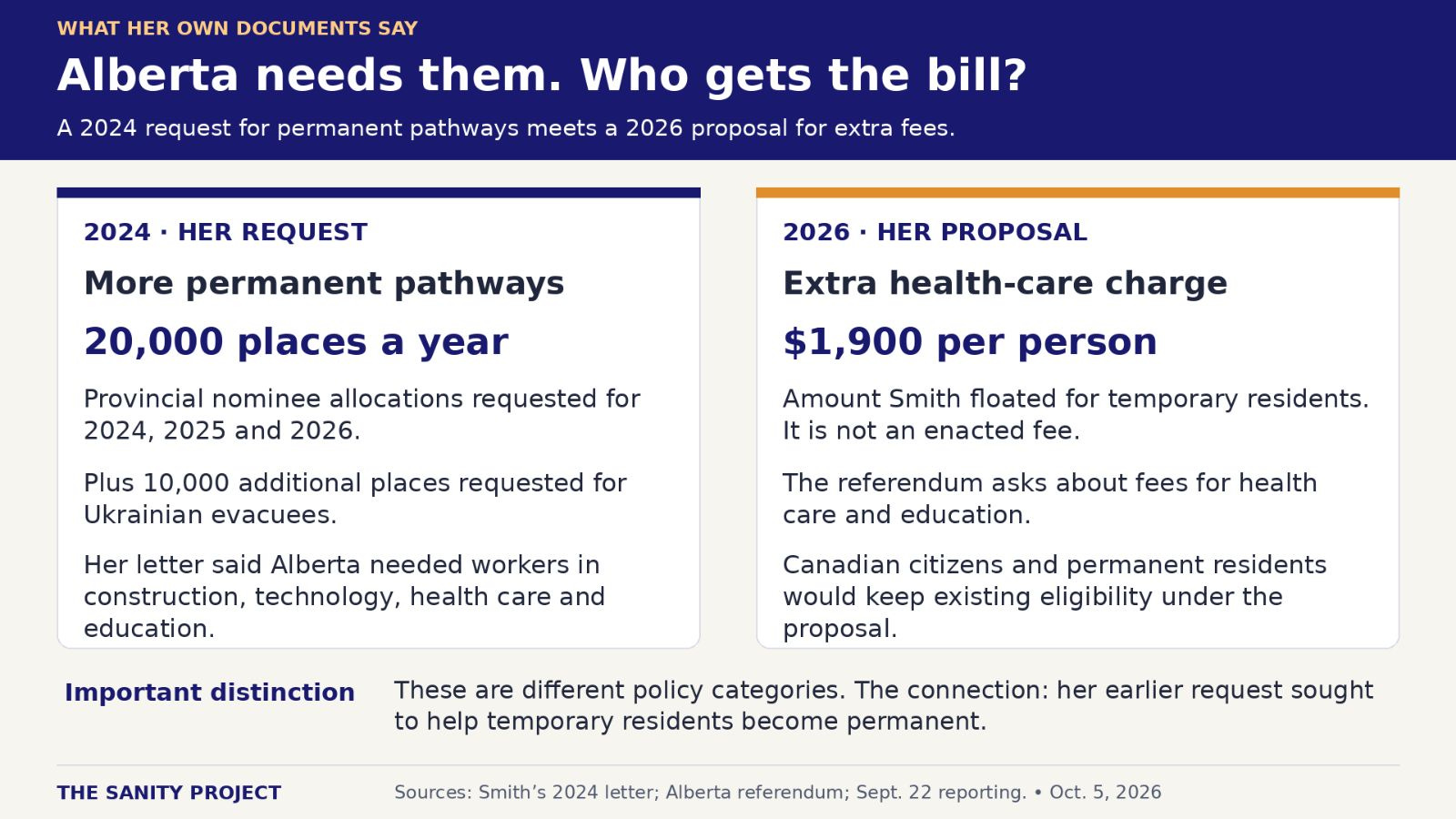
In a 2024 letter to Justin Trudeau, Alberta’s premier asked for 20,000 provincial nominee places annually for 2024, 2025 and 2026. She also sought another 10,000 places for Ukrainian evacuees.
Her reason was direct. Alberta needed workers in construction, technology, health care and education. She explained that its nomination program focused heavily on helping temporary residents become permanent residents. alberta.ca
Keep that letter in mind. It makes her latest sales pitch considerably harder to swallow.
Smith has floated a $1,900-per-person health-care fee for temporary residents. At a September 22 business event, she distinguished between permanent and temporary residents, saying the latter should pay their own way. hcamag.com
Apparently, the work becomes essential before the paperwork does. While the province waits for that documentation to be updated, Smith would like permission to send an additional bill.
Their Immigration Status Is Temporary. Their Contribution Isn’t Imaginary.
Let’s get the proposal straight before somebody turns it into a Facebook panic grenade.
Alberta’s October 19 referendum asks whether people with non-permanent immigration status should pay fees or premiums for their own and their families’ use of health care and education. It explicitly preserves existing eligibility for Canadian citizens and permanent residents. Immigration Questions
The $1,900 figure is a floated amount, not an enacted charge. Important details remain undecided, including whether people already living in Alberta would have to pay. www.hcamag.com
These are people living in Alberta, not simply tourists dropping by for a subsidised checkup. Under the province’s current rules, qualifying temporary workers must establish residency, intend to stay at least 12 months, and hold acceptable immigration documents. Not every permit qualifies. Alberta.ca

That distinction matters because “temporary” describes permission to remain in Canada. It doesn’t tell us whether somebody works hard, pays taxes, raises children, or hopes to build a permanent life here.
Smith’s own letter recognised that temporary residents can become the permanent residents Alberta needs. A person waiting for that transition doesn’t suddenly become less useful between shifts.
Nor does a work permit make employment income magically tax-free. Employers generally deduct federal and provincial income tax from taxable pay under the rules that apply to the worker’s circumstances. What someone ultimately owes depends on income, credits and other factors. Canada.ca
“Immigrant” and “taxpayer” can describe the same person. We shouldn’t need to explain this to a premier, but here we are.
A Scary Number Needs More Than a Confident Delivery
The government’s referendum website says temporary residents cost Alberta more than $1 billion annually in social services. That’s a government estimate, not a complete account of their economic contribution.
It also isn’t a billion-dollar health-care bill. The estimate covers health care, education and other services. Immigration Questions
The Tyee investigated Smith’s claim that every dollar of guest-worker taxes corresponds to $10 in services. It reported that her office did not provide sufficient information to independently verify the tax-revenue figure.
Its economist also noted that the previously stated figures of $1 billion in services and $150 million in taxes produce approximately $6.67, before the government’s additional capital-cost argument. That doesn’t establish the correct net cost. It shows the calculation needs much more daylight. The Tyee

Income matters, too. A low-paid Canadian worker can owe relatively little provincial income tax while using public services. Comparing the services people receive using a single narrow tax measure cannot, by itself, tell us whether immigration status explains the gap.
We deserve consistent definitions, matching time periods, and a fair comparison with people doing similar work. A frightening ratio without those things is excellent campaign material and a lousy basis for public policy.
Before We Approve the Bill, Let’s Read the Fine Print
The price tag is only the beginning. Below, we examine who could pay, the exception in Smith’s British comparison, and the questions Alberta should answer before asking voters for permission. Subscribe for free to continue.


IMHO, a TFW is earning income and therefore should be paying taxes and since all residents of the various provinces pay taxes at the same provincial rate, they should not have to pay extra to access common services.