


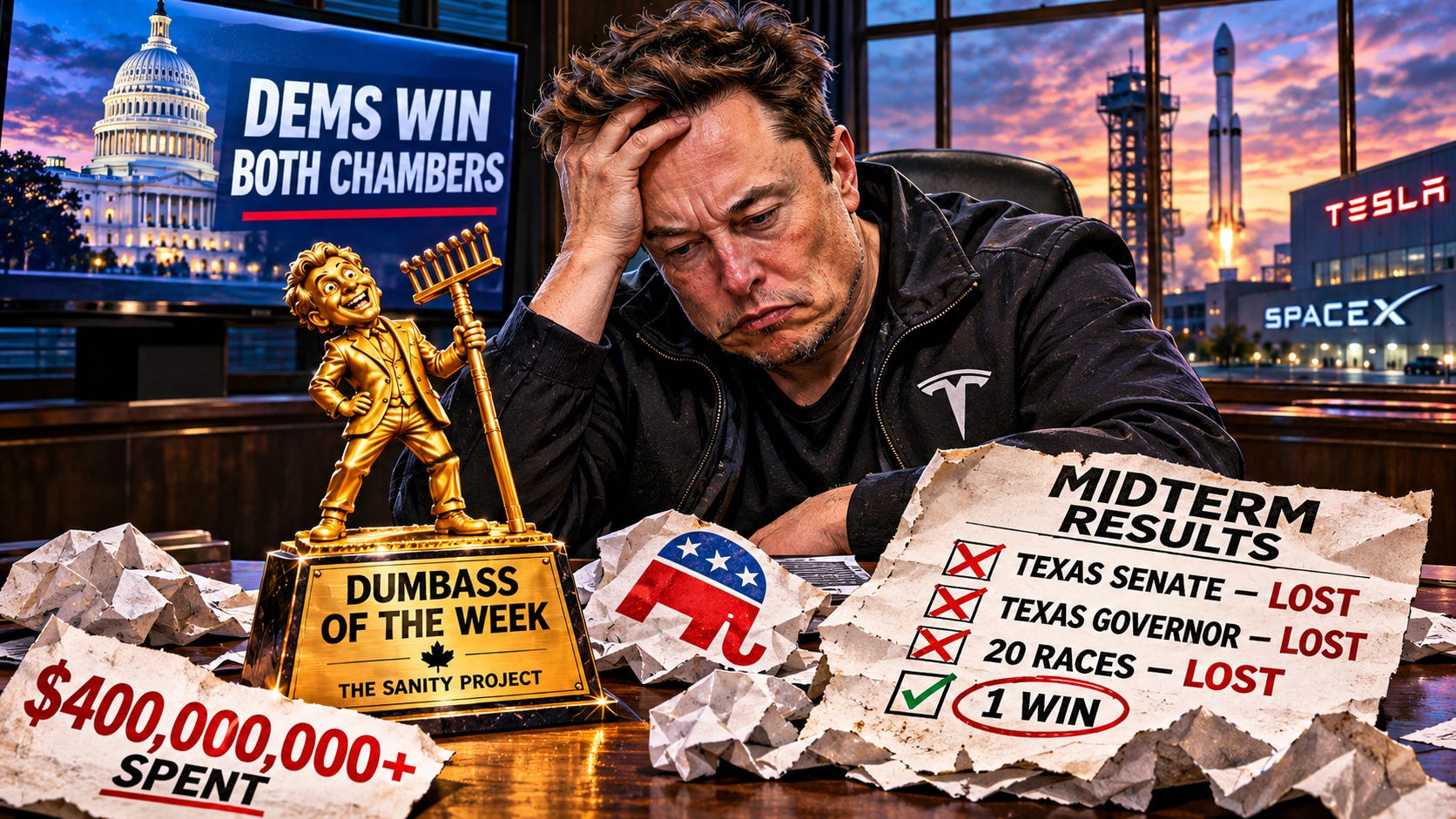
Elon Musk’s $400 Million Election-Night Reality Check
The world’s richest man spent a fortune trying to shape America’s midterms. Texas voters and many other Americans had different plans.
Elon Musk has built rockets that land themselves, electric cars that practically drive themselves, and an online platform where he can tell hundreds of millions of people exactly what he thinks.
In 2026, he tried another ambitious engineering project: using an enormous political fortune to help Republicans retain control of Congress.
The financial commitment was breathtaking. Musk poured more than US$400 million into Republican political efforts, according to post-election reporting. That’s more than the roughly $290 million he spent supporting Donald Trump and other Republicans in 2024.
On November 3, voters delivered a costly reminder that democracy does not come with a Buy Now button.
Texas: The Very Expensive Experiment
Texas was especially important to Musk. He lives there, Tesla and SpaceX have major operations there, and the state’s Republican leadership had provided a generally welcoming political environment.
Musk directed substantial financial support toward Republican Senate candidate Ken Paxton. His donations to the Senate Leadership Fund totalled $168 million, much of which was later transferred to a political committee supporting Paxton.
By election day, Musk-financed political operations had poured enormous resources into supporting Paxton and attacking Democrat James Talarico.
The result?
Talarico won.
And he didn’t squeak across the finish line, either. He won by roughly ten percentage points.
During the campaign, Musk attacked Talarico on X with increasingly dramatic warnings about immigration, democracy and transgender issues.
Talarico, meanwhile, made the billionaire’s financial involvement part of his own campaign message.
After winning, he told supporters that Texans had shown that even extraordinary wealth could not guarantee an election victory.
That is a striking outcome for a contest in which money was supposed to be one of the Republican candidate’s greatest advantages.
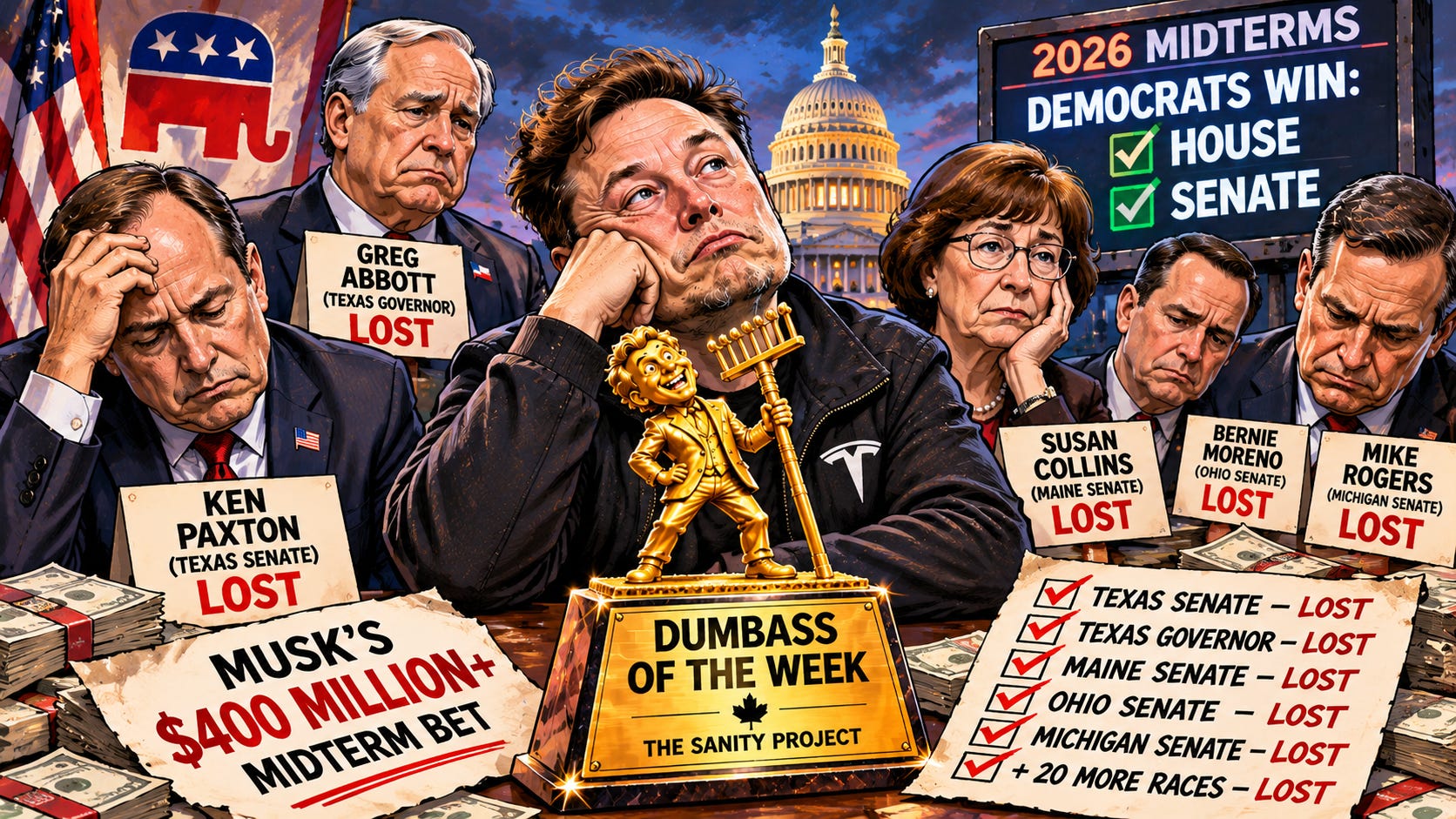
And Then There Was the Governor’s Race
The surprises in Texas didn’t stop with the Senate.
Republican Governor Greg Abbott lost to Democrat Gina Hinojosa, changing the political leadership of a state central to Musk’s business empire.
That doesn’t mean Musk personally financed Abbott’s entire campaign or that he paid for every dollar spent in Texas. Political donations, committee transfers and advertising expenditures must be counted carefully to avoid double-counting.
But the broader result is unmistakable: Texas voters rejected two prominent Republican candidates in races closely connected to Musk’s political and business interests.
The new administration could take a different approach to data-centre development, corporate tax incentives, and other policies affecting his companies.
The political outcome may therefore have implications well beyond election night.
The National Scoreboard
Texas wasn’t an isolated result.
According to WIRED’s analysis on November 4, candidates supported by Musk’s America PAC had lost 20 decided races and won just one, with another 21 contests still uncalled.
The PAC had advertised in seven Senate races. Of the six decided by Wednesday morning, all six had gone against its preferred candidates.
The results included Democratic victories in Ohio, Michigan, Iowa, and Maine.
WIRED calculated that more than 99 cents of every traceable dollar assigned to races already decided had gone toward unsuccessful efforts.
That statistic needs context. It does not mean Musk lost 99% of his personal wealth or that every dollar of his political spending was wasted. It measures spending in races that were decided, and the remaining results could change the final picture.
Still, it illustrates the striking mismatch between the scale of the spending and the electoral outcomes.
Meanwhile, Democrats won control of both the House and Senate.
Musk’s political spending was intended to help Republicans retain congressional power. The electorate produced the opposite result.
The Wisconsin Warning
An earlier sign suggested that huge spending could not guarantee victory.
In 2025, Musk’s America PAC spent heavily on Wisconsin’s Supreme Court election, a contest Musk publicly described in civilisation-defining terms.
The conservative candidate lost.
The PAC spent money on advertising and controversial voter-participation incentives. Prosecutors ultimately declined to pursue charges over the incentive program.
Wisconsin showed that large amounts of money could fail to produce the desired result.
The 2026 midterms spread that lesson across many states and congressional races.
Even the Space Lasers Failed
As election results came in, Musk posted two memorable observations on X.
First, he suggested that data centres in space were looking increasingly attractive.
Then he joked that his election-interfering space lasers had failed.
It was a rare moment of self-deprecating humour from a man who had spent months treating the election as an existential political struggle.
And perhaps the most revealing detail of the evening.
Musk had warned that Democratic victories could threaten American democracy. Yet the elections proceeded, voters made their choices, and several heavily financed Republican campaigns lost.
The machinery of democracy worked without regard to the size of any single donor’s bank account.
What the Money Could Not Buy
Musk’s spending was not insignificant simply because many candidates he supported lost. Political advertising, voter outreach and campaign organisations can influence elections without determining their outcomes.
This election also does not prove that billionaires have lost their political influence. Musk remains extraordinarily wealthy, commands a massive communications platform and has extensive business interests affected by government policy.
But the midterms provide a compelling example of the limits of financial power.
Hundreds of millions of dollars can purchase advertisements, consultants, field operations and an astonishing number of political messages.
They cannot guarantee that voters will agree.
For a businessman used to measuring success by scale, investment, and technological control, the election offered a different kind of result.
More than $400 million in political spending. A string of high-profile defeats. And a Congress controlled by the other party.
The rockets may still land on schedule.
The voters, however, apparently prefer to make their own travel arrangements.