


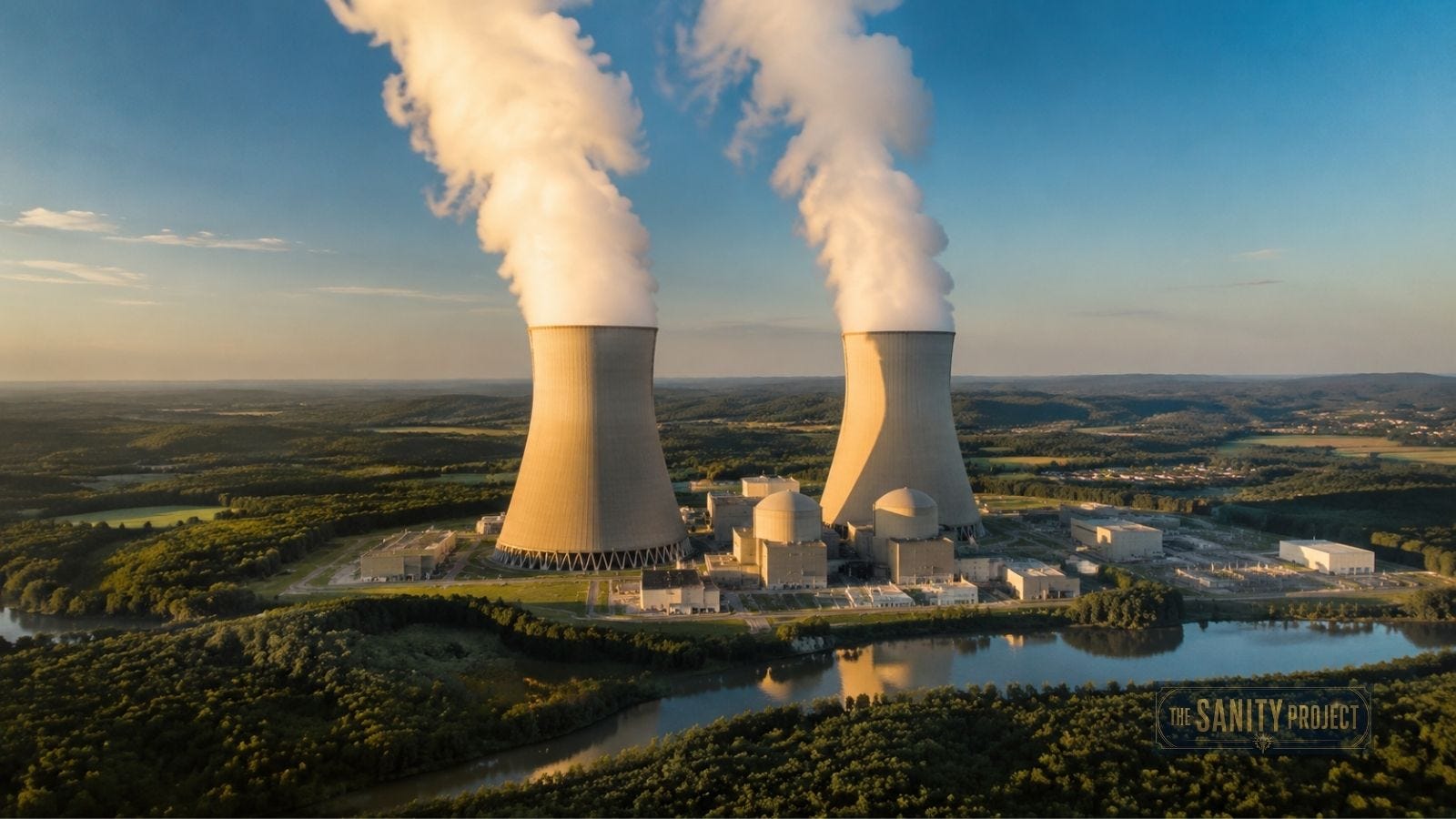
I’ll be honest with you. For most of my adult life, the word “Chernobyl” sat somewhere deep in my brain as a kind of shorthand for technological catastrophe. Nuclear power was dangerous. Everyone knew that. It was one of those things you simply absorbed from the culture without ever really examining, like knowing not to stand under a ladder.
Then I looked at the actual data.
Not the documentaries. Not the headlines. The mortality tables.
And what I found dismantled something I had held, unquestioned, for decades.
The Number Nobody Talks About
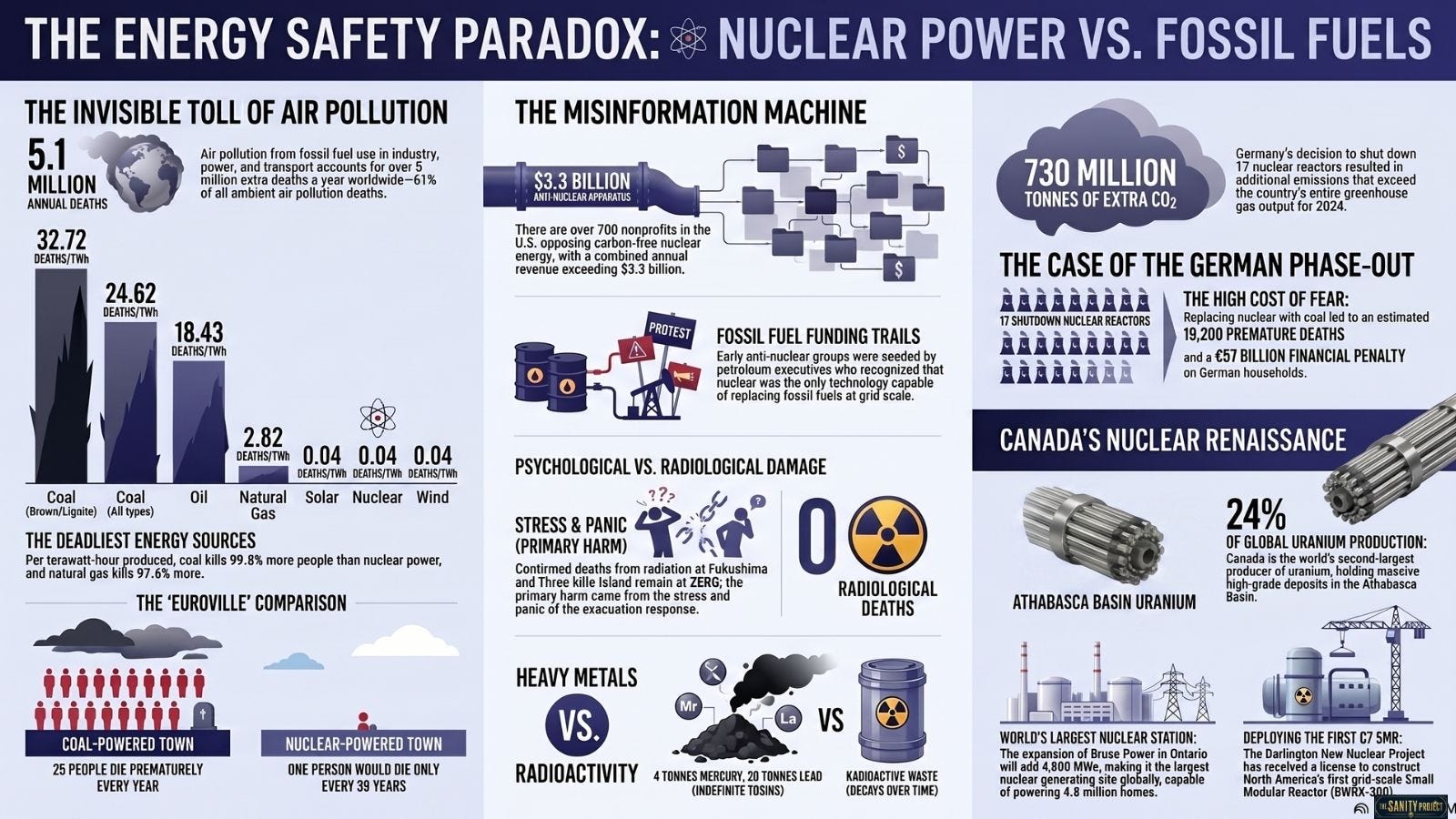
Nuclear energy results in 99.8% fewer deaths per unit of electricity than coal. Per terawatt-hour produced (roughly enough to power a mid-sized city for a year), coal causes approximately 25 deaths. Nuclear causes 0.04.
Sit with that for a second.
In November 2023, the British Medical Journal published a study estimating that ambient air pollution from fossil fuel combustion causes 5.13 million excess deaths globally every single year. That works out to roughly 14,000 people dying every day from the energy source we consider normal and unremarkable.
Meanwhile, the total confirmed death toll from radiation at Fukushima, to this day, is zero.
Not low. Zero.
More than 1,300 people died at Fukushima, but not from radiation. They died in the panicked evacuation that followed the accident, mostly elderly residents displaced from nursing homes, killed by the stress and chaos of relocation. The fear of radiation turned out to be more lethal than the radiation itself.
We have spent fifty years afraid of the wrong thing. The question worth asking is how that happened.
Follow the Money
The standard image of the anti-nuclear movement involves passionate grassroots activists: tie-dye, folk music, genuine moral alarm. That grassroots anxiety was real. People genuinely feared radiation. The concern wasn’t manufactured from thin air.
But the infrastructure that amplified and sustained that fear for half a century has a paper trail.
In 1969, Robert O. Anderson, the CEO of the Atlantic Richfield Company, a major petroleum corporation, contributed $80,000 to create a brand new environmental organization called Friends of the Earth. He followed it with another $200,000 the following year. Adjusted for inflation, that’s millions of dollars in seed funding for what became one of the world’s most aggressively anti-nuclear organizations.
The logic wasn’t complicated. The fossil fuel industry understood something early on that its critics largely missed: nuclear power was the only technology capable of replacing coal and oil at the grid scale, around the clock, without carbon emissions. If nuclear succeeded, fossil fuel assets would be worth dramatically less. A direct attack on nuclear would look like monopolists protecting their turf. Proxy environmental organizations could carry the message without the petroleum brand attached. Think of it as a tobacco company secretly funding a massive anti-vaping campaign.
The Capital Research Center’s 2025 analysis found more than 700 nonprofit and advocacy organizations in the United States that oppose nuclear energy. Their combined annual revenue exceeds $3.3 billion.
Here’s where it gets specific. The Sierra Club has taken $136 million from natural gas and renewable energy interests that stand to profit when nuclear plants close. The Natural Resources Defence Council holds at least $70 million invested in oil, gas, and renewables. The Environmental Defence Fund has received at least $60 million from investors who benefit directly from anti-nuclear outcomes. Greenpeace and Friends of the Earth both refuse to disclose their donors.
None of this means every person inside these organizations is acting in bad faith. Many are sincere. But sincerity and funding are two different things. The organic anxiety was real. The machine built around it was not.
Starting an online business?
Canadian businesses deserve Canadian hosting. If you’re building a website or blog, this is where I’d start: Web Hosting Canada

The Three Accidents, Honestly
You know the names. Chernobyl. Three Mile Island. Fukushima. They’ve lived in cultural memory for decades as proof that nuclear power is uniquely and irreducibly dangerous. Looking at what actually happened at each site is more instructive than the cultural shorthand suggests.
Chernobyl (1986) was not a failure of nuclear physics. It was a failure of a specific Soviet reactor design, the RBMK-1000, which had a known engineering flaw: under certain conditions, as the water coolant boiled into steam, the nuclear reaction sped up rather than slowed down. Western regulators would never have licensed this design. The plant had no containment building. It was operated by a political system that routinely suppressed safety information. When operators pushed it into a condition its design couldn’t handle, the results were catastrophic. The confirmed death toll is approximately 30 direct deaths and an estimated 160 thyroid cancer fatalities among those exposed as children. A genuine tragedy, and an indictment of Soviet industrial culture rather than of nuclear power itself.
Three Mile Island (1979) came down to a stuck valve and ambiguous instrumentation. Operators misread the signals, made wrong decisions, and the reactor core partially melted. The part that rarely gets told: the containment building, a massive steel-reinforced concrete dome built specifically to trap radiation if the reactor vessel ever breaches, did exactly what it was designed to do. It held. Minimal radiation was released. Zero people died. Multiple peer-reviewed studies over the following decades found no measurable increase in cancer in the surrounding population. The containment worked. The accident actually proved that the safety systems functioned even when the operators failed.
Fukushima (2011) absorbed a magnitude 9.0 earthquake, one of the strongest ever recorded in human history, and the reactors initially survived it. The meltdowns came when a tsunami overwhelmed the seawalls and drowned the backup diesel generators. Without power, the pumps circulating coolant failed, and three reactors melted down. Radiation was released. The confirmed radiation death toll remains zero. What killed people was the evacuation itself. The World Health Organization, the UN Scientific Committee on the Effects of Atomic Radiation, and the Fukushima Prefecture health survey all reached the same conclusion: the response to the fear of radiation caused more death than the radiation itself.
Germany’s Billion-Dollar Lesson
If you want to see what nuclear fear costs in concrete, measurable terms, look at Germany.
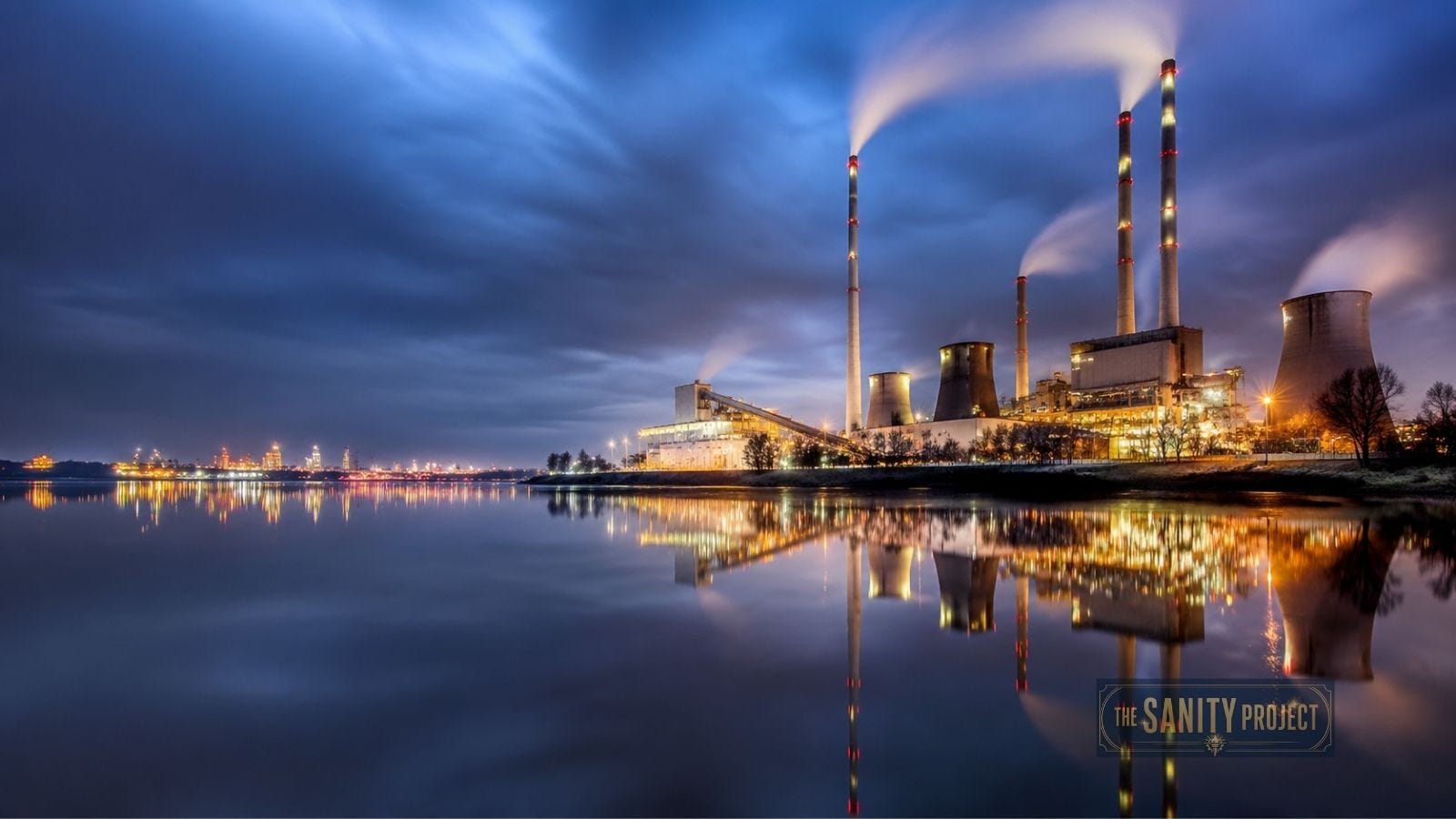
Following Fukushima, an earthquake and tsunami event in a country with neither significant earthquake nor tsunami risk, Chancellor Angela Merkel accelerated the shutdown of Germany’s entire nuclear fleet. The last reactor closed in April 2023. Seventeen reactors that had been generating over a third of the country’s electricity were gone.
The Anthropocene Institute’s 2025 report quantified what came next. Germany replaced 98% of its lost nuclear generation with coal and natural gas. That substitution added 730 million tonnes of CO₂ to the atmosphere. More than Germany’s entire annual greenhouse gas output was erased in a single policy decision. The estimated human cost of that extra coal burning: 19,200 premature deaths.
PricewaterhouseCoopers modelled the counterfactual. If Germany had kept its nuclear fleet running, 94% of its electricity in 2024 could have been emission-free. The actual figure was 61%. Average electricity prices would have been roughly 23% lower. Instead, Germany now operates 28,000 megawatts of coal capacity, imports nuclear-generated power from France, and pays some of the highest electricity bills in Europe.
The German Green Party built its founding political identity on opposing nuclear power in the 1970s. History will record that in their effort to protect the environment, they chose coal.
Looking to grow your YouTube channel?
One of my favourite tools is vidIQ. It helps take the mystery out of YouTube growth by providing keyword research, channel audits, AI-powered content ideas, and competitor insights.

Canada’s Moment
While Germany was dismantling its clean energy infrastructure, Canada was quietly positioning itself at the center of the global nuclear revival, and most Canadians haven’t noticed.
Start with what’s in the ground. Canada is the world’s second-largest producer and exporter of uranium, with operations in northern Saskatchewan supplying roughly 20% of global demand. In a world pivoting hard toward nuclear energy, Canada holds the raw material.
In April 2025, the Canadian Nuclear Safety Commission issued Ontario Power Generation a Licence to Construct a BWRX-300 small modular reactor at the Darlington site, the first grid-scale SMR construction licence issued in any G7 country. The Canada Infrastructure Bank committed $970 million in financing. Three additional units are planned for the same site. The federal government has included nuclear in its green bond framework.
Then in May 2026, Bruce Power and the Government of Ontario signed a $300 million predevelopment agreement to add up to 4,800 megawatts of new nuclear capacity at the Bruce Power site. If completed, Bruce Power would become the largest nuclear generating station on Earth, producing enough power for 4.8 million homes and injecting an estimated $238 billion into the economy over its operational life.
This is not observation from the sidelines. Canada is building the architecture of what comes next.
The Renaissance Nobody Expected
What finally cracked the decades-long stalemate wasn’t a policy breakthrough or a government mandate. It was artificial intelligence.
AI data centers require massive, uninterrupted electricity around the clock, regardless of whether the sun is shining or the wind is blowing. Solar and wind, whatever their merits, cannot promise that. In September 2024, Microsoft signed a 20-year power purchase agreement with Constellation Energy to restart Unit 1 at Three Mile Island, the same plant that became the symbol of American nuclear failure, to power its data centers. The reactor is expected back online in 2028, ahead of schedule.
The irony is almost too much. The plant the fear industry used as its most powerful cautionary tale is being resurrected to power the technology defining this century.
Amazon, Google, and Meta are all pursuing nuclear agreements. The International Energy Agency projects $900 billion in global SMR investment by 2050. The industry spent forty years defending itself against a well-funded campaign. Now the world's biggest companies are knocking on its door.
What the Data Actually Says
Nuclear power is the safest and most reliable form of energy ever deployed by human civilization. Safer, by orders of magnitude, than the fossil fuels that still dominate global electricity production.
The fear of nuclear is not rooted in evidence. It grew from a half-century campaign seeded by fossil fuel interests, sustained by organizations whose funders had every financial reason to keep nuclear sidelined, and kept alive by the emotional power of three accidents that together, over fifty years, killed fewer people than coal kills in a typical 48-hour period.
Germany’s phase-out alone added 730 million tonnes of CO₂ and an estimated 19,000 deaths to the ledger. Globally, the suppression of nuclear has prolonged fossil fuel dependence and extended the invisible daily toll of air pollution deaths that no documentary has ever dramatized, because they don’t happen in a single televised moment. They happen quietly, in respiratory wards and hospitals, one at a time.
I was wrong about nuclear power. And when I traced back why I believed what I believed, the thread didn’t lead to data. It led to money.
That’s worth carrying with you the next time you find yourself certain of something you never actually investigated.
The Sanity Project Research Desk white paper on nuclear energy, including full source documentation, mortality tables, and policy reports, is available at blog.thesanity.org.
Listen to the Sanity Project Podcast

Had no idea. Now I do.
I cannot find the white paper. Where is it? Otherwise it is still just random numbers. I am really curious because I’m looking for more deep dives like this.