


Is RONA Canadian-owned? Not Anymore, and Almost Nobody Noticed
We checked who owns Canada’s national hardware chains, and the answer key isn’t what most shoppers assume.
There’s a particular kind of confidence that comes from buying lumber and light bulbs at the same hardware store for decades. You know the layout. You know which associate knows exactly where the 3/8-inch bolts are. And you assume, without ever checking, that you know whose pocket your money lands in.
Is RONA Canadian-owned? Ask most people in this country, and you’ll get an instant, confident yes. Quebec roots, French name, decades of loyalty. It’s the kind of assumption nobody bothers to verify, because why would you?
Here’s the problem. That assumption has been wrong since February 2023, and the correction arrived without the fanfare that would have made it stick in public memory.
This piece does what nobody selling you a hammer particularly wants: it traces the actual ownership chain behind every hardware retailer with real national reach in Canada, meaning operations in at least five or six provinces, and ranks them by who’s genuinely still Canadian once you follow the money to the end.
Verification like this takes hours, and nobody pays for it. The Sanity Project runs on subscribers who’d rather know than assume.
Is RONA Canadian-owned? Here’s What Happened in 2023
No. RONA has been owned by Sycamore Partners, a New York private equity firm, since February 2023. The RONA name and the Boucherville head office stayed. The ownership didn’t.
In November 2022, Lowe’s Companies announced it was selling its entire Canadian retail business, RONA, Réno-Dépôt, Dick’s Lumber, and every Lowe’s-branded store in the country, to Sycamore Partners for $400 million US. The deal closed on February 3, 2023.
Sycamore kept RONA’s headquarters in Boucherville, Quebec. It kept the RONA name, which carries more than eight decades of brand equity that most private equity firms would happily pay extra for. What didn’t keep it Canadian was the ownership itself. Sycamore Partners is based in New York and specialises in buying retail companies, tightening operations, and eventually selling them again.
Since the acquisition, RONA under Sycamore has continued to move. Réno-Dépôt was folded into a new RONA+ banner in October 2024. In 2025, RONA picked up All-Fab Group, a Winnipeg-based building components manufacturer, from the Regina firm that had owned it since 2018. A Manitoba manufacturer was bought by an American-owned Quebec retailer. Not a criticism of the deal itself, just a useful reminder of how far an ownership chain can wander from the store you walked into.
Ask most people if RONA is Canadian-owned and you’ll get a confident yes, mostly because a Quebec head office and a French name read as more Canadian than an Atlanta head office ever could. That instinct isn’t foolish. It’s just about three years out of date.
“That instinct isn’t foolish. It’s just outdated by about three years.”
The One Everyone Already Gets Right: Home Depot
Compare that to Home Depot, which nobody has to ask about twice. Home Depot Canada is, and always has been, a wholly owned subsidiary of The Home Depot Inc., headquartered outside Atlanta, Georgia. It operates 182 stores across all ten provinces and employs more than 30,000 people here, and there is no confusion about who owns it.
There’s something almost refreshing about a company that’s honestly foreign. Home Depot expanded into Canada in 1994 as an American chain doing American-chain things well, and nobody’s Well Made Here campaign ever tried to claim it. The confusion, when it shows up, tends to happen with the stores that used to be Canadian or that still sound like they are.

The Genuinely Canadian Tier: Home Hardware and TIMBER MART
Home Hardware and TIMBER MART are the two national hardware retailers in Canada that are genuinely, currently, dealer-owned by the people running the stores, with no head office in another country to answer to.
If you want a hardware retailer that’s Canadian-owned in the fullest sense, meaning owned by the people actually running the stores, there are exactly two candidates with true national reach.
Home Hardware was born in 1964, when 122 independent Ontario retailers pooled their money to buy Hollinger Hardware Limited in St. Jacobs. That co-op structure never changed. Today it’s owned by roughly 1,100 independent dealers across every province and territory, and it remains one of the last chains that can call itself Canadian without an asterisk.
TIMBER MART tells a similar story with a fraction of the brand recognition. Founded in 1967, it’s the largest national member-owned buying group in the country. Dealer members in every province operate under the TIMBER MART banner or, just as often, under local names most Canadians wouldn’t connect to the group at all. Less flash than Home Hardware’s red-jacket television commercials, same ownership logic underneath.
Both models share a quiet advantage that public companies and private equity portfolios don’t have. Nobody can sell Home Hardware or TIMBER MART out from under the dealers, because the dealers are the owners. There’s no head office in another country weighing whether the Manitoba locations are still worth keeping open this quarter.
“Nobody can sell Home Hardware or TIMBER MART out from under the dealers, because the dealers are the owners.”

Who Owns Canadian Tire? Widening the Aisle
Canadian Tire is Canadian-owned in the way that matters most, control, through the Billes family’s roughly 60 percent grip on voting shares, even though it’s technically a general merchandiser rather than a pure hardware chain.
Every time this topic comes up, somebody asks about Canadian Tire, and it’s a fair question. It’s Canadian, it’s everywhere, and everybody has a Canadian Tire money story.
The honest answer needs one small technical detour. Canadian Tire isn’t classified as a hardware retailer; it’s ga eneral merchandise store, like a department store, because of the sporting goods, the automotive bays, and the Mark’s clothing racks stapled onto the hardware department. Whether that disqualifies it from a pure hardware ranking is a fair argument to have in the comments.
Ownership-wise, though, Canadian Tire earns its Canadian label harder than most. It’s publicly traded on the TSX under two share classes, the widely held Class A non-voting shares and the far scarcer Common voting shares. The Billes family, descendants of founders J.W. and A.J. Billes, controls roughly 60 percent of those voting shares through holding entities. Institutions own most of the economic value sitting in the non-voting stock. The family keeps the steering wheel.
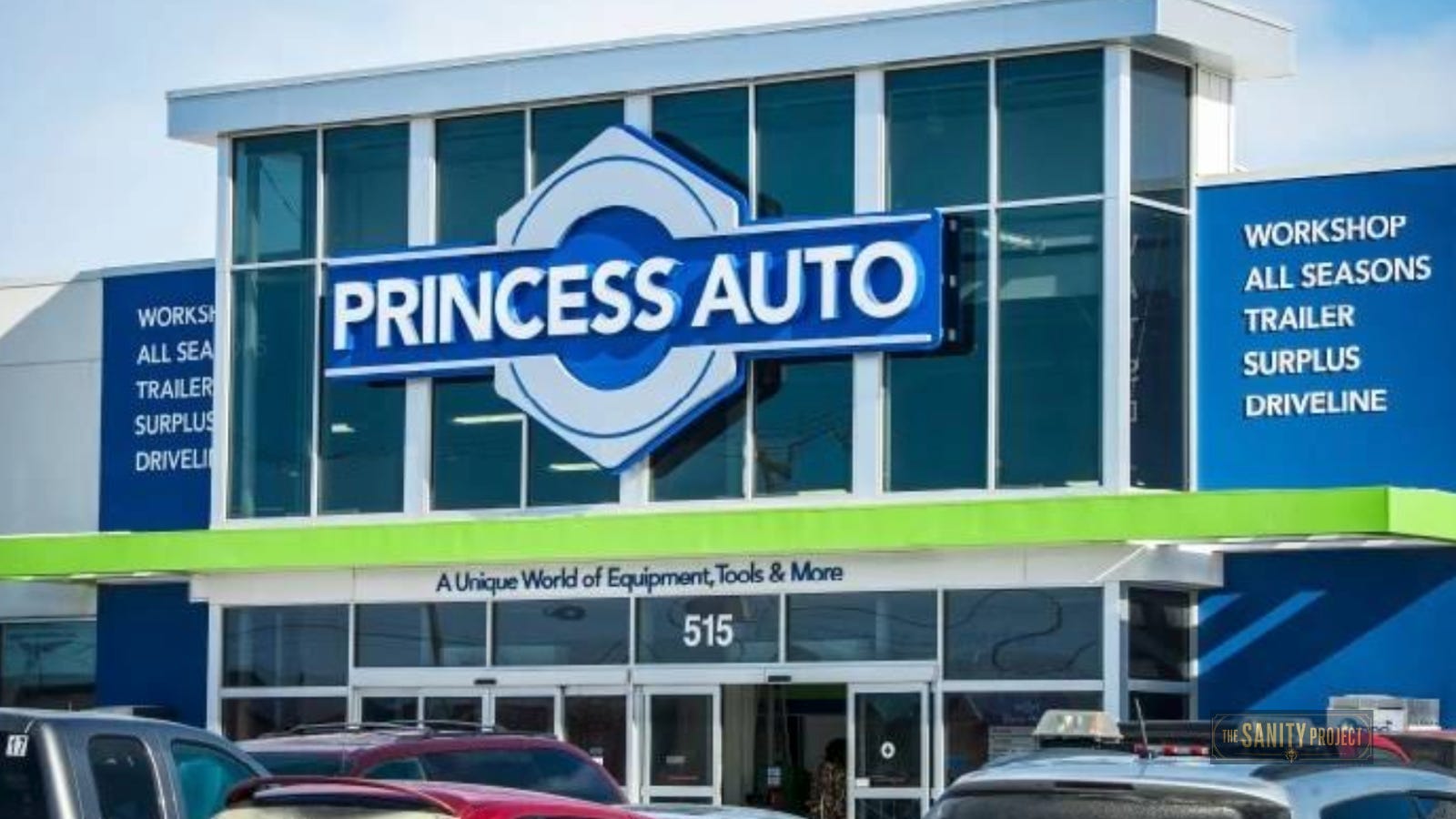
If you’re willing to widen the aisle to general merchandise, there’s exactly one other genuinely Canadian name that belongs beside it. Princess Auto, based in Winnipeg since 1933, is privately owned by Matthew and Marc Tallman, the third generation of the family that bought the business from a struggling war surplus dealer for the price of a truck. They opened a new flagship store on Panet Road here in Winnipeg this summer, their 59th location and a pretty direct rebuttal to anyone who thinks family-owned can’t also mean growing.
Plus, Princess Auto bought the naming rights to the Winnipeg Football Stadium, where our Winnipeg Blue Bombers play. They committed for 10 years!
The Near Misses and the Honest Foils
A few more names deserve a mention before the ranking settles.
BMR, strong in Quebec and stretching into four Atlantic and Ontario markets, is owned by Sollio Cooperative Group, a Canadian agricultural cooperative. Genuinely Canadian, genuinely a hardware retailer, just short of the five-or six-province bar this piece set at the start.
Castle Building Centers is the oldest cooperatively owned buying group in the country, dating to 1963, but its members mostly trade under local names, so almost nobody recognizes the Castle banner itself.
Giant Tiger is a Canadian-owned, private company based in Ottawa and operating in eight provinces. It’s also mostly apparel and groceries with barely a hardware aisle to speak of, so it doesn’t really belong in this conversation no matter how Canadian its ownership is.
“Sometimes the obvious answer is just correct.”
Editor’s View
Twenty-four years in law enforcement teaches you one blunt lesson: people believe what’s convenient, and they rarely check. Twenty years of selling real estate in Winnipeg taught me the same lesson with better manners.
Buyers assumed things about a house based on how the listing photo looked, not because anyone verified the roof.
I don’t think most people buying lumber at RONA are doing anything wrong by assuming it’s still Canadian. The assumption used to be true, and companies are slow to update in the public’s head even after the paperwork changes. What gets me is how little effort the correction takes. One search. Thirty seconds.
My honest prediction is that most readers will finish this piece, feel a small jolt about RONA, and keep shopping there anyway because the store is close and the staff is good. That’s fine. Just do it with your eyes open.
Bo
If this kind of verification is useful to you, subscribing keeps it coming.
The Answer, Once You Follow The Money
So, is RONA Canadian-owned? No. It hasn’t been since a Tuesday in February 2023, and the correction arrived quietly enough that most shoppers never got the memo. Meanwhile, the actual answer key, Home Hardware, TIMBER MART, Canadian Tire if you’re generous about the aisle, and Princess Auto if you’re generous twice, sat there the whole time, unglamorous and mostly uncelebrated.
Buying local doesn’t require boycotting anyone. It just requires knowing who you’re actually supporting when you swipe your card, and being at peace, or not, with the honest answer either way.
Which one surprised you more, RONA’s ownership or Canadian Tire’s? Tell me in the comments, I read every one.
Publications Consulted: Lowe’s Companies Inc., Sycamore Partners, PR Newswire, HBS Dealer, Hardlines, RONA Inc., Home Depot Canada, Home Hardware Stores Limited, TIMBER MART, Canadian Tire Corporation Limited, Princess Auto Ltd., Wikipedia, Retail Insider, Farms.com, CTV News.
Corrections policy: if any fact in this piece is later found to be inaccurate, a dated correction will be appended below this line.
Update: A Reader Adds BMR to the List
A reader flagged an omission worth fixing. BMR, a hardware and renovation chain with more than 275 stores across Quebec, Ontario, and the Maritimes, belongs in this conversation.
BMR is a subsidiary of Sollio Cooperative Group, Canada’s largest agricultural cooperative, rooted in Quebec since the 1920s. Individual BMR locations are themselves dealer-owned cooperatives or independent operators, a structure close to Home Hardware’s, nested inside a farmer-owned co-op.
The network employs roughly 8,000 people and generates an estimated $1.5 to $2 billion in annual retail sales. It doesn’t reach the West Coast, so it sits alongside McMunn & Yates as another example of deep, genuine Canadian ownership that stayed regional rather than national.
Thanks so much for doing all that investigating!
I remember Rona being acquired by the USA, knew Home Hardware was individual owners, assumed Castle, Timber Mart.
Canadian Tire, yes, you missed Coop Building centres here in the West where communities when communities own them. Not every community but frequent.
Being from Winnipeg i knew Princess Auto was Canadian.
At age 80 no longer have much interest or need for Hardware but lucky enough here in Cold Lake AB to have HH, Rona, and Canadian Tire. Home Hardware my choice for the odd item, Canadian Tire closer.
When I retired in 2007/8 in Winnipeg I worked at Home Depot in my old neighborhood and enjoyed it. 2008 thru 2013
Knew it was American but I had fun. They gave me a significant raise as they noticed how well I worked and trained the younger workers. Learned to operate all the machines and didn't put on my application that I could work any department from Seasonal, Electric, plumbing, lumber, tools, hardware. Never worked appliance or toilets. Retired building & plumbing inspector, built 3 homes for my family, father electrician.
Good management. But lots of bureaucracy.
I see Windsor Plywood occasionally.
David Clements Cold Lake Alberta T9M 1C3