


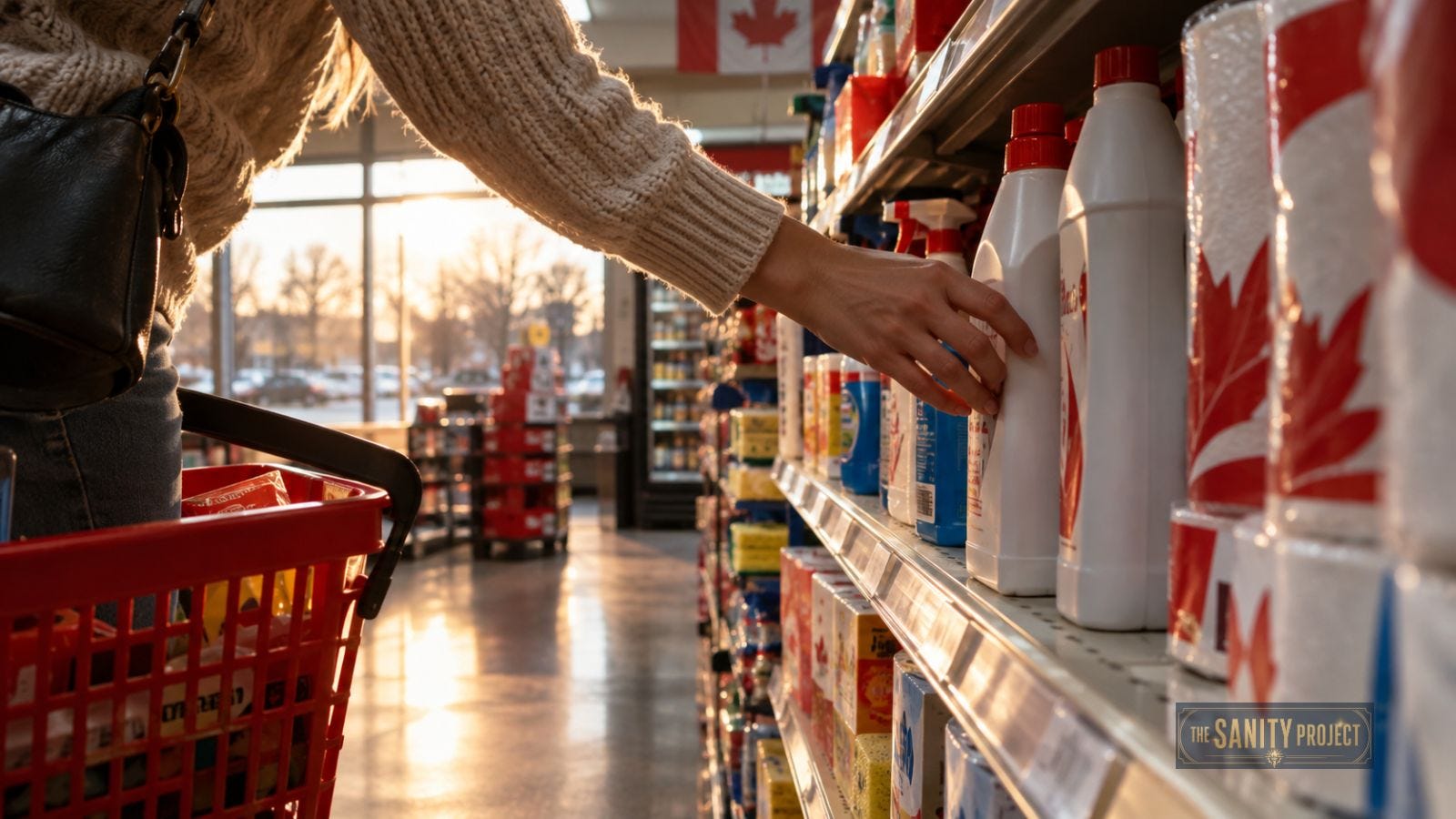
“Made in Canada” Products You Didn’t Know Were Canadian
We went looking for the companies hiding behind familiar logos. What we found included an inconvenient lesson about who actually owns what.
Key Takeaways
Owning a company and manufacturing in Canada are two separate facts, and a Canadian brand list that checks only one is only half honest.
Giant water heaters are still built in Montreal, but the company has been owned by the American firm A. O. Smith since 2021.
Napoleon, Chapman’s, Bee Maid and Stanfield’s remain privately held by Canadian families or Canadian producer cooperatives, some for over a century.
Buying Canadian doesn’t require an all-or-nothing pledge. Shifting even one purchase in ten toward a verified Canadian company adds up nationally.
A free guide to 40 verified Canadian brands, sorted by category, is linked at the end of this piece.
Try this. Walk through your house right now and name ten Canadian companies whose products you own. Not ten companies that merely sell things in Canada, not ten brands with a maple leaf slapped on the package after the fact. Ten companies that are genuinely Canadian, owned here, built here, or both.
Go ahead. I’ll wait. If you made it past six without stalling out, you did better than I did, and I write about this stuff for a living.
That’s the real problem sitting underneath every “buy Canadian” conversation happening across the country right now. Almost everyone agrees it’s a good idea in principle. Almost nobody can name which products made in Canada actually qualify once you look past the packaging. So over the past few weeks, we checked, company by company, and what turned up is less a shopping list than a lesson in how slippery the word “Canadian” gets once you start checking the paperwork.
“Owned in Canada” and “Made in Canada” Are Two Different Promises
A company can be fully Canadian owned and still manufacture overseas. It can also be foreign owned and still run a Canadian factory. A real buy Canadian list checks both questions, not just one.
This trips up almost every “buy Canadian” list, including, if we’re honest, early drafts of this one. For example, Giant, the water heater company from Montreal. For decades, it was the textbook Canadian success story: a family business founded in 1945 by brothers Lucien and Jean Lesage, two factories, more than 300 employees, and tanks in basements across the country.
Then, in October 2021, Giant was sold to A. O. Smith, an American water heater giant listed on the New York Stock Exchange, for roughly 192 million U.S. dollars.

Here’s the part that matters for a Canadian shopping list. Giant still manufactures every one of those tanks in Montreal, at the same two facilities, with the same workforce. What changed in 2021 wasn’t the factory floor. It was who collected the profits at the end of the quarter.
If your definition of Canadian is built here, Giant still qualifies. If your definition is owned here, it doesn’t anymore. Neither answer is wrong; they’re simply different questions, and a lot of buy-Canadian enthusiasm assumes they’re the same question.
“Neither answer is wrong. They’re just different questions, and buying Canadian enthusiasm usually assumes they’re the same one.”
If this kind of “check the paperwork” reporting is useful to you, it’s free to keep getting it.
Six Canadian-Owned Companies Hiding in Plain Sight
Some of the most familiar names on Canadian shelves, and in Canadian driveways, are still privately held by the families or cooperatives that built them, in a few cases for well over a century.
Napoleon. The grill in the hardware store barbecue aisle is from Wolf Steel Ltd., a family business that the Schroeter family has run in Barrie, Ontario, since 1976. Still privately held, still manufacturing domestically, and by most counts North America’s largest privately owned maker of grills and fireplaces. Fifty years, one family, one Ontario postal code.
Chapman’s. The tub of ice cream in your freezer likely comes from a creamery David and Penny Chapman bought in Markdale, Ontario in 1973, with four employees and two trucks. Their son Ashley now runs it. Chapman’s just broke ground on a $200 million Markdale expansion, backed partly by Invest Ontario, and it sources its milk exclusively from Canadian dairy farmers.
Bee Maid. A close-to-home one for Manitobans. Bee Maid isn’t a corporation with shareholders; it’s a cooperative owned jointly by roughly 300 Western Canadian beekeepers. It is processed and bottled at plants in Winnipeg and Spruce Grove. Buy the bear-shaped bottle, and the profit goes back to the beekeepers who filled it.
Cheekbone Beauty. Jenn Harper founded Cheekbone Beauty in St. Catharines, Ontario, in 2016, one of the first Indigenous-owned cosmetics companies in the country. She turned down an investment offer on Dragons’ Den to keep it on her own terms. Since then, it has landed shelf space at Sephora Canada and JCPenney in the U.S., and it is still privately held.
Stanfield’s. The underwear company that outfitted Klondike Gold Rush prospectors in 1897 is now run by the fifth generation of the Stanfield family in Truro, Nova Scotia. Most of what carries the label is still knit, cut and sewn there, though the company is upfront that some stock for U.S. retailers gets imported. Ownership versus manufacturing again, stated plainly rather than buried in fine print.
Buy Canadian Doesn’t Require an All-or-Nothing Pledge
Shifting even a small share of routine purchases toward verified Canadian companies compounds across millions of households without requiring anyone to boycott anything.
None of this is an argument for throwing every American product in your house into a dumpster. American companies make plenty of things well—sometimes better and cheaper—and there often isn’t a reasonable domestic option anyway. Buy it.
It argues for checking before you assume. If two comparable products sit on the same shelf and one is actually Canadian-owned or Canadian-made, and the price and quality hold up, give it the first look. Maybe it starts with the honey, or the next tub of ice cream, or the next box of underwear. Shift one purchase in ten over the next month. It won’t transform the economy on its own, but multiplied across a few million households, it adds up to real money staying home.
More of this, twice a week, straight to your inbox.
“Buying Canadian was never supposed to be a purity test.
It’s supposed to be a habit.”
So, Back to the Challenge
Name ten Canadian companies whose products you own. It’s a harder question than it should be, and that’s not really your fault. Ownership structures don’t come printed on packaging. Now you have six more names than you started with, and one footnote about a company that now looks Canadian.
We put together the rest: forty companies across food, household products, home goods and clothing, in a free guide you can save to your phone. The alternative to buying foreign by default was there all along. Most of us just weren’t looking for it.
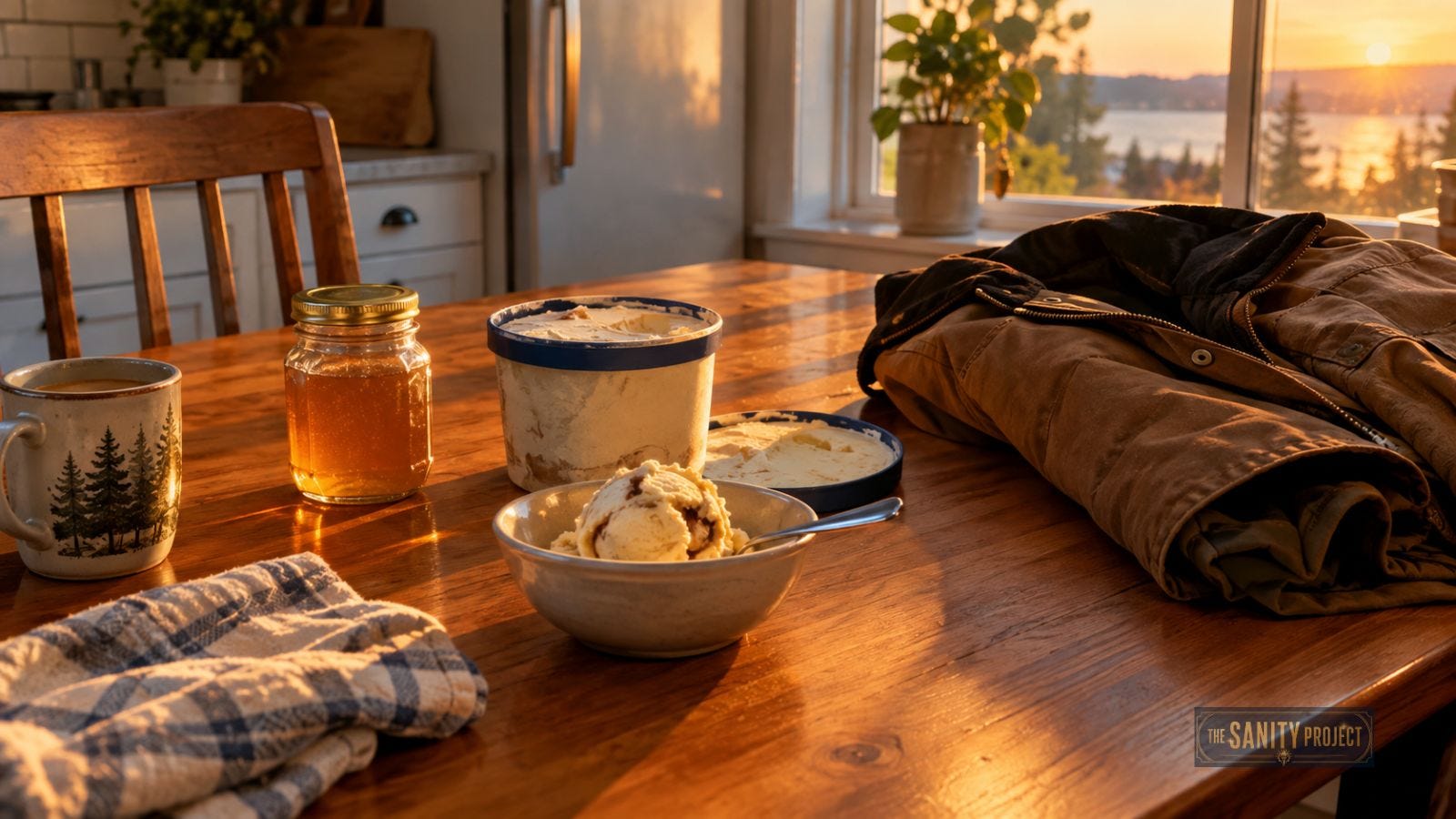
The Full Made in Canada Products List Lives in One Free Guide
Six companies fit comfortably in an article. Forty fit better in something you can save.
Six names make for a decent read. They don’t make for something you can pull up on your phone in the cereal aisle six weeks from now, once this piece has scrolled off your feed.
So we ran the same two questions, who owns it and where it is really made, against the other thirty-four, and put all forty into one free guide sorted into four categories: food and grocery, household and cleaning, home and living, and clothing and personal care. No corporate report, no fifty-page PDF nobody opens twice.
Save it to your phone. Keep it in the car. Hand it to the relative who keeps asking where to even start.
Get the free guide by becoming a subscriber to The Sanity Project (also free).
Editor’s View
The Giant discovery bugged me more than I expected. I’d walked past that brand in hardware stores for years, assuming “Canadian company” from the name and the tanks stamped “Made in Montreal.” Finding the A. O. Smith paperwork didn’t make Giant a bad choice exactly; the jobs are still here, but it reminded me why “check the paperwork” isn’t just a line I use for effect.
Twenty-four years doing exactly that for a living taught me that the interesting facts are rarely the ones printed on the label. I don’t think this changes what belongs on a buy Canadian list. I think it changes what you’re allowed to assume before you check.
Corrections and Updates Protocol
The Sanity Project corrects errors transparently rather than editing quietly. If any fact in this piece needs updating, it will be added here as “Update (Month Year):” rather than rewritten into the original text.
Publications Consulted
Wikipedia; A. O. Smith Corporation investor relations; Chapman’s Ice Cream corporate site; Expansion Solutions Magazine; ATB Financial; Made in CA; Alberta Agriculture and Irrigation export catalogue; Economic Development Winnipeg; Stanfield’s Ltd.; Dictionary of Canadian Biography; Napoleon / Wolf Steel Ltd. corporate materials.
Uncle Bob's Popcorn🍿: non-GMO kernels, naturally colored popping corn (like blue and red varieties), microwave popcorn, and seasonings. Available in some grocery stores and online.
Family owned from Walsingham, Ontario.
100% Canadian Grown. https://share.google/GLH4Tnvhw7TfwCOXn
Toilet paper. Royale buy Canadian. Swan.