
No Prime Minister Visited Kuujjuaq In Nearly Twenty Years, Until Carney Finally Did
Six ministers showed up to hear it directly.
No Prime Minister Visited Kuujjuaq In Nearly Twenty Years, Until Carney Finally Did
Mark Carney landed in Kuujjuaq on Tuesday and became the first sitting prime minister to set foot in Nunavik’s largest community since Stephen Harper made the trip in 2008. He didn’t come alone. Six cabinet ministers came with him, including the ones who control defence, energy and public safety spending. That’s the story underneath the story.
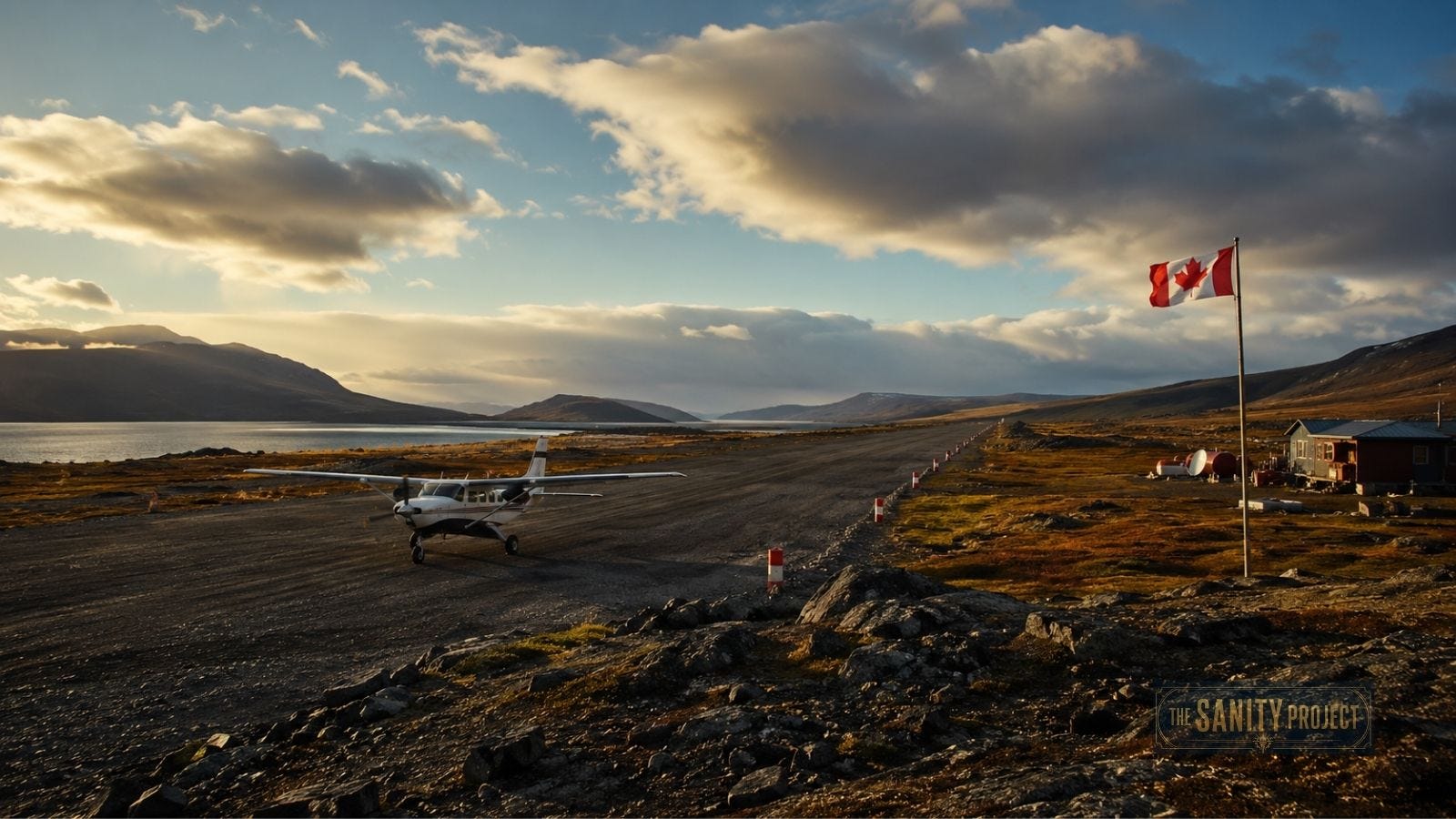
For nearly two decades, Arctic sovereignty got managed from Ottawa boardrooms while the people who actually live the policy waited for someone to show up. Carney’s plane landed on an airstrip the Americans built during the Second World War, a detail that says more about Canada’s historical presence in its own North than any defence white paper does.
The meeting itself, the Inuit-Crown Partnership Committee, exists to put elected Inuit leaders in a room with the federal government three times a year. The prime minister usually skips it. Carney didn’t skip it this time, and ITK president Natan Obed used the access for exactly what it’s for. He told Carney directly that Ottawa hasn’t fully accounted for the impact of billions in new Arctic defence spending on Inuit communities and culture. He raised the Canadian Rangers, who patrol the North on their own snowmobiles with no government equipment to speak of. He raised a housing shortfall in Nunavik that exceeds 1,000 homes, with construction costs north of $1 million per house.
Some coverage is framing Obed’s comment that Inuit could seek “partnerships abroad” as a crack in the relationship. Read the room differently. That line only has weight because Obed was saying it to the prime minister’s face, with cameras rolling and cabinet ministers sitting beside him. That’s leverage being used the way it’s supposed to be used, in person, on the record, where it can’t be quietly filed away. Carney’s own respose, that there’s “room for improvement” even as Inuit “stand with Canada as proud Canadians,” reads like two parties negotiating in good faith rather than two parties drifting apart.
Canada’s Arctic sovereignty case to Washington and NATO has always depended on more than maps and military hardware. It depends on the people who actually occupy that territory backing the claim. A government that builds Arctic defence infrastructure without the people living there isn’t building sovereignty; it’s building a liability.
Carney seems to understand that better than his predecessors did. Showing up in Kuujjuaq doesn’t, on its own, fix the consultation gap. But it puts the gap in front of the only people who can close it, rather than letting it surface later as a court case or a blockade. That’s a better way to run Arctic policy than the one Canada has used for the last eighteen years.


