


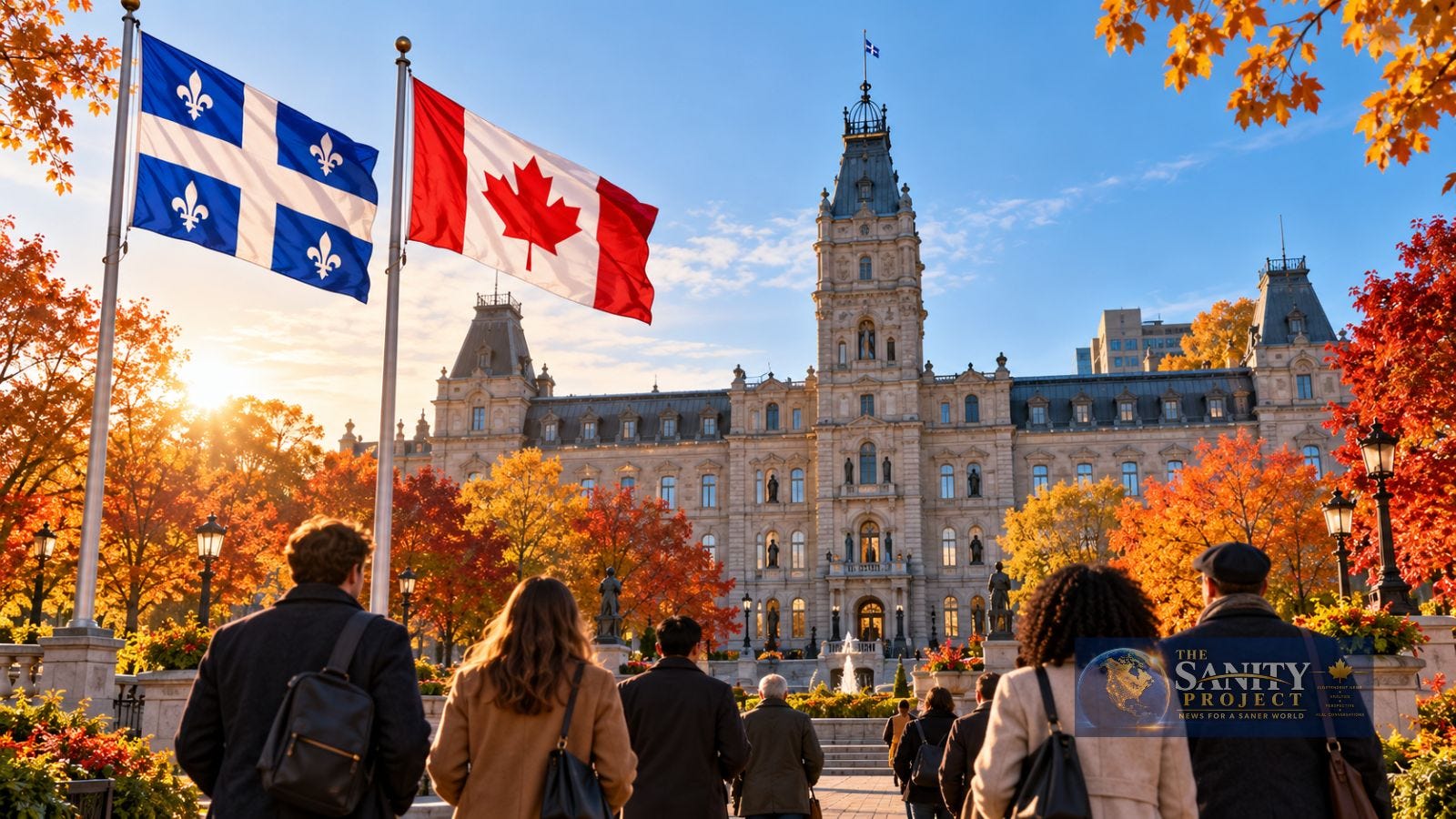
Quebec: Things Change, With a Check on Power
Quebec has elected a new government, and the central result is clear: the Parti Québécois will have to work with others. Voters gave it the largest caucus, but not a majority.
According to The Canadian Press, the PQ captured 59 seats, five short of the 64 needed for a majority. Paul St-Pierre Plamondon now faces the challenge of governing while other parties together hold more seats.
We can congratulate Quebecers for exercising their right to choose a new direction. We can also note that the result requires the incoming government to listen beyond its own benches, which is the key political change.
But before we declare the separation debate safely packed away, another number is worth knowing: nine. That is how many seats Québec solidaire won, and it also supports independence.

What Those Five Missing Seats Actually Mean
Here, we need to keep the champagne cork firmly attached to the bottle. A minority government makes the road to a referendum less straightforward, but it does not close that road.
Under Quebec’s Referendum Act, the National Assembly must approve the referendum question, or adopt legislation submitted to voters. The premier cannot simply announce a question and bypass that step.

With 59 seats, the PQ cannot guarantee approval on its own. It would need enough opposition support or abstentions to win the vote, depending on attendance and how members vote.
The 64-seat threshold tells us whether a party holds a majority of seats. It does not mean every parliamentary vote requires exactly 64 supporters, regardless of how many members participate.
The encouraging part is that the PQ must negotiate. The important point is that it has a potential negotiating partner that shares its central goal, which keeps the question alive.
Five Seats Short Doesn’t Mean the Door Is Closed
The PQ needs help, and Québec solidaire could supply it. But would they share power, strike a deal, or cooperate just long enough to put a referendum question before voters?
Subscribe for free to explore the three possible paths, the differences that could complicate a partnership, and what both leaders have already signalled. There’s room for optimism here, but the seat count tells only half the story.