



In 1868, professional writers warned that a new machine would destroy human creativity forever.
They argued it would cheapen language, eliminate craftsmanship, and flood society with low-quality writing produced by people who had no business calling themselves authors. The machine they feared was the typewriter.
Today, we’re having the exact same panic attack all over again — except now the villain is artificial intelligence.
Spend five minutes online, and you’ll inevitably encounter the phrase “AI slop.” It has become the universal insult for low-quality digital content: badly written articles, surreal Facebook images, automated spam, fake engagement farming, and endless oceans of synthetic noise.
And to be fair, some of that criticism is absolutely justified.
The internet is being flooded with low-effort garbage. Deepfakes are real. Hallucinated facts are real. Automated misinformation campaigns are real. AI-generated content farms are real.
But beneath all the noise, another reality is unfolding — one that history has seen over and over again.
Every time humanity invents a tool that makes information easier to create, distribute, or access, the existing gatekeepers declare the end of civilization. And remarkably, they almost always use the same arguments.
The Panic Cycle We Keep Repeating
The pattern is so consistent it almost feels scripted.
A new technology appears. The barrier to entry collapses. Ordinary people suddenly gain access to tools that were previously reserved for elites, institutions, or professionals. The incumbents panic.
Then comes the moral outrage:
“This will destroy quality.”
“This will poison society.”
“This will corrupt the youth.”
“This will eliminate real craftsmanship.”
“This will flood the world with garbage.”
Eventually, society adapts. The panic fades. The technology becomes normal. And then we repeat the entire cycle again with the next invention.
Artificial intelligence isn’t breaking this historical pattern. It may simply be the latest chapter in it.
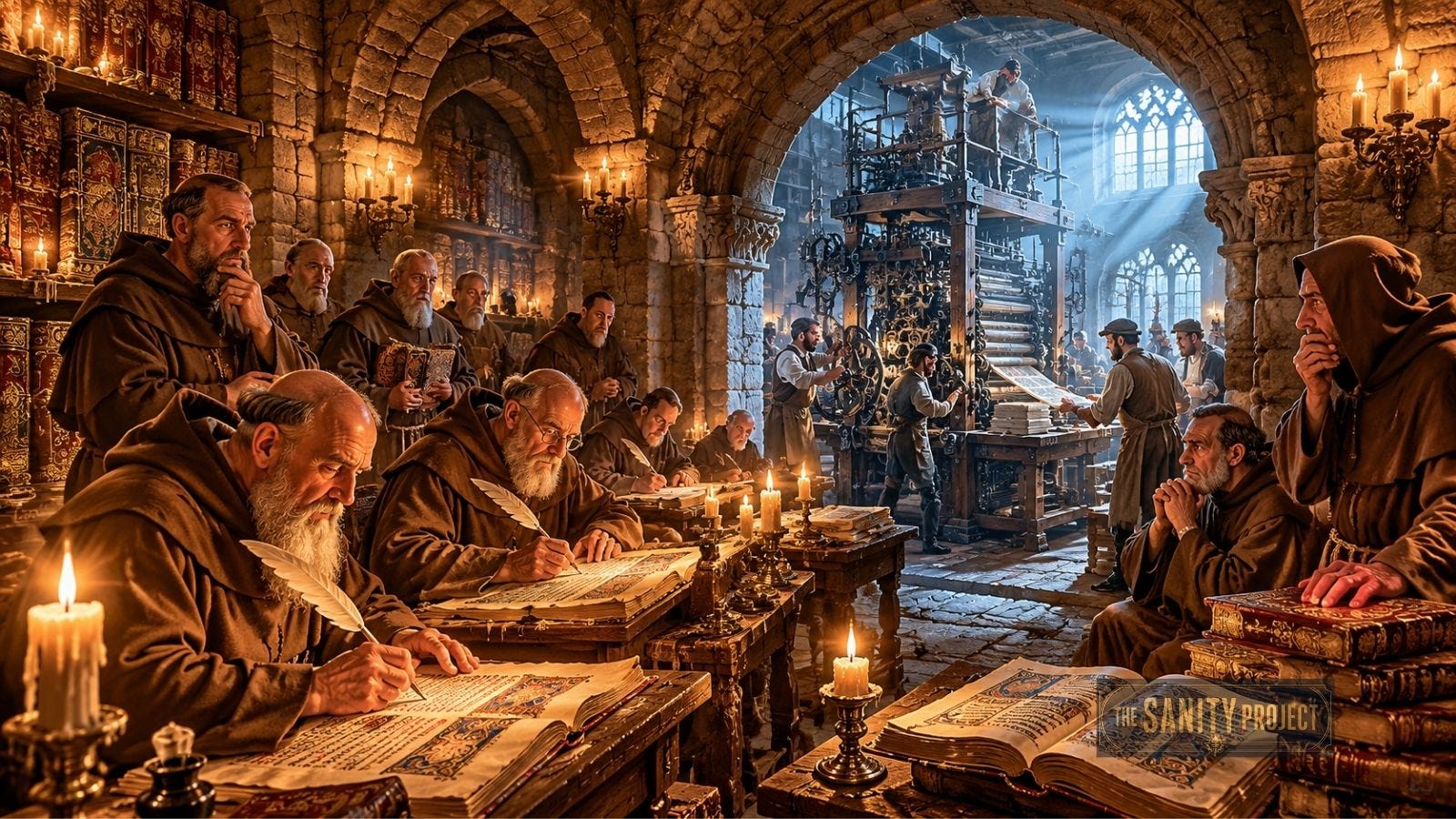
The Printing Press Was Once Considered Dangerous
Before Johannes Gutenberg’s printing press, books were incredibly rare. Knowledge itself was effectively controlled by a small number of institutions: the Church, wealthy nobility, universities, and elite scholars.
Books had to be copied by hand, often by monks. Information moved slowly, expensively, and through tightly controlled channels.
Then Gutenberg changed everything.
Mechanical printing caused the price of books to collapse across Europe. Suddenly, ordinary people could access written knowledge in ways that had previously been impossible. But what followed wasn’t just enlightenment.
It was chaos.
Pamphlet wars exploded across Europe. Religious factions weaponized mass-produced propaganda. Sensationalized misinformation spread rapidly. Graphic woodcut illustrations were used to inflame fear, outrage, and tribalism.
Sound familiar?
The printing press didn’t just democratize truth. It democratized misinformation, too.
Authorities responded exactly as modern gatekeepers often do: by claiming that society needed protection from dangerous information. The Catholic Church eventually created the Index Librorum Prohibitorum — a formal list of banned books designed to suppress ideas considered destabilizing or heretical.
But history remembers something important.
The printing press also enabled the Scientific Revolution. It spread the ideas of Copernicus, Galileo, and Newton across Europe. The same machine that amplified propaganda also expanded human knowledge on a scale civilization had never seen before.
The technology itself wasn’t moral or immoral.
It was infrastructure.
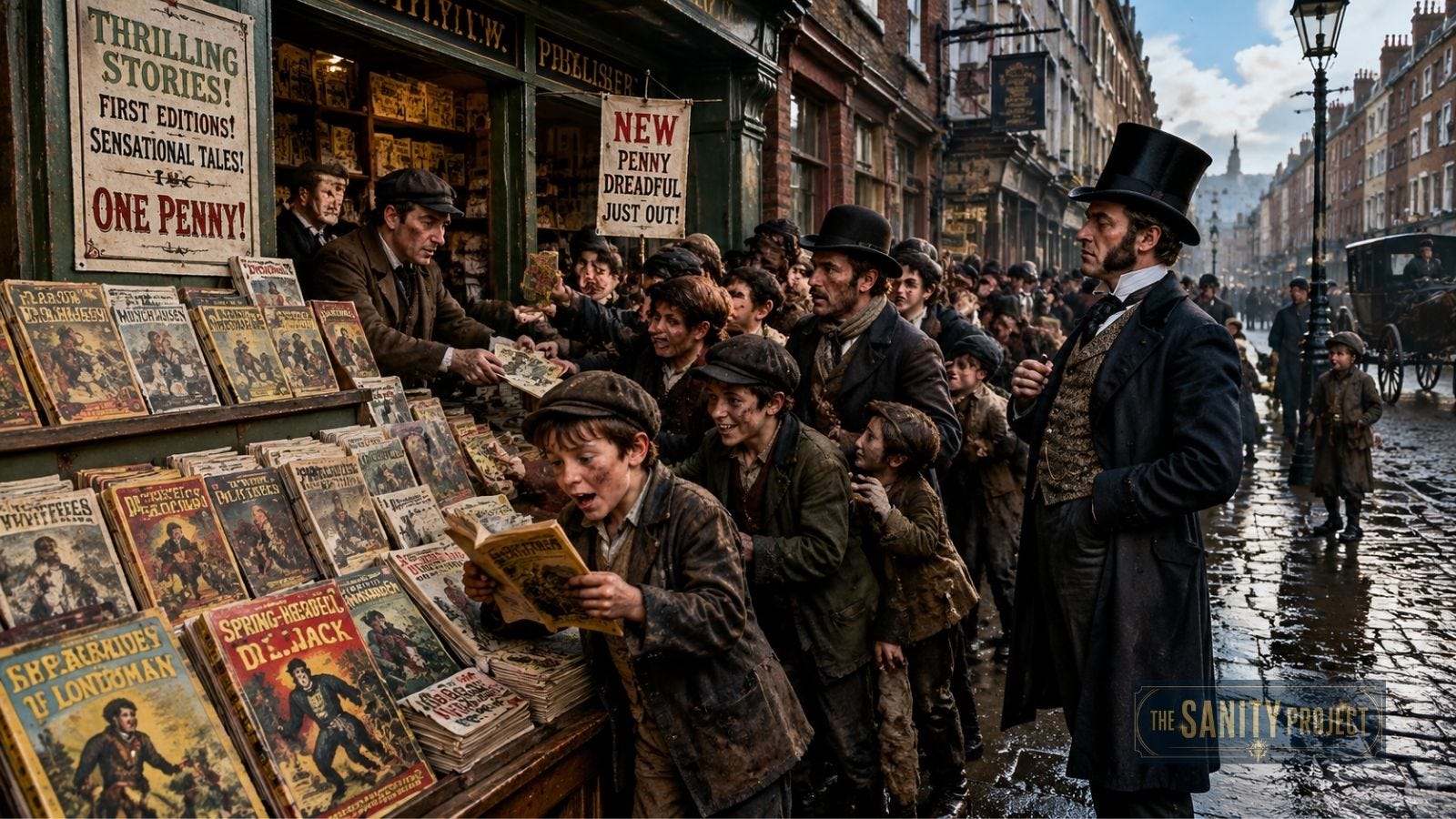
Cheap Paper Once “Threatened Civilization”
In the 19th century, publishers shifted from expensive rag paper to cheap wood pulp paper. This innovation dramatically lowered the cost of books and newspapers, making literature accessible to ordinary working-class readers for the first time.
And society completely lost its mind.
Critics warned that cheap novels and “penny dreadfuls” would corrupt morality, encourage crime, weaken intelligence, and poison the minds of young readers. Once again, the cheaper and more accessible the medium became, the more aggressively elites attacked it.
The physical cheapness of the paper became psychologically associated with the “cheapness” of thought itself.
But something deeper was happening underneath the panic: access was expanding. The gatekeepers were losing control over who could participate in public discourse.
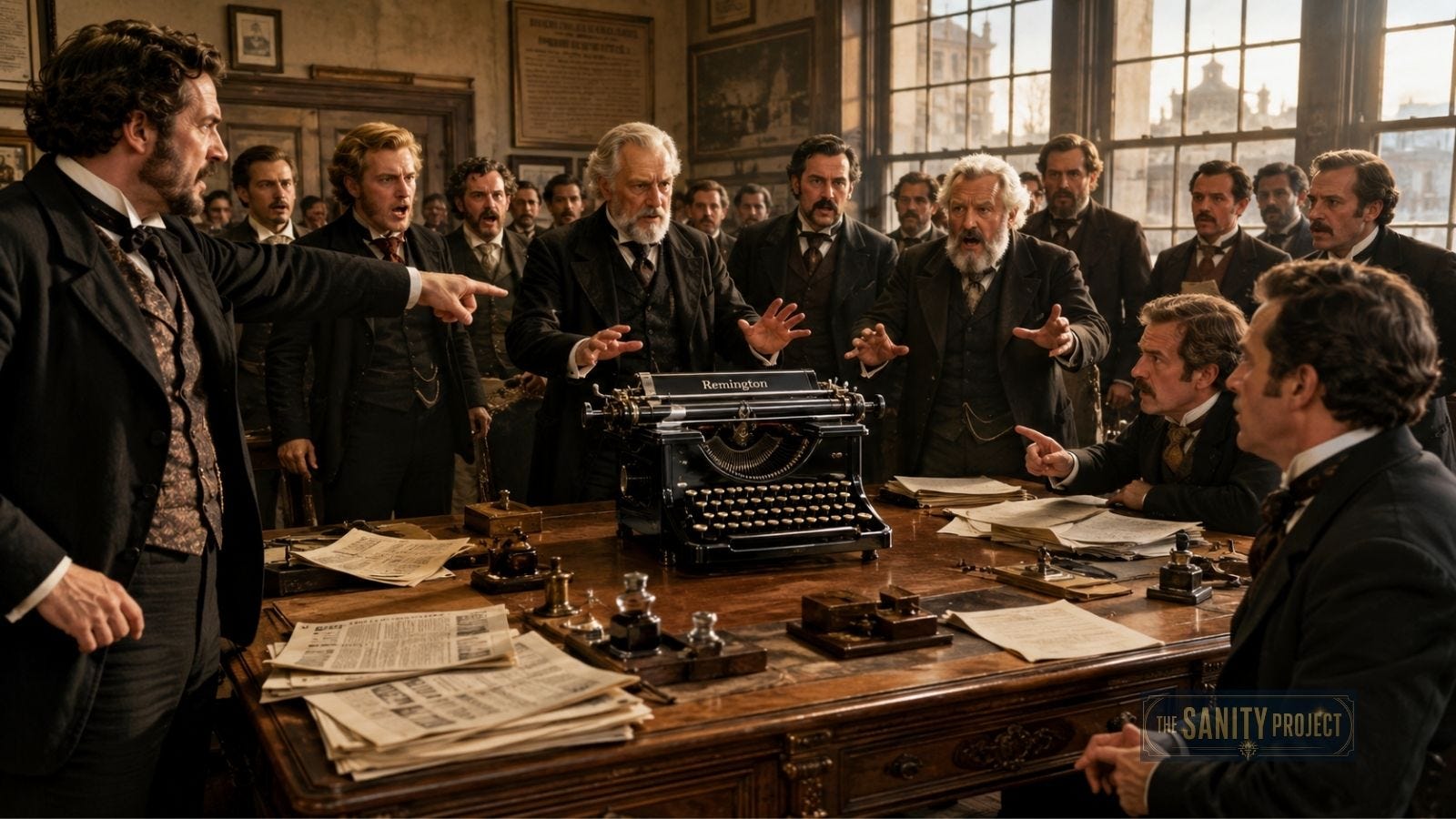
The Typewriter Triggered the Same Fear
The backlash against the typewriter now feels almost absurd in hindsight.
Professional writers argued that mechanized writing would destroy the human soul of language. The machine was accused of removing craftsmanship, devaluing expertise, and enabling amateurs to flood the marketplace with inferior work.
But the typewriter didn’t destroy writing.
It democratized it.
It dramatically lowered the barrier to producing legible professional documents. And perhaps most importantly, it opened clerical and professional writing careers to women on a massive scale for the first time.
The panic was framed as a means of protecting quality. Structurally, however, the old monopoly on written communication was collapsing.
That pattern matters. Because once you notice it, you start seeing it everywhere.
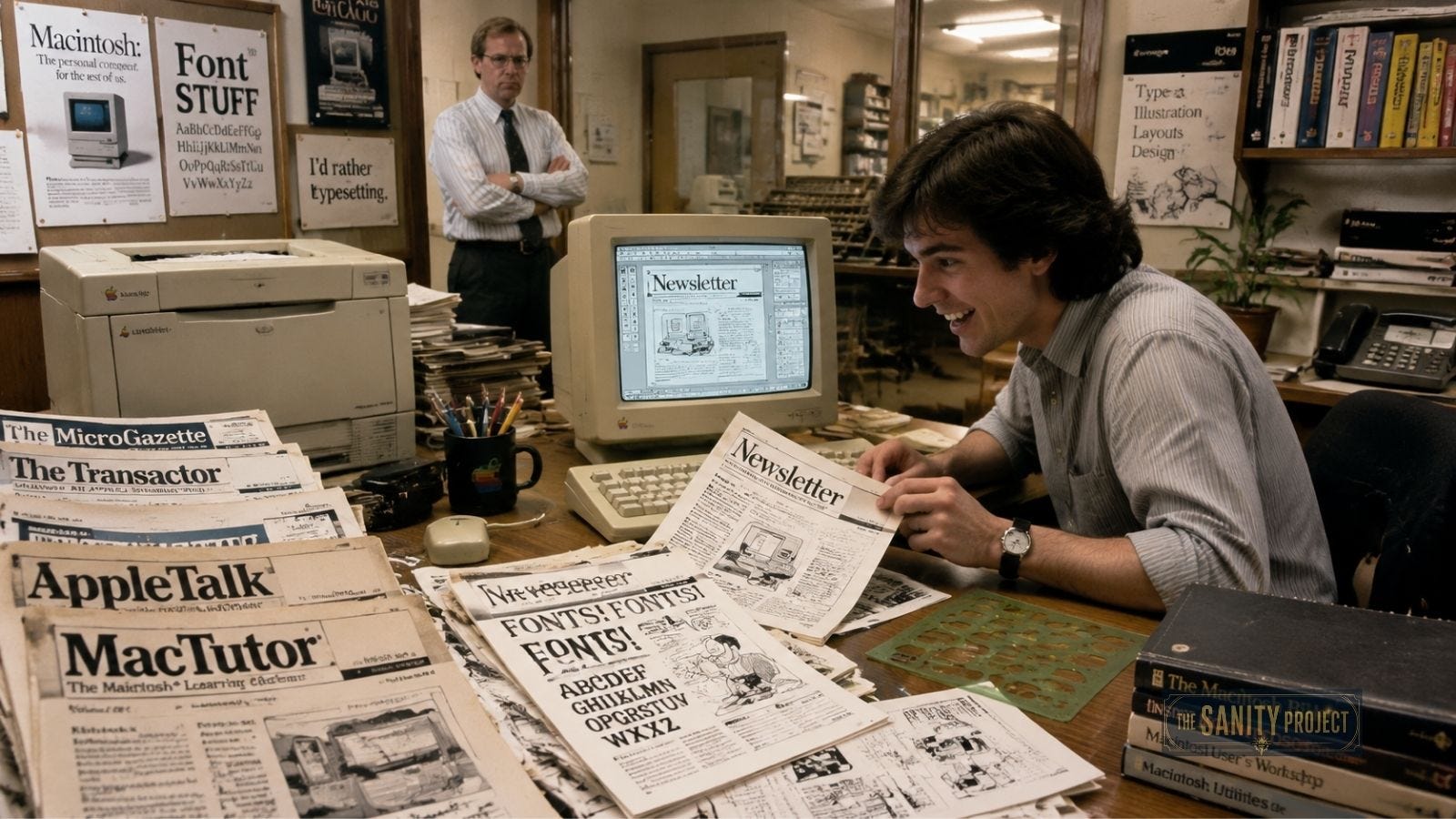
Desktop Publishing Created “Content Slop” Too
In the 1980s, desktop publishing software allowed ordinary people to create newsletters, magazines, brochures, and layouts without expensive professional printing infrastructure.
Traditional typesetters panicked.
And honestly, they weren’t entirely wrong. The world was flooded with ugly newsletters, chaotic fonts, poor formatting, and amateurish design. Anyone old enough to remember the early desktop publishing era probably remembers the visual disaster zone that followed.
But if we stop the story there, we miss the revolution.
Desktop publishing also allowed smaller voices, independent researchers, local communities, and marginalized groups to publish information without requiring institutional permission. One study from the 1990s showed how desktop publishing transformed access to scientific publishing in parts of Africa, where researchers had previously been locked out of expensive European publishing systems.
Again, the same pattern emerged:
more clutter, more noise — but also more access.
The Real Fear Behind “AI Slop”
This is where the modern debate becomes more complicated.
Because, unlike cheap paper or ugly newsletters, AI genuinely does introduce new risks. Pretending otherwise destroys credibility.
A recent study from the Columbia Journalism Review found that some AI-powered search systems produced incorrect answers more than 60% of the time. That’s not a minor issue. That’s a systemic problem of factual reliability.
We’re also seeing:
fabricated citations,
political deepfakes,
automated propaganda,
engagement-farming content,
and synthetic misinformation on an enormous scale.
These are legitimate concerns.
But there’s one concept that explains why this moment feels so overwhelming: asymmetric effort.
An AI system can generate thousands of words, images, or videos in seconds. But verifying whether that content is accurate may take hours. That imbalance breaks the economics of trust online.
And that’s the real crisis.
Not simply that machines can create content, but that verifying reality has suddenly become far more expensive.
The Mistake We’re Making
Here’s where I think the public conversation is going badly wrong.
We are increasingly treating the tool itself and deceptive human behaviour as though they are the same thing.
They are not.
There is a massive difference between:
an automated propaganda network generating fake political content,
anda researcher transparently using AI to organize, translate, or synthesize real information.
But culturally, we are flattening those distinctions into one emotional label:
“AI slop.”
And once that happens, nuance disappears.
The tool becomes guilty by association.
History suggests this is exactly what societies always do when information becomes democratized. We panic first. We sort out the distinctions later.
Facts Are Medium Neutral
This may be the single most important thing to understand about the AI debate.
Facts are medium neutral.
A true statement does not become false because it was handwritten by a monk, printed by Gutenberg, typed on a Remington, published through desktop software, or assisted by artificial intelligence.
The truth value of information has never depended on the instrument used to assemble it. It has always depended on evidence, verification, transparency, and human intent.
That standard has not changed.
And it never will.
The Real Question Isn’t Whether AI Exists
AI is not going away. That debate is already over.
The real question is whether society learns to build:
stronger verification systems,
better editorial standards,
transparent sourcing,
and healthier information literacy.
Because history suggests something important: human civilization eventually adapts.
We learned how to navigate propaganda pamphlets, tabloid newspapers, radio panic, television manipulation, internet misinformation, and social media outrage cycles. Messily. Imperfectly. But we adapted.
And we will likely adapt again.
The Bigger Pattern Nobody Wants to Admit
Every major communication breakthrough in human history has done two things simultaneously:
It created more noise.
And it expanded access.
The printing press created misinformation — and the Enlightenment. Cheap paper created sensationalism — and mass literacy. Desktop publishing created clutter — and global access to publishing.
AI will almost certainly follow the same pattern.
It will create more garbage, more manipulation, and more informational noise. But it will also expand accessibility, creation, participation, and democratized knowledge on a scale we are only beginning to understand.
History rarely gives us one without the other.
Final Thoughts
The phrase “AI slop” may survive. But history suggests the panic surrounding it probably won’t.
Because eventually, every generation normalizes the tools it once feared.
The typewriter became invisible. The printing press became civilization itself. And perhaps someday, artificial intelligence will simply become another ordinary layer of how humans think, create, organize, and communicate.
Not because the risks weren’t real.
But because humanity adapted.
Again.
If you enjoy long-form analysis that challenges assumptions instead of feeding outrage, subscribe to The Sanity Project for more deep dives into technology, media, politics, and the systems shaping modern life.