


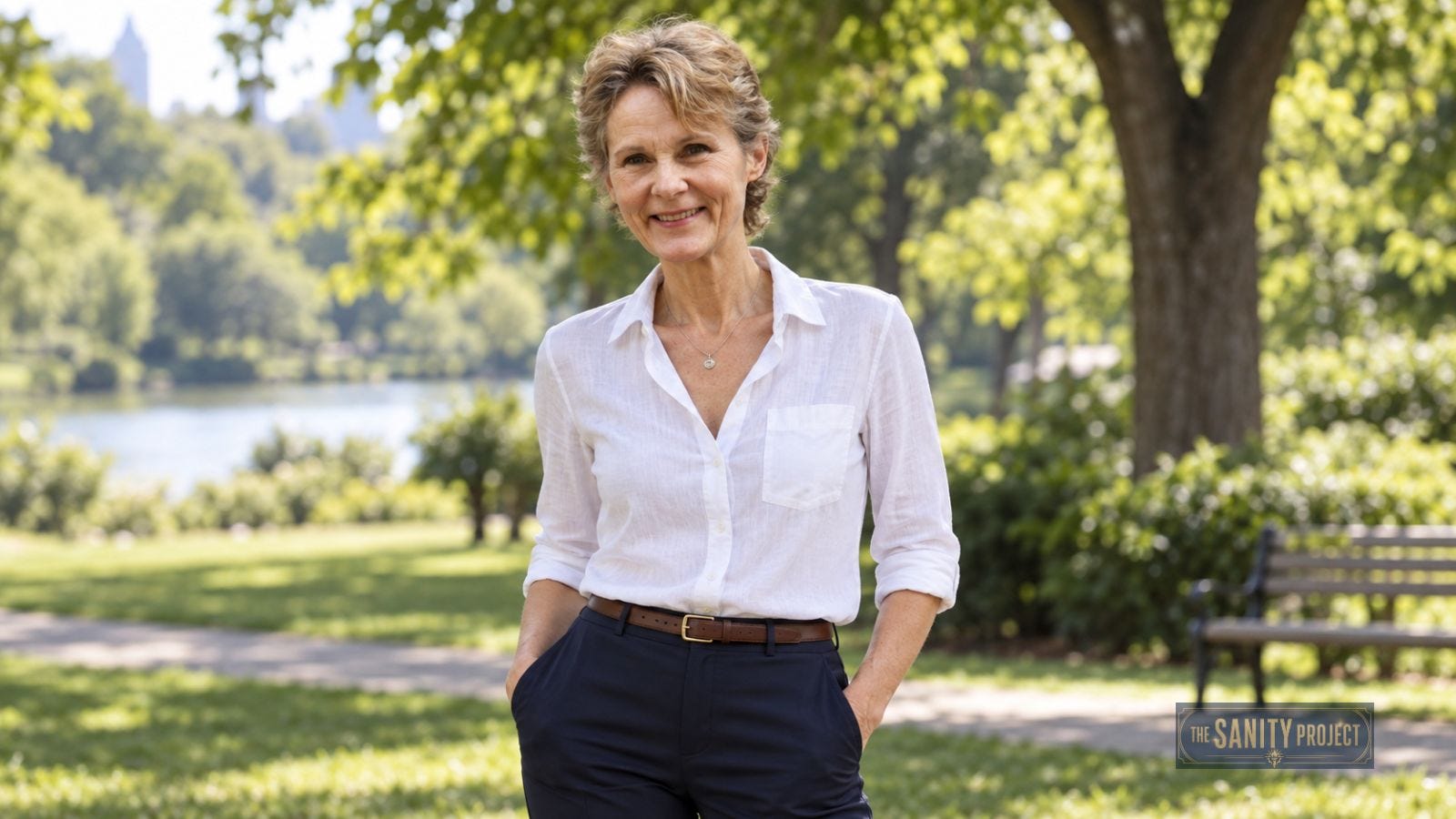
Diana Fox Carney: The Other Economist at Rideau Cottage
You didn’t vote for Diana Fox Carney. Nobody did. And yet here she is: economist, climate policy veteran, and, as of last year, the second-most-scrutinised person living inside Rideau Cottage. Call it Canada's quiet two-for-one deal."
Key Takeaways
Diana Fox Carney is a career economist and climate policy specialist whose public advocacy predates Mark Carney’s political career by more than a decade.
She holds a PhD in philosophy, politics and economics, a master’s in agricultural economics from Oxford, plus a master’s in international relations from the University of Pennsylvania.
She publicly drew a line between her professional identity and her husband’s on the record as early as 2013.
Her husband’s government has repealed the consumer carbon tax and confirmed it won’t curb oil growth to meet climate targets, a notable divergence from her long-standing positions.
The couple met playing hockey at Oxford and married in 1994. They have four daughters: Cleo, Tess, Amelia and Sasha.
Most of what’s been written about her since Mark Carney became prime minister follows a familiar template. Oxford. Hockey. Four daughters. A charming quote from election night. It’s the same profile, written five different ways, and it treats Diana Fox Carney the way political spouses usually get treated: as a supporting character in someone else’s story.
It’s the wrong read, and not just because it’s a little insulting. Diana Fox Carney was arguing publicly about inequality and climate policy more than a decade before her husband ran for anything. The British press was writing about her independent views back when Mark Carney’s biggest job title was Governor of the Bank of Canada. She isn’t new to this. She’d been doing it long before it mattered politically.
It starts long before Ottawa, on an ice rink. Carney was a goaltender on the University of Oxford hockey team. Fox Carney played forward. By the club’s own account, she was known for skating rings around her opponents, which, if you know anything about goaltenders, means she spent a fair amount of that era making her future husband look bad. They married in 1994. Three decades, four daughters and two central bank governorships later, they’re doing all of that again, just with higher stakes.

Who Diana Fox Carney Was Before Mark Carney Was PM
Diana Fox Carney was a published, publicly outspoken economist working on inequality and climate policy for over a decade before her husband entered politics, not after.
Start with the credentials themselves, since they tend to get buried under the hockey anecdote. Fox Carney studied philosophy, politics and economics at Oxford’s St John’s College, followed by a master’s in agricultural economics and a second master’s in international relations from the University of Pennsylvania. From there, her career ran through development economics: a posting with the UK government in Zanzibar, years as vice president at the Ottawa think tank Canada 2020, a stint directing strategy at Britain’s Institute for Public Policy Research, and a senior advisory role at Eurasia Group focused on climate and energy. She’s chaired a climate investment fund, advised another, and co-authored two books on agricultural service provision. Not exactly beach reading, and never meant to be.
None of that happened because her husband became prime minister. Most of it happened while he was still running central banks. When Carney took the top job at the Bank of England in 2013, the British press discovered his wife had opinions and treated the discovery like a scandal. Coverage of that period, recapped years later by the Globe and Mail, described UK tabloids painting her as a “strident environmental activist” and mocking her with the British shorthand for a capable, no-nonsense woman from money who doesn’t mind getting her hands dirty. What that coverage tended to skip over: she’d been building that record for years, not performing it for the cameras.
By 2013, she was testifying to a Canadian parliamentary finance committee about the global gap between rich and poor and appearing on CBC’s Power & Politics to discuss carbon pricing. This isn’t a spouse discovering causes on the campaign trail. It’s a career economist doing the job she’d always done, one that happened to run in parallel with her husband’s.
Enjoying this? The Sanity Project runs on readers who stick around.
Subscribe for the next one
The Question Worth Asking About Unelected Influence
An economist married to an economist prime minister is a fair thing to be uneasy about, and Fox Carney has addressed the concern herself, on the record, more than once.
Here’s the part where a fair reader gets sceptical, and they should. An accomplished policy economist, married for three decades to the head of government, working in the exact same subject areas he now legislates on: that’s not a wild thing to raise an eyebrow at. Unelected influence over public policy is a real category of concern, and pretending otherwise because the story is warm would be bad journalism.
Fox Carney faced this question directly, years before it had any prime ministerial stakes attached. When British reporters started treating her opinions as newsworthy in 2013, she went on CBC and said plainly that while she and Mark are married, “we are not entirely one,” and that people generally accept that a couple can hold separate professional identities. That’s an ordinary enough thing to say now. In 2013, with a central bank governorship on the line and British tabloids circling, it was a deliberate line drawn in public, years before anyone needed her to draw it.
The other piece of evidence is less about what she’s said and more about timing. If the worry is that her views quietly steer his decisions, you’d expect his policy to track hers closely. It doesn’t, and that gap says more than any quote she could give.

Where Her Ideas and His Record Meet, and Where They Don’t
Fox Carney has argued for over a decade for stronger climate and inequality policies. Her husband’s government has repealed the consumer carbon tax, confirmed it won’t curb oil growth to hit climate targets, and is being sued by youth climate groups over the rollback.
This is where a puff piece would stop at the parts that flatter everyone. We’re not going to do that.
Fox Carney’s public record, going back to her time at Canada 2020 and continuing through her work with Eurasia Group’s climate practice, centres on two ideas: that inequality is a policy failure worth fixing, and that climate action has to survive contact with real economics rather than collapse the moment it gets expensive. Those are her published views, under her own name, for over a decade.
Carney’s government, so far, hasn’t followed that script closely. The consumer carbon tax that his predecessor built the climate plan around is gone, fully repealed. In a policy video released in June 2026, Carney called the plan he inherited “too expensive” and “divisive,” and his government has confirmed it won’t curb oil growth to meet Canada’s climate targets.
Youth and advocacy groups have sued the government over what they call climate rollbacks, and former environment minister Steven Guilbeault resigned as an MP, citing what he described as Canada backsliding on climate. On affordability, where Fox Carney has spent three decades arguing inequality demands real investment, the Fraser Institute points out that grocery and housing costs remain stubbornly high despite government claims of progress.
If Diana Fox Carney were quietly running climate and inequality policy from the family kitchen, this is not what it would look like.
That doesn’t mean the two of them have nothing in common anymore. Carney’s language about electricity, what he’s called doubling the grid as the least politically painful way to cut emissions without hitting household budgets, echoes the pragmatic, cost-aware climate framing Fox Carney was pushing back in 2013, when she told Global News that income inequality had become the defining issue policy needed to actually solve, not just talk about. The overlap isn’t in the outcomes. It’s in the instinct: good policy has to survive an affordability test, or it doesn’t survive at all.
“We are not entirely one,” Diana Fox Carney said on the record in 2013.
More Canadian politics, minus the spin, straight to your inbox.
Join The Sanity Project
The Two-For-One Deal Nobody Voted For
You didn’t vote for Diana Fox Carney. What you got, whether her husband’s government reflects her views or not, is thirty years of one household arguing in good faith about the same hard questions Canada is still asking.
Canadians elected a former central banker. What came bundled in was stranger than the campaign photos let on: a policy economist who’d been publicly wrong-footing British tabloids, testifying to parliamentary committees, and running climate investment funds since before most of the current cabinet held their first political job. Nobody put her name on a ballot. She showed up anyway, credentials intact.
This isn’t nepotism, and the record doesn’t support backdoor influence either. It’s closer to what happens when two people who’ve spent thirty years married to the same hard economic questions occasionally end up in the same room where the answers get decided. Sometimes their instincts line up. Lately, often, they don’t. Either way, Canada got a working policy mind in the house, and didn’t have to elect her to get it.
Call it the bonus round. Nobody asked for it. It came with the marriage.

Editor’s View
Twenty years selling real estate taught me one thing about long marriages: you can tell within about ten minutes at a kitchen table whether two people actually talk to each other about the big stuff, money, risk, what they’re afraid of, or whether one of them just nods along. Thirty-one years of Diana Fox Carney testifying to parliamentary committees while her husband ran two central banks tell me these two talk. A lot.
My old law enforcement instincts want to find the angle, the quiet influence, the thing nobody’s saying out loud. I went looking for it in this one and mostly found a government that keeps disappointing on the exact policy positions she’s spent her career on. Make of that what you will. My own read is that we got lucky, in a boring, unglamorous way, and boring is usually a compliment when it comes to who’s whispering in a prime minister’s ear.
Corrections and Updates Protocol: The Sanity Project is committed to accuracy and named sourcing. If you spot an error or have a documented correction, please get in touch. Any updates to this piece will be logged inline using the format “Update (Month Year):” rather than silent edits.
Update (September 2026): An earlier version of this piece referred to the prime minister's residence as 24 Sussex Drive. 24 Sussex has been vacant since 2015 and is currently the subject of a public restoration campaign. Mark Carney and Diana Fox Carney live at Rideau Cottage, on the grounds of Rideau Hall. The piece has been corrected throughout.
Publications Consulted: Global News, Ottawa Lookout, CBC News, The Globe and Mail, Bloomberg, Fraser Institute, Canada’s National Observer, Wikipedia.
Thank you Diana Fox Carney for all you do.
Reminds me of the conscience that Elenor Roosevelt brought to the White House.