


On April 19, 2026, millions of Australians sat down to watch what appeared to be a devastating investigation into renewable energy.
The broadcast aired on Channel 7’s flagship investigative program Spotlight, and it arrived wrapped in all the familiar visual language of serious journalism: dramatic narration, sweeping aerial footage, emotionally charged interviews, ominous music, and carefully timed moments of outrage. The message was unmistakable. Renewable energy, viewers were told, was not merely flawed. It was ethically compromised, environmentally destructive, and quietly built on exploitation.
For millions watching in prime time, it probably felt convincing.
There was just one problem.
Within eight days, much of the broadcast’s core evidence had already begun collapsing publicly.
Ordinarily, that kind of unravelling would trigger a journalistic reckoning. Corrections would follow. Clarifications would appear. Editors would distance themselves from weak claims or incomplete reporting.
Instead, something far more revealing happened.
The network largely stood by the story.
And that response may tell us far more about the modern media environment than the original broadcast itself ever intended.
⚡ The Entire Narrative Revolved Around One Mineral
At the center of the investigation sat a single word:
Cobalt
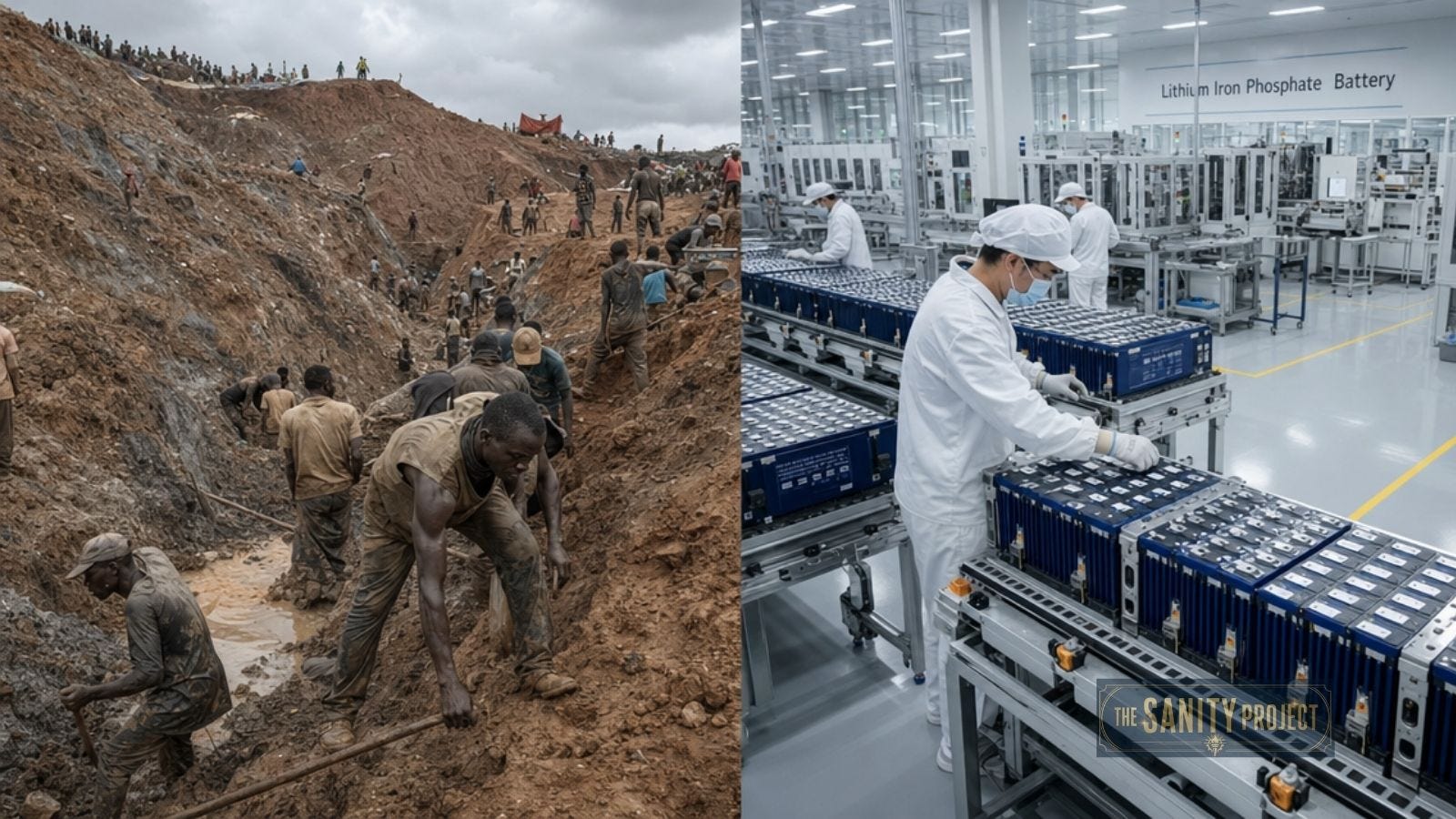
Reporter Liam Bartlett framed cobalt as the hidden moral stain behind renewable energy infrastructure. Throughout the program, viewers were repeatedly shown emotionally charged footage of dangerous hand-dug mining operations in the Democratic Republic of Congo. The implication was obvious. Modern renewable energy systems, the audience was told, depended on exploitation hidden beneath the surface of the so-called green transition.
The imagery was powerful because it was designed to be powerful. Children working in dangerous trenches create an immediate emotional reaction. The footage bypasses technical discussion entirely and moves straight into moral judgment.
But almost immediately, the factual foundation beneath the narrative began weakening.
According to the U.S. Geological Survey, approximately 90% of Congo’s cobalt production comes from large-scale industrial mining operations, not the small artisanal pits emphasized throughout the broadcast.
That distinction alone complicated the story significantly. But the larger problem involved something even more important: battery chemistry itself.
Because the renewable energy industry had already begun moving away from cobalt-heavy systems years earlier.
🔋 The Broadcast Used Yesterday’s Technology to Attack Today’s Grid
One of the most revealing aspects of the entire controversy was how heavily the investigation relied on assumptions that no longer reflected the modern battery industry.
Today, many grid-scale and home battery systems increasingly use Lithium Iron Phosphate (LFP) chemistry. These systems are cheaper, longer-lasting, more stable, and, critically, entirely cobalt-free.
That changes the moral framework of the entire argument.
An audit later highlighted by ABC’s Media Watch found that out of 17 major Australian battery projects, only two still relied on cobalt-heavy chemistry, and both had been installed before 2018.
In other words, the broadcast projected yesterday’s battery technology onto today’s renewable infrastructure.
That may sound like a technical distinction, but it matters enormously. Once outdated assumptions are applied to modern systems, almost any narrative can be manufactured from selective evidence. Viewers believed they were watching an investigation into the current state of the renewable energy landscape. In many cases, they were actually watching a carefully edited argument against a technological reality that had already evolved.
That is what made the story begin unravelling so quickly.
📺 The Amnesty International Claim Changed Everything
Then came the moment where the controversy shifted from questionable framing into something far more serious.
The program singled out the famous Hornsdale Big Battery in South Australia, one of the most recognizable grid-scale battery installations in the world, as an example of ethical failure. Bartlett claimed Amnesty International had effectively linked the facility to what he described as “blood cobalt.”
That is not a minor accusation.
The problem was that Amnesty International later clarified they had never connected the Hornsdale facility to Congolese mining operations at all. They also stated they do not use the phrase “blood cobalt.”
That clarification fundamentally altered the credibility of the segment.
At that point, the issue was no longer merely one of interpretation or emphasis. A globally recognized human rights organization had effectively been used to reinforce a narrative it did not actually support.
And once that happened, the broadcast stopped looking like a difficult investigation that navigated complex truths. It started to look much more deliberate.
🌲 Tasmania Revealed the Larger Pattern
The cobalt controversy alone would have been deeply damaging to the program's credibility.
But then came Tasmania.
The broadcast warned viewers that a Chinese mining company was preparing to bulldoze pristine rainforest for a toxic tailings dam, all in the name of the “green dream.”
Again, the imagery was emotionally devastating. Again, the framing carried unmistakable moral weight.
And again, the timeline turned out to be a major problem.
Because the company involved had reportedly abandoned that specific dam location six weeks before the episode ever aired. Veteran environmentalist Bob Brown later confirmed he had informed Bartlett about the cancellation directly on camera.
Yet the footage never appeared in the final broadcast.
That detail changes the nature of the entire conversation.
Journalism contains mistakes all the time. Facts evolve. Sources turn incomplete. Information changes. But once contradictory evidence is knowingly omitted to preserve emotional impact, the issue ceases to be a simple error.
It becomes narrative preservation.
And that distinction matters enormously in modern media.
✂️ The Editing Became Part of the Story
Perhaps the most revealing moment arrived during the program’s confrontation with Australia’s Energy Minister.
The segment showed Bartlett aggressively challenging the minister and demanding accountability for renewable energy policy. Immediately afterward, viewers saw the minister appear silent and visibly uncomfortable.
It looked devastating.
Except later reporting suggested the exchange had been edited in a highly misleading way.
The minister had actually responded.
That response was simply removed from the final cut.
At that point, the overall pattern became increasingly difficult to dismiss:
outdated battery assumptions
misleading cobalt framing
omitted context
unresolved corrections
selectively edited footage
Individually, each controversy might have survived public scrutiny. Together, however, they painted a picture that looked far less like investigative journalism and far more like a carefully engineered emotional narrative.
💰 Then the Ownership Questions Emerged
And this is where the story became larger than a single television broadcast.
Because eventually, people started asking a very uncomfortable question:
Why?
Why would a major national broadcaster risk its credibility by attacking renewable energy with claims that could be publicly dismantled so quickly?
Part of the answer may lie less in the reporter and more in the ownership structure surrounding the network itself.
Before becoming a journalist, Liam Bartlett reportedly worked for Shell. On its own, that proves very little. Journalists come from many different professional backgrounds.
But the ownership layer is more difficult to ignore.
Channel 7 is controlled by billionaire Kerry Stokes through Seven Group Holdings. That corporate structure includes major exposure to heavy mining equipment, Caterpillar machinery distribution, and substantial interests tied directly to coal, gas, and fossil fuel industries. The company also maintains a significant stake in oil and gas producer Beach Energy.
Suddenly, the broader framing of the broadcast begins to look less accidental.
Because renewable energy does not merely represent technological change.
It represents economic disruption.
And industries facing disruption rarely surrender quietly.
🌪️ The Real Story Was Never About Batteries
At some point, the deeper realization arrives.
This story was never really about cobalt. Or batteries. Or Tasmania.
It was about how modern narratives are manufactured.
Because once you step back, the pattern becomes difficult to ignore: emotionally loaded imagery, selective omissions, outdated technical framing, edited confrontations, moral panic, and unresolved corrections all working together to produce a highly emotional public narrative.
That may be one of the defining media patterns of our era.
Not necessarily giant fabricated lies, but emotionally engineered realities built from selective truths, omission, framing, timing, amplification, and outrage.
And once enough confusion enters the system, public trust itself begins breaking down.
At that point, audiences no longer know what to believe.
And confusion, more than persuasion, becomes the real product being sold.
🧠 Final Thought
What happened with Channel 7 matters far beyond Australia.
Because once you notice how narratives are manufactured around renewable energy, you start noticing the same machinery everywhere else, too. You begin recognizing how outrage gets monetized, identity gets weaponized, and emotional narratives increasingly overpower technical reality.
And that may be the most unsettling realization of all.
Because the modern battle over renewable energy is no longer just about energy.
It is increasingly about who gets to shape the public’s understanding of reality itself.
If you enjoy deep dives that separate data from narrative, subscribe to The Sanity Project for more investigations into the stories shaping modern politics, media, technology, and public perception.
