


The Gordie Howe Bridge Cost $6.4 Billion. Here’s What Staying Closed Would Have Cost Canada.
The first trucks roll across the Gordie Howe Bridge. That’s not a small thing. It’s the payoff of twenty-five years of planning, seven years of construction, and a $6.4 billion bill that Canada paid in full. It’s also, if you rewind the tape a few months, almost a bridge that opened to nobody.
For most of this year, that outcome was a live possibility. In February, President Trump threatened to keep the finished, essentially complete bridge shut until the United States got a bigger cut. A June opening date got cancelled at the last minute. It took until July 10 for both countries to actually agree on terms, and the ribbon-cutting itself nearly didn’t happen either, after Ottawa pulled out over new tariffs.
So it’s worth asking the question nobody answered out loud while all of this was playing out: what would it actually have cost Canada if no deal had ever been reached, and the bridge simply stayed closed?
The answer isn’t “the end of Canada-U.S. trade.” It’s something narrower, more specific, and in a strange way, already partly measured.
Key Takeaways
The Gordie Howe Bridge opens July 27, 2026, after nearly a year of delays tied to a U.S.-Canada standoff over the terms of its opening.
A “no deal” scenario would not have stopped Canada-U.S. trade outright. The Ambassador Bridge, the Detroit-Windsor Tunnel, and the Blue Water Bridge would all still operate.
Keeping a finished, $6.4-billion bridge closed indefinitely carried a real price tag: Anderson Economic Group put unavoidable direct costs at $6 to $7 million per week.
Roughly five months passed between Trump’s February threat and the bridge’s eventual opening, meaning a version of that cost already accumulated in the real world.
Beyond direct costs, the bridge is projected to save truckers hundreds of thousands of hours a year and cut typical commercial crossing costs by roughly $40 per trip versus the Ambassador Bridge.
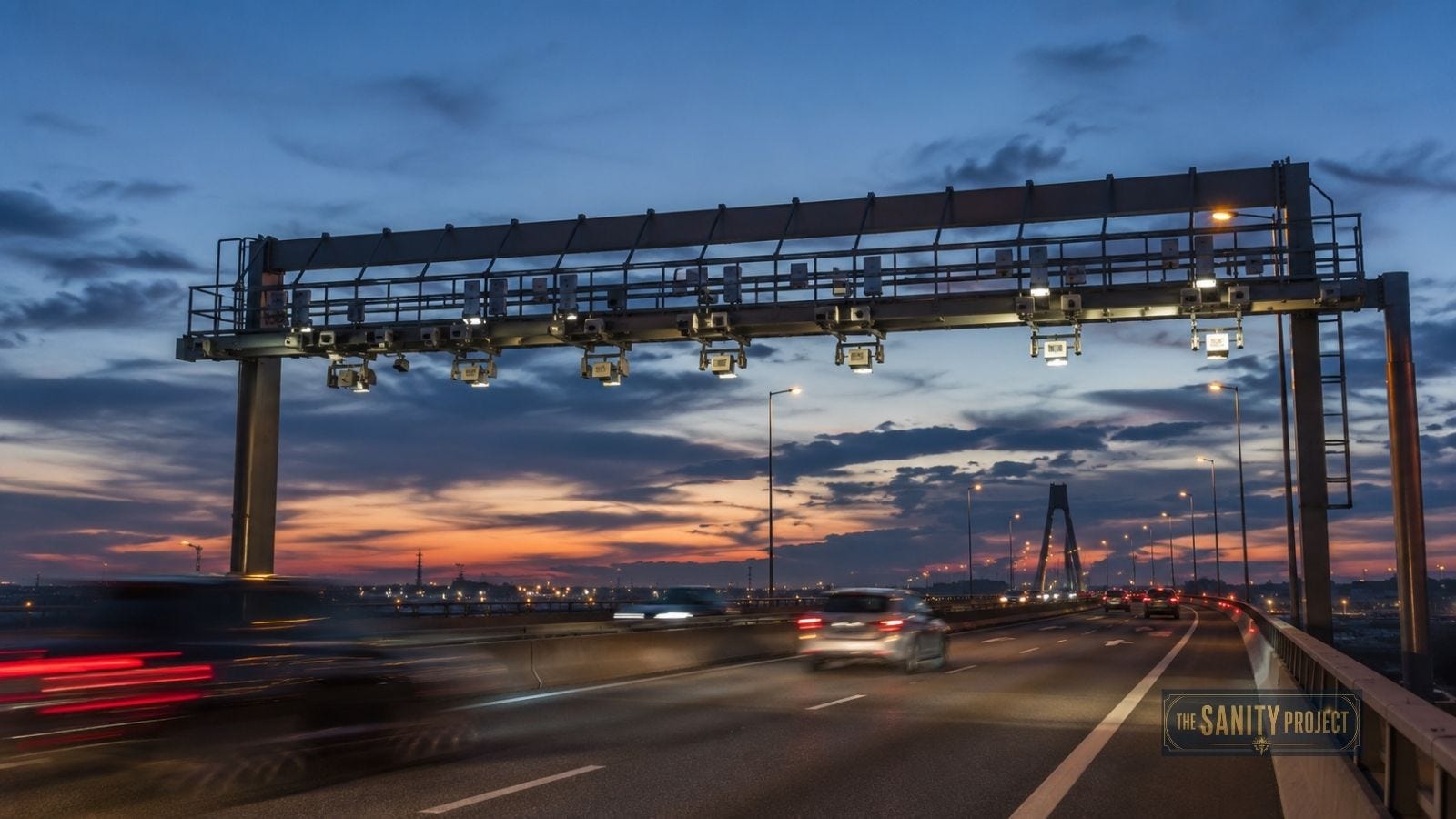
In three days, this is what the Gordie Howe Bridge looks like with trucks on it instead of just steel.
Enjoying this? Subscribe to The Sanity Project for more reporting like this, before the next story breaks.
What “No Deal” Would Have Actually Meant
Key Insight: A permanently closed Gordie Howe Bridge would not have stopped Canada-U.S. trade. It would have meant permanently relying on older, costlier, more crowded alternatives.
Until this week, the Windsor-Detroit corridor had exactly one land bridge: the Ambassador Bridge, a 96-year-old, privately owned span that has been the only game in town for commercial trucking since 1929. There’s also the Detroit-Windsor Tunnel for passenger vehicles, and the Blue Water Bridge, roughly 90 minutes northeast, which some shippers already use when Ambassador tolls get too steep.
None of that infrastructure disappears in a no-deal scenario. Trucks still cross. Trade still happens. That distinction matters, because the loudest version of this story treats the standoff as an existential threat to Canada-U.S. commerce, and it wasn’t. What a permanently closed bridge would have meant is narrower, and in some ways more damning: Canada would have spent $6.4 billion financing a second, cheaper, more modern crossing, and kept sending its trucks over the old one anyway.
Every idle week at this toll plaza carried a real Gordie Howe Bridge cost, according to economists.
The Real Weekly Cost of a Closed Gordie Howe Bridge
Key Insight: Anderson Economic Group put the unavoidable direct cost of an indefinite delay at $6 to $7 million a week, split between lost toll revenue and taxpayer-funded customs operations. The bridge authority said it couldn’t verify the firm’s methodology.
The most-cited number in this whole saga comes from a February report by the Anderson Economic Group, a Michigan-based consulting firm. Economist Patrick Anderson broke the estimate down like this: roughly $5 million a week in direct losses to the Windsor-Detroit Bridge Authority, plus close to $2 million a week in taxpayer-funded costs for keeping customs plazas staffed on both sides of the border, whether trucks are using them or not. Total unavoidable exposure: $6 to $7 million a week, before counting knock-on effects to the auto industry, agriculture, and tourism that Anderson flagged separately.
The Windsor-Detroit Bridge Authority said it wasn’t part of the study and couldn’t verify its methodology, a caveat worth keeping front and center. It’s also fair to note that not everyone read the number the same way politically. Several Michigan Republicans, including House Speaker Matt Hall, called Trump’s threat appropriate leverage, while Rick Snyder, the former Michigan governor who negotiated the original 2012 deal, publicly disputed the claim that it had ever been unfair to the U.S.
Trucks still cross. Trade still happens. What changes is who pays extra, and for how long.
Halfway through? Subscribe now so the next installment lands in your inbox, not buried in your feed.
The Gordie Howe Bridge Opening Delay That Already Happened
Key Insight: This isn’t just a hypothetical. Roughly five months passed between the February threat and the actual opening, meaning a version of the “no deal” cost already accumulated in the real world.
Here’s the detail that turns this from a thought experiment into something closer to an observed result. The bridge sat essentially complete from February 2026 straight through a cancelled June 11 opening, until the new agreement finally cleared the way for a July 27 opening. That’s roughly five months, or about 22 weeks, of a finished bridge collecting no tolls while carrying full operating and financing costs.
Running Anderson’s own $6 to $7 million weekly range across that stretch puts the real-world price tag for this specific delay somewhere in the neighbourhood of $135 to $155 million. That’s a rough extrapolation, not an audited total, and it assumes the weekly figure held roughly steady the whole time, which nobody has independently confirmed. But it’s a real number attached to a real five months, not an abstract “what if.”

Five months of Gordie Howe Bridge opening delay, priced out at roughly six to seven million dollars a week.
Gordie Howe Bridge Cost vs. the Ambassador Bridge Toll
Key Insight: Commercial trucks crossing the Gordie Howe pay roughly $40 less per trip than the Ambassador Bridge toll, and the new crossing is projected to save drivers hundreds of thousands of hours a year.
Money isn’t the only thing a no-deal scenario would have cost. The Windsor-Detroit Bridge Authority’s announced rates put the Gordie Howe’s discounted commercial toll at $6.90 U.S. per axle, against $15 to $20 per axle on the Ambassador. For a typical five-axle semi, that’s roughly a $40 savings per crossing, every crossing, on a corridor that handles close to a third of all Canada-U.S. truck trade.
The time savings carry their own asterisk, worth flagging honestly rather than rounding away. A 2021 economic study projected 850,000 truck-hours saved annually once the bridge opened. More recent federal and state projections, published this week, put the figure closer to 420,000 hours. Both numbers point the same direction. They don’t agree on the size of it, and the honest move is saying so instead of picking whichever one sounds better.
One more data point that tends to get skipped: the Ambassador Bridge’s owners cut their own passenger toll nearly in half earlier this year, months before the Gordie Howe even opened. That’s what competition does before a single truck crosses the new bridge.
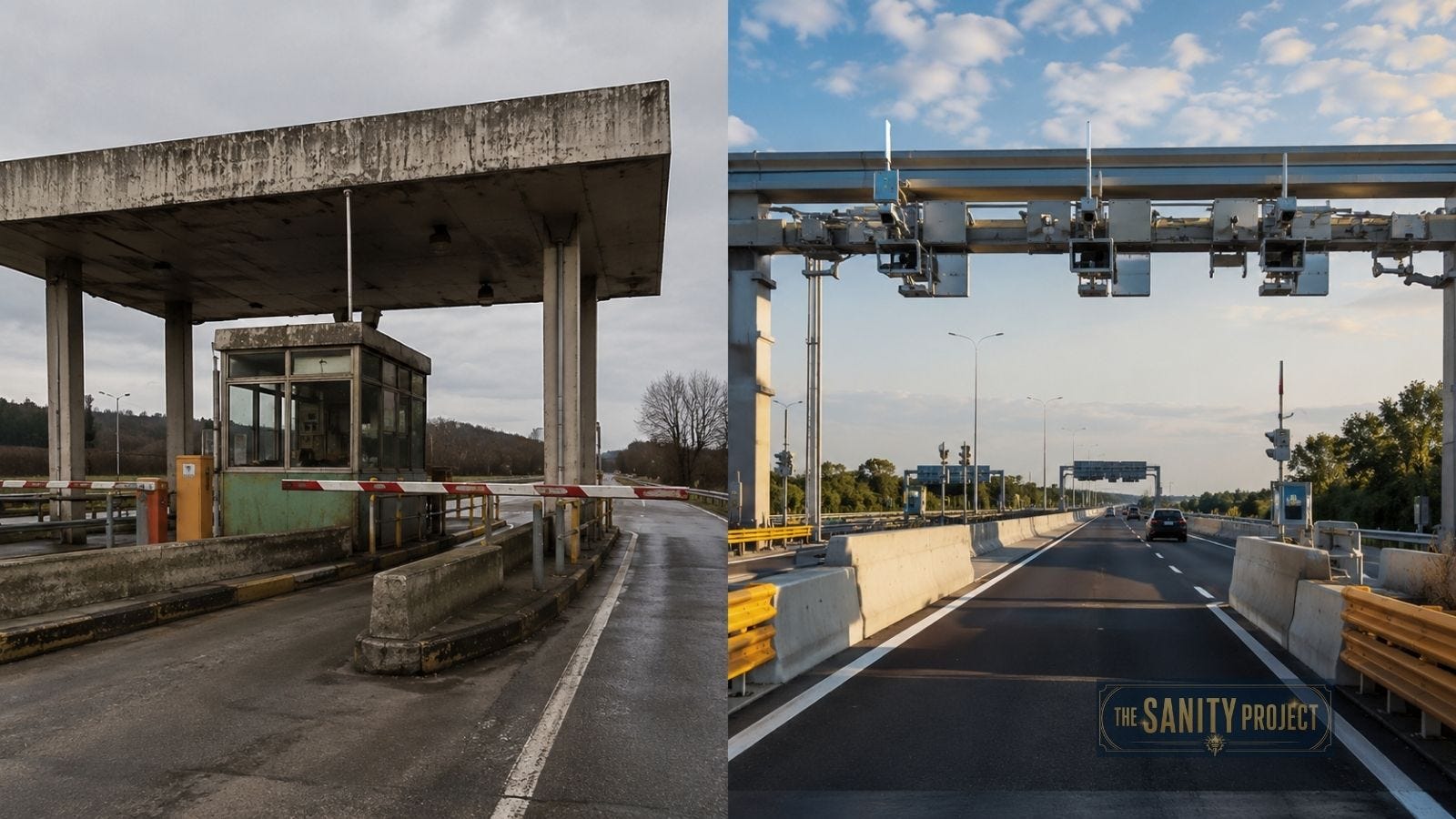
The Ambassador Bridge toll just got a competitor. Prices moved before a single truck crossed the new bridge.
Lost Trade vs. Lost Efficiency
Key Insight: No deal would not have erased Canada-U.S. trade through this corridor. It would have made Canada pay a permanent redundancy tax on the busiest trade corridor it has.
Older studies cited by the Global Infrastructure Hub projected that failing to relieve congestion in this corridor could eventually cost billions of dollars a year in lost production and tens of thousands of jobs in Ontario alone, under a genuine do-nothing scenario stretched out over years. Those numbers explain why the bridge got built in the first place. They aren’t a receipt for this specific five-month delay, and treating them as one would overstate the case.
The more honest framing is the trade-off Canada actually faced: reject the new terms and risk an open-ended closure with mounting weekly costs, or accept a less favourable revenue split and start collecting tolls, saving truckers time and money, and actually using the $6.4 billion asset it had already built.
Editor’s View
Here’s my honest read. The “no deal” scenario was never going to sink Canada-U.S. trade, whatever the loudest voices on either side implied while this was playing out. But it would have meant paying real, weekly, compounding money to sit on a finished bridge nobody could use, for as long as the standoff lasted, with genuinely no guaranteed end date. Whether $150 million in accumulated costs is the precise price of the last five months or a rough extrapolation from one firm’s estimate, the fact that a number this size exists at all is the actual story.
Opening the bridge on worse financial terms than Canada wanted was still, almost certainly, the economically rational move. That’s not the same as calling it a good outcome. It’s just calling it the least bad one available once the concrete had already dried.
None of this will matter to the trucker crossing the Detroit River for the first time on six new lanes instead of the same old two. The bridge will just be open. But the bill for how long it almost wasn’t is real; it’s estimated in the hundreds of millions, and it’s a reminder that finishing something and being allowed to use it aren’t, it turns out, the same accomplishment twice.
Finishing something and being allowed to use it aren’t the same accomplishment twice.
This is the second piece in our Gordie Howe Bridge series. The first looked at why Canada ever ended up needing Washington’s permission in the first place. Read it at thesanity.org.
Canada Built the Gordie Howe Bridge. So Why Did Washington Get to Decide When It Opened?

Canada Built the Gordie Howe Bridge. So Why Did Washington Get to Decide When It Opened?
One more thing. If this kind of fact-checked, sourced skepticism is your thing, subscribe. That’s the whole business model.
Corrections and Updates Protocol. This piece reflects publicly available reporting and official sources as of July 24, 2026, three days before the bridge’s scheduled opening. The $135 to $155 million delay estimate is this publication’s own extrapolation of Anderson Economic Group’s published weekly range and has not been independently audited. The 850,000-hour and 420,000-hour truck-time projections come from different studies conducted in different years and are presented as competing estimates rather than a single confirmed figure. This article will be updated if the bridge’s opening is delayed further or if new cost data is released.
Update (July 2026): No corrections issued yet.