



The Wall Inside Canada: How Interprovincial Trade Barriers Got a Man Fined for Buying Beer
A $292.50 fine over a case of beer went all the way to the Supreme Court of Canada, exposing a wall running straight through the middle of the country.
Key Takeaways
Interprovincial trade barriers let provinces block internal trade in ways a customs tariff never could, and the Supreme Court confirmed it in 2018.
It isn’t just alcohol. Trucking rules, professional licenses, and safety codes fracture at nearly every provincial line.
As of January 1, 2026, Bill C-5 and provincial deals like Ontario’s are finally starting to take pieces of the wall down.
The CFIB tracks who’s actually making progress, province by province, every single year.
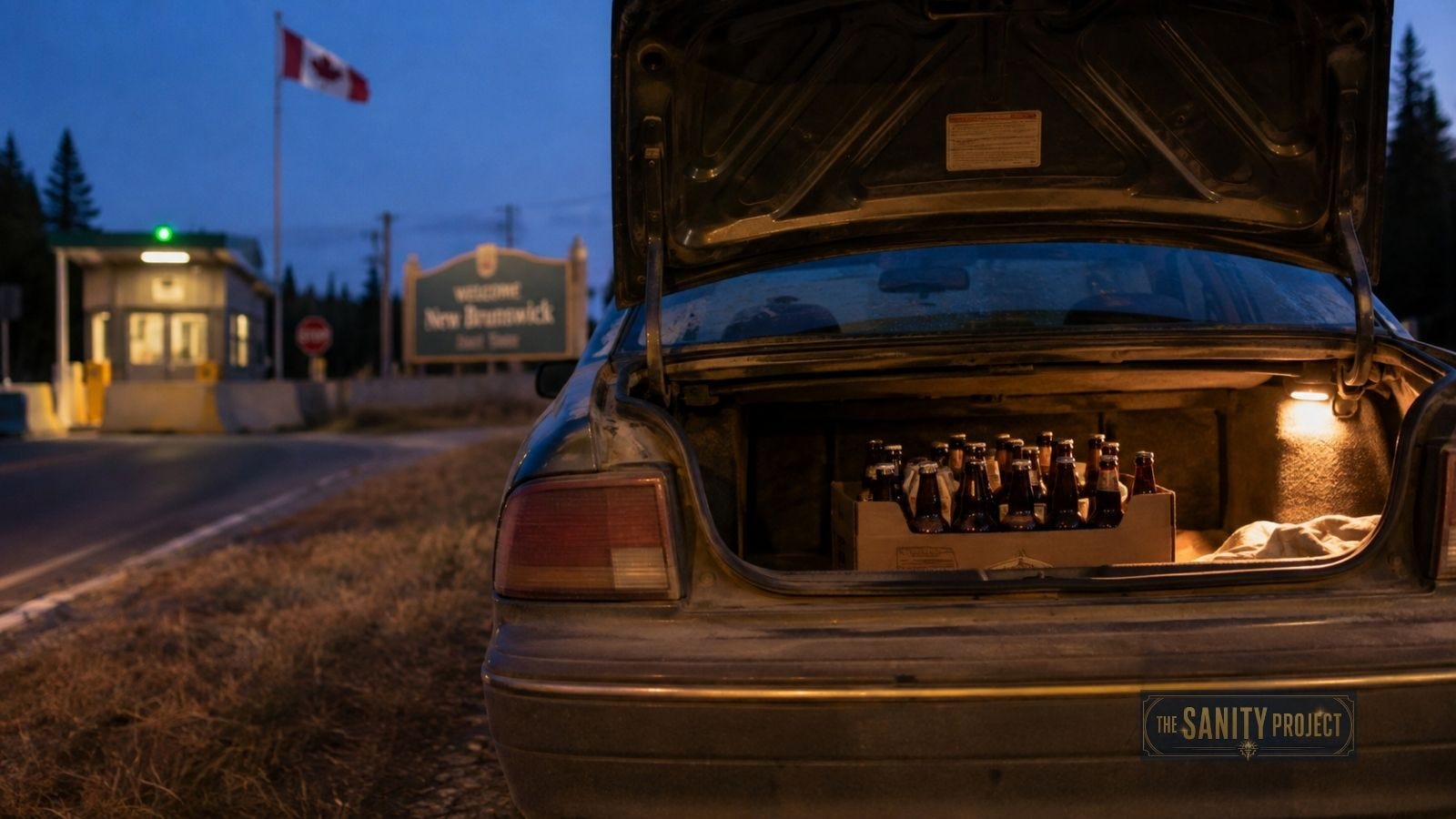
In October 2012, Gerard Comeau did something that barely registers as a decision. He drove across a provincial line to buy cheaper beer.
He lived in Tracadie, New Brunswick, close enough to the Quebec border that the price gap on beer was hard to ignore. He crossed over, bought his alcohol legally, paid every tax he owed, and drove home.
Waiting for him was an RCMP operation built specifically to catch people doing exactly what he had just done.
His beer was seized, and he was fined $292.50, officially for possessing liquor not purchased from the New Brunswick Liquor Corporation. Unofficially, his crime was moving a legal Canadian product across a Canadian provincial line, which happens to be the exact thing the country’s founding document promises he can do freely.
That fine is the origin story of one of the odder facts about this country. Interprovincial trade barriers are real, they are legal, and by some estimates they quietly cost the economy more than most of what dominates the nightly news.
A $292.50 Constitutional Crisis
Key Insight: Section 121 of the Constitution Act, 1867 says goods from any province shall be admitted free into the others. In 2018, the Supreme Court of Canada ruled that promise does not mean what it sounds like it means.
Comeau did not pay the fine and move on. He fought it, and his defence skipped past every local bylaw and went straight to Section 121. A New Brunswick trial judge actually agreed with him, ruling the province’s liquor restriction was unconstitutional. Read that sentence again. A sitting judge looked at a century and a half of settled practice and said the emperor had no clothes.
New Brunswick appealed, and the case climbed all the way to the Supreme Court of Canada. In 2018, the court ruled unanimously against Comeau. Section 121, the justices said, only bans literal customs-style tariffs collected at provincial borders. It does not touch the broader regulatory barriers provinces build instead. A toll booth is unconstitutional. A liquor board that happens to keep out-of-province beer off the shelf is just policy.
“A province cannot charge you a toll at the border. It only has to make sure you never reach the shelf.”
Less cynical than it sounds, the reasoning goes like this: if Section 121 guaranteed truly frictionless trade, provinces could not enforce their own environmental rules, health codes, or labour standards without risking a constitutional fight every time one of those rules nicked cross-border commerce. The Supreme Court was not protecting beer monopolies for their own sake. It was protecting the idea that provinces are provinces, not administrative subdivisions of Ottawa.
Losing confirmed something bigger than a beer run for Comeau. Provinces have had the legal room to build these walls for over a century, one regulation at a time, as long as nobody calls it a tariff out loud.

It Is Not Just Beer
Key Insight: The same legal loophole that let New Brunswick block Quebec beer also lets provinces set conflicting rules for trucking, professional licensing, and dozens of other everyday industries.
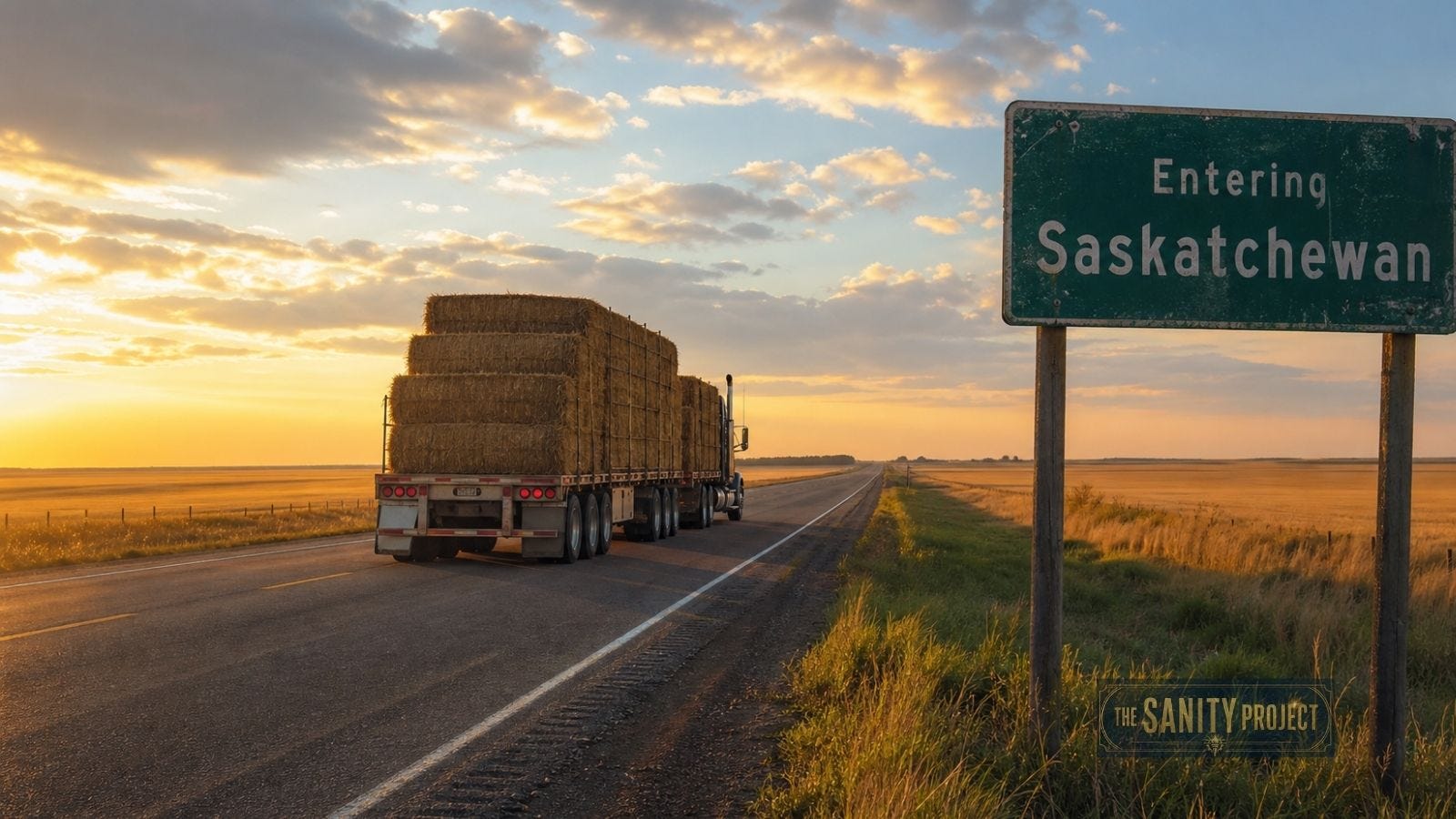
Picture a truck that is fully legal to drive in Alberta. Loaded correctly, insured, roadworthy, everything by the book. The moment it crosses into Saskatchewan, none of that guarantees anything. Tire tread specifications can differ. Weigh station intervals can differ. Even the required contents of a commercial first aid kit have, at various points, differed from one province to the next. None of it looks like a tariff. All of it functions like one, in the form of retrofits, retraining, and delay.
A similar pattern shows up in professional licensing. An architect certified in Nova Scotia who wins a contract to design a clinic in New Brunswick cannot simply email over the blueprints. Depending on the province, they may need separate licensing fees, months of recertification, or a local firm hired just to stamp the paperwork before the project can proceed.
None of this comes with a toll booth or a customs agent. It comes with a binder of provincial requirements, and it is exactly the kind of barrier Comeau’s case left standing.
Scale matters here too. A retailer or logistics company in Ontario can grow for years without ever crossing a provincial line, because its home market is already tens of millions of people. A business in Atlantic Canada does not get that luxury. For them, a barrier like this is not a mere inconvenience. It is a ceiling.
If this is the first time you’ve heard how deep this goes, hit subscribe.
Part 2 puts a hard number on it all.
The Wall Is Finally Cracking
Key Insight: As of January 1, 2026, federal and provincial governments stopped negotiating around these barriers and started legislating them away, beginning with labour mobility.
For decades, this was treated as an unfixable cost of running a decentralized country. Ottawa tried negotiating comprehensive trade agreements with the provinces instead, and every one of them arrived riddled with exceptions carved out sector by sector.
Enter Bill C-5, the One Canadian Economy Act. Its Free Trade and Labour Mobility in Canada Act came into force on January 1, 2026, and it runs on a principle called mutual recognition. If a good, a service, or a worker meets one province’s standard, that now counts as meeting the comparable federal standard too. No re-application. No second gatekeeper standing in the doorway.
Ontario did not wait for the rest of the country to catch up. As of January 1, 2026, Ontario is recognizing more than 50 regulated professions certified in other provinces, architects, engineers, electricians, and land surveyors among them, letting qualified workers begin within ten business days instead of restarting a licensing process from zero. Sixteen additional health professions were added on top of that, aimed squarely at the doctors and nurses who could not move to where the shortages were.

Nobody’s doing this out of charity. The International Monetary Fund estimates that fully removing these barriers could raise Canada’s real GDP by nearly 7 percent, a figure CBC reported as roughly $210 billion. We will get into exactly how that number is built next week. For now, the point is simpler: the wall Gerard Comeau ran into in 2012 is the same wall this legislation is now chipping away at, one province and one profession at a time.
Enjoying this? Leave a comment with the weirdest interprovincial rule you’ve personally run into.
The Sanity Project runs on readers who talk back.
What You Can Do
This is not a story that gets fixed by one law and then forgotten about. Progress, or the lack of it, is genuinely trackable, and you do not need to take a premier’s press release at their word.
Here’s the honest caveat: in CFIB’s own member survey this year, two-thirds of Ontario small businesses said they had noticed no real change from any of this, and some said cross-border trade had gotten harder, not easier. A grade on a report card and friction on the ground are not always the same thing.
The Canadian Federation of Independent Business runs an annual report card grading every province, territory, and the federal government on how much of this wall they are genuinely removing, not just announcing. Look up your own province’s grade. It takes two minutes, and it is the closest thing Canadians have to a scoreboard for whether this is real reform or another round of communiqués.
Next week: the wall has a number attached to it, and it is bigger than most people assume. We are putting a hard figure on exactly what interprovincial trade barriers cost Canada every year, and where that money goes.
Follow for more fact checks that cut through the noise.
Subscribe for Part 2: The $210 Billion Question, next week.


