


The Winter Bill: Why Energy Is Agricultural Policy
Vertical farming in Canada can already grow almost anything through the winter. Whether the country can afford to run it is the question this series keeps circling back to.
Key Takeaways
Growing food indoors through a Canadian winter is a solved technical problem. Paying for the energy it takes is not.
Labour and energy already eat 44 to 55 percent of greenhouse operating costs in Canada’s main producing provinces, and electricity keeps climbing.
Vertical farms save water and space, but their high energy demands make them a poor fit for staple crops that already grow cheaply outdoors.
Waste heat from data centers and industry is a real, piloted idea abroad, not a Canadian free lunch waiting to be claimed.
Provincial electricity costs vary by three times or more across Canada, meaning the same greenhouse costs very different amounts to run depending on where it sits.
The smartest food policy matches each crop to the least energy-intensive system that can grow it reliably, rather than betting everything on a single technology.
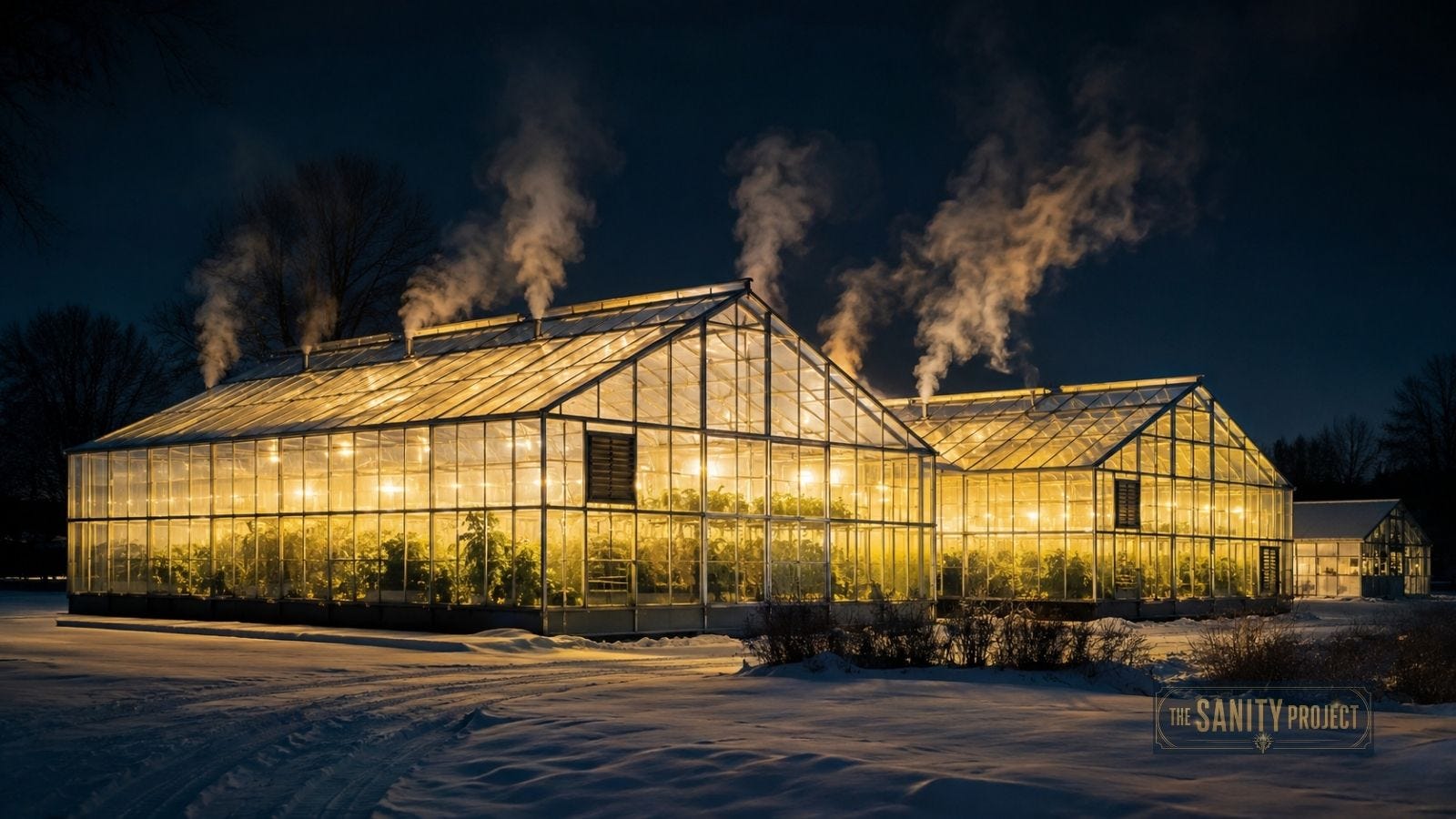
Picture a greenhouse outside Leamington in the second week of February. Outside, it’s minus fifteen. Inside, tomato vines are pushing out fruit under supplemental lighting, in air held at a steady twenty-one degrees, on soil warmed from below. Somewhere behind the scenes, a boiler burns fuel around the clock to make all of that possible.
That’s not a metaphor. That’s the actual machinery behind a Canadian winter tomato, and it’s worth sitting with, because most of the conversation about growing more food indoors skips straight past it. Sunlit greenhouses, indoor lettuce towers, vertical farming in Canada — generally, it’s easy to talk about all of it as a technology question. Can we build it? Can we automate it? Can we scale it?
The technology question was answered years ago. The real question, the one that actually decides whether any of this makes food more available or more expensive, is whether the energy it takes to fake a Canadian summer can produce food at a price anyone will pay. In this country, that makes energy policy agricultural policy, whether anyone planned it that way or not.
Subscribe to The Sanity Project, new angles land free →
The Hidden Cost of Winter Food
Key Insight: Heating, lighting, and labour, not the plants themselves, are what make a Canadian winter vegetable expensive to grow.
Growing anything indoors through a Canadian winter means paying for everything the sun and the season would otherwise provide for free. Heat to keep root zones and air at the right temperature. Supplemental lighting to stretch short winter days into something a plant can grow under. Ventilation and dehumidification so all that heat and moisture don’t rot the crop. Water systems, pumps, and climate control are running continuously. Labour to manage a facility that never really shuts off. And underneath all of it, the capital cost of the building itself, which has to be paid down whether the greenhouse is full or empty.
Farm Credit Canada’s own numbers show what this costs. Labour and energy together represent between 44 and 55 percent of operating expenses across Canada’s major greenhouse-producing provinces, and electricity costs alone rose more than 20 percent in a single recent year, with other fuel and heating costs up over 10 percent on top of that. When two line items eat half the budget, and both keep climbing, they stop being operating details and start being the business model.
Greenhouses Are Not All the Same
Key Insight: A sunlit greenhouse, a hybrid facility, and a fully indoor vertical farm are different tools for different crops, not three versions of the same idea.
It helps to stop lumping every controlled environment together, because they aren’t interchangeable. Outdoor field agriculture still grows Canada’s potatoes, carrots, onions, and cabbage more cheaply than any indoor system could, using nothing but soil, rain, and sunlight, with harvest and storage doing the work of carrying them through winter.
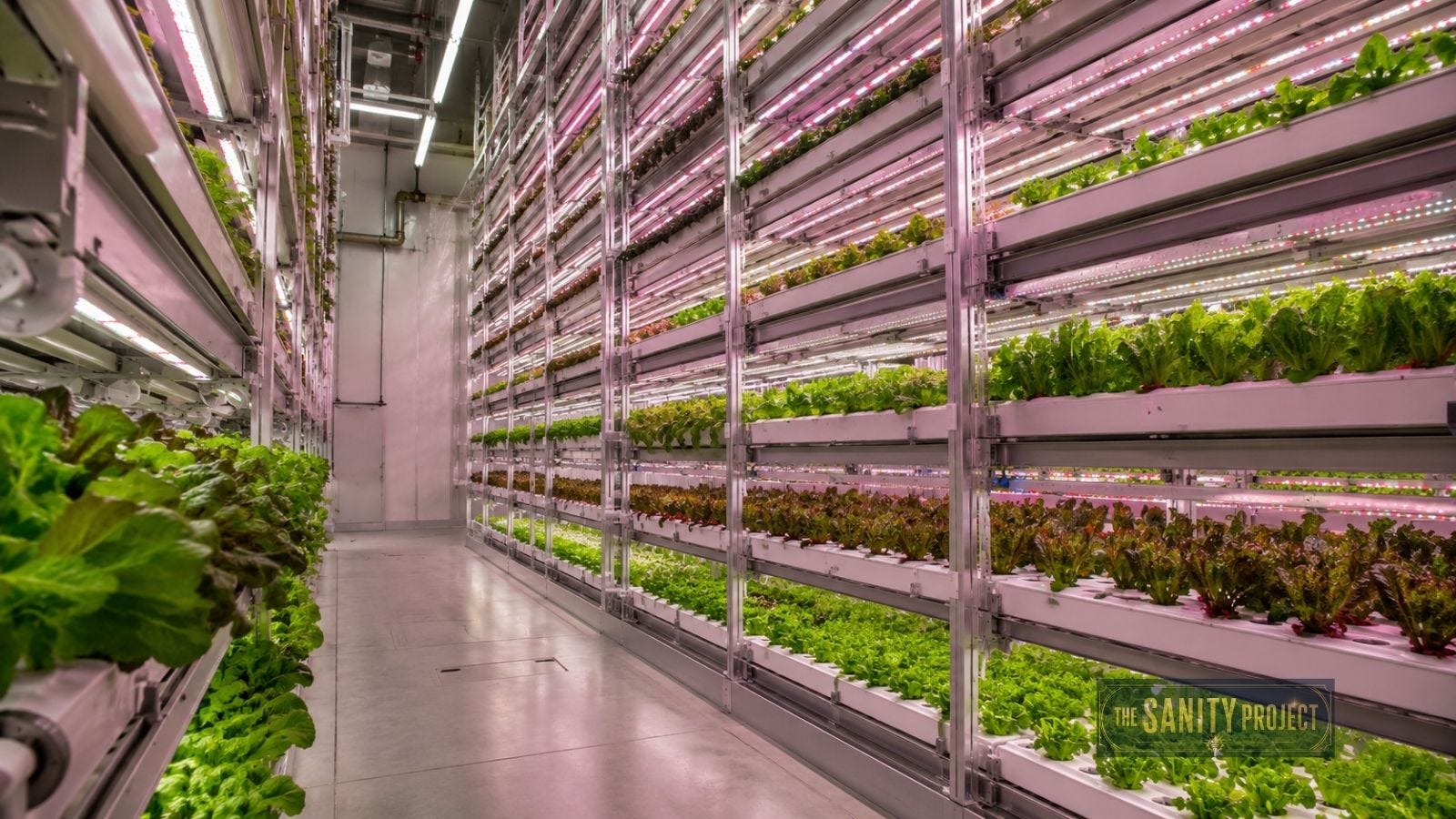
Sunlit commercial greenhouses use natural light for most of the year and heat to manage the cold months, which is why they dominate the production of tomatoes, cucumbers, and peppers, crops that need months on the vine and reward the extra light a glass roof lets in. Hybrid systems supplement natural light with targeted artificial lighting during the darkest weeks, borrowing some of a greenhouse’s efficiency and some of a vertical farm’s control. Fully indoor vertical farms forgo natural light entirely, replacing it with LEDs stacked across multiple growing levels. They are expensive per square foot but efficient for fast-growing, shallow-rooted crops like lettuce, herbs, and microgreens that don’t need months of sunlight to mature.
“Match the wrong crop to the wrong system, and you’re paying vertical farm electricity bills to grow something a field already produces for pennies.”
The Promise and Limits of Vertical Farming in Canada
Key Insight: Vertical farms are a genuinely good idea for the right crops, and a genuinely expensive one for the wrong ones.
GoodLeaf’s vertical farm in Saint-Hubert, Quebec, is the clearest Canadian example of this model working as intended. The facility uses hydroponics and specialized LED lighting to produce more than two million pounds of leafy greens a year, and the company reports roughly 95 percent less water use than a comparable outdoor farm. That’s a real win, not a marketing figure.
But water savings and a fast growth cycle are exactly why leafy greens are the success story, not proof that the model generalizes to everything else. A 2025 peer-reviewed analysis of 116 studies across 40 countries and 23 crop types found that energy use in controlled-environment agriculture varies by several orders of magnitude depending on the crop, and that energy intensity is a particular problem for staple and root crops that already grow cheaply outdoors. Grow lettuce indoors, and you’re competing on time and freshness. Grow potatoes indoors, and you’re mostly competing with your own power bill.
The Waste Heat Opportunity
Key Insight: Data centers and industrial waste heat can warm a greenhouse. Whether it can do so profitably is a separate, harder question.
Readers keep suggesting an obvious-sounding fix: hook Canadian greenhouses up to the waste heat already being emitted by natural gas facilities, industrial plants, and the AI data centers now being built across the country. It’s not a fringe idea. Data center operators in Sweden have partnered with a local university and research institute to heat a greenhouse and grow hydroponic microgreens using server waste heat, and a 2025 modelling study found that waste heat from the entire U.S. data center fleet could theoretically support greenhouse areas spanning tens of thousands of hectares.
Notice the word theoretically. Waste heat only becomes useful for agriculture if the heat is the right temperature for a greenhouse’s needs, arrives on a schedule that matches when the crop actually needs it, sits close enough that piping it over is physically sensible, and comes from an owner willing to build the connecting infrastructure and share the upside. Move any one of those variables, and the free heat stops being free. No verified Canadian project currently pairs a data center with a commercial-scale greenhouse, making this a promising direction worth piloting, not a solved problem waiting to be claimed.
The Mall Farm Question, Briefly
Key Insight: An empty building can house an indoor farm. It cannot make that farm’s electrical, water, and food safety retrofit bill disappear.
The idea of converting an abandoned mall or big-box store into an indoor farm resurfaces every time this topic comes up, usually anchored to a specific claim about a Montreal shopping center that remains unverified by any authoritative source we could locate. Set the specific claim aside, and the underlying question still deserves an answer.
A retail building offers floor space, parking, and existing walls, but none of that solves the actual retrofit problem. Ceiling heights built for shoppers rarely suit stacked, growing racks. Electrical systems sized for lighting and cash registers rarely suit rows of LED grow lights. HVAC built for human comfort rarely suits the humidity and heat a working farm produces. Add food-safety drainage, water systems, and loading access for daily harvest, and an empty building starts looking less like free real estate and more like a construction project that already has a roof.
The Provincial Energy Problem
Key Insight: The same greenhouse can cost three times as much to run, depending only on which province it sits in.
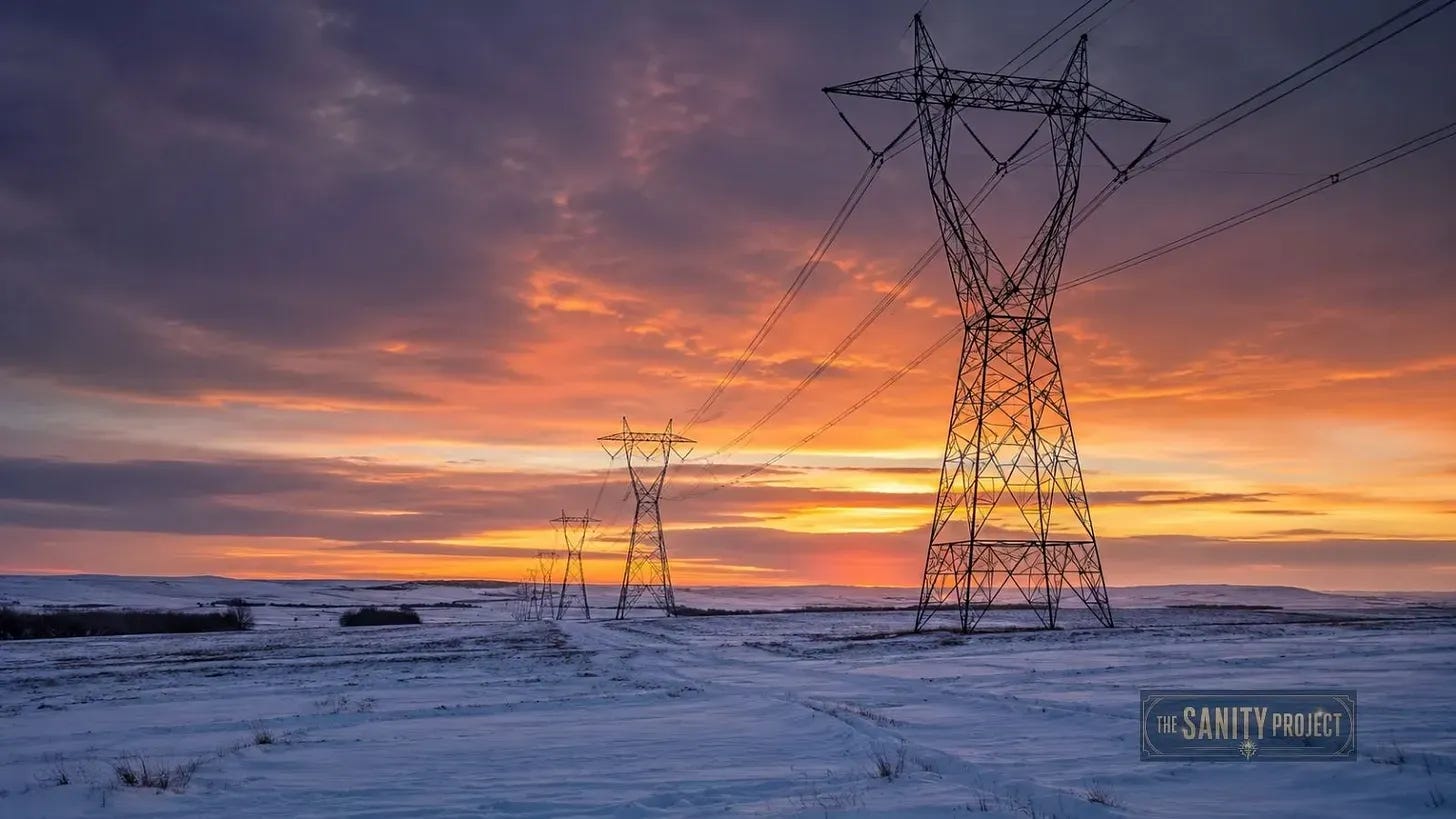
This is where “just build more greenhouses” runs into geography. A 2026 C.D. Howe Institute analysis found that normalized electricity system costs in 2023 ranged from roughly $76 per megawatt hour in Quebec to $225 in Alberta, with hydro-heavy provinces like Quebec, Manitoba, and British Columbia consistently posting the lowest costs, and non-hydro provinces like Alberta, Ontario, and Nova Scotia posting the highest.
Alberta’s deregulated market adds a second problem on top of the first: volatility. The same analysis found that Alberta’s system costs swung from roughly $145 per megawatt-hour in 2020 to a peak of nearly $270 in 2022, before falling to an average pool price of about $44 in 2025. A greenhouse operator financing a decade-long capital investment cannot plan around a power price that can nearly double and then fall by half within a few years. Industrial users typically pay less than residential customers everywhere in Canada, but the province a greenhouse is built in still decides an enormous share of whether it can compete.
What Policy Could Actually Do
Key Insight: The useful version of a subsidy pays for outcomes, not for novelty.
None of this argues against government involvement; it argues for a more disciplined version of it. Governments can support energy-efficient greenhouse retrofits instead of funding only new construction. They can actively broker industrial heat integration, connecting greenhouses to nearby waste heat sources rather than leaving that matchmaking to chance. They can fund research and demonstration projects that test waste-heat and vertical-farming claims at real scale before anyone commits public money to a full rollout. They can tie funding to measurable food production outcomes, cost per kilogram, energy per kilogram, actual domestic availability, rather than to how impressive a pitch deck looks. And they can resist the instinct to subsidize a technology simply because it’s new, which is exactly the trap a flashy vertical farm announcement is built to spring.
Get Angle 3 the day it lands, subscribe free →
The Verdict
Canada doesn’t need to pick a winner between traditional field agriculture and indoor farming. It needs to match each crop to the least energy-intensive system that can reliably grow it: fields for potatoes and cabbage, sunlit greenhouses for tomatoes and peppers, vertical farms for lettuce and herbs, and waste heat integration wherever the physics and the ownership line up.
The future of Canadian food production probably depends less on building more farms of any particular kind, and more on connecting the farms already standing to energy, industry, storage, and distribution systems, treating a greenhouse less like an isolated building and more like one node in a much larger machine.
Editor’s View
I went looking for a hidden cheap way to grow tomatoes in January and didn’t find one here either. The energy has to come from somewhere, and someone has to pay for it. What surprised me is how good the vertical farming numbers look for lettuce and how quickly they fall apart for almost everything else.
That’s not a failure of the technology. It’s a reminder that the technology was never the hard part. Angle 3 finally tackles the comparison everyone keeps bringing up in the comments: whether Canada could actually run something like the Dutch greenhouse model, and where that comparison holds up and where it quietly doesn’t.
Corrections and Updates Protocol
This article will be updated if new data changes the picture. Corrections are noted inline using the format “Update (Month Year):” followed by the change. No corrections have been issued at the time of publication.
Publications Consulted
Farm Credit Canada, GoodLeaf Farms, C.D. Howe Institute, InformationWeek, peer-reviewed research on controlled-environment agriculture energy demand
Good read.
Thanks for writing this.
There must be opportunities for waste heat to be employed more for just this use.
If we must use fossil fuels to normalize climates for agriculture, would it not be more productive to apply them directly to growing food rather than channelling them through hyper data centres purportedly built to solve problems of productivity? And on which side of the ledger are we counting the massive engineering required to put water where it isn't (https://canadiangeographic.ca/articles/glacier-ghosts-of-the-rocky-mountains/) and remove it from where it's not wanted? (Calgary 2013, Edmonton 2026).
Where do we put the costs of engineering inter-basin transfers and the expense of restoring an ecosystem subjected to inter-basin transfers? Who picks that up? The potato growers or the tomato buyers?
And who pays for the water treatment plant built with the steel made using the metallurgical coal that leached heavy metals into the watershed requiring it to to be cleaned up? Who pays for the steel required for the marvels of climate controlled agricultural technology? Who pays for the water needed for the coal to make the steel needed for the war machines and for the water needed for the AI technology necessary for the upcoming and ongoing wars over the dwindling arable land and sources of water needed to grow our food?
Yes, it's complicated.