



There’s a version of history where none of this made sense.
Where a man walks into a room full of investors, pitches a vehicle powered by controlled explosions, fueled by flammable liquid extracted from underground and shipped across continents, requiring hundreds of moving parts and periodic maintenance. And everyone in the room looks at him like he’s describing a medieval torture device.
That version of history is basically ours. We just arrived at it backwards.
A thought experiment has been making the rounds lately, and it’s one of those rare ideas that takes about thirty seconds to understand and considerably longer to stop thinking about. The premise is simple: what if electric vehicles had existed for over a century, and someone showed up today trying to pitch the internal combustion engine as the next big thing?
What would that pitch look like?
Turns out, it would look a lot like a Shark Tank episode where everyone goes home confused.
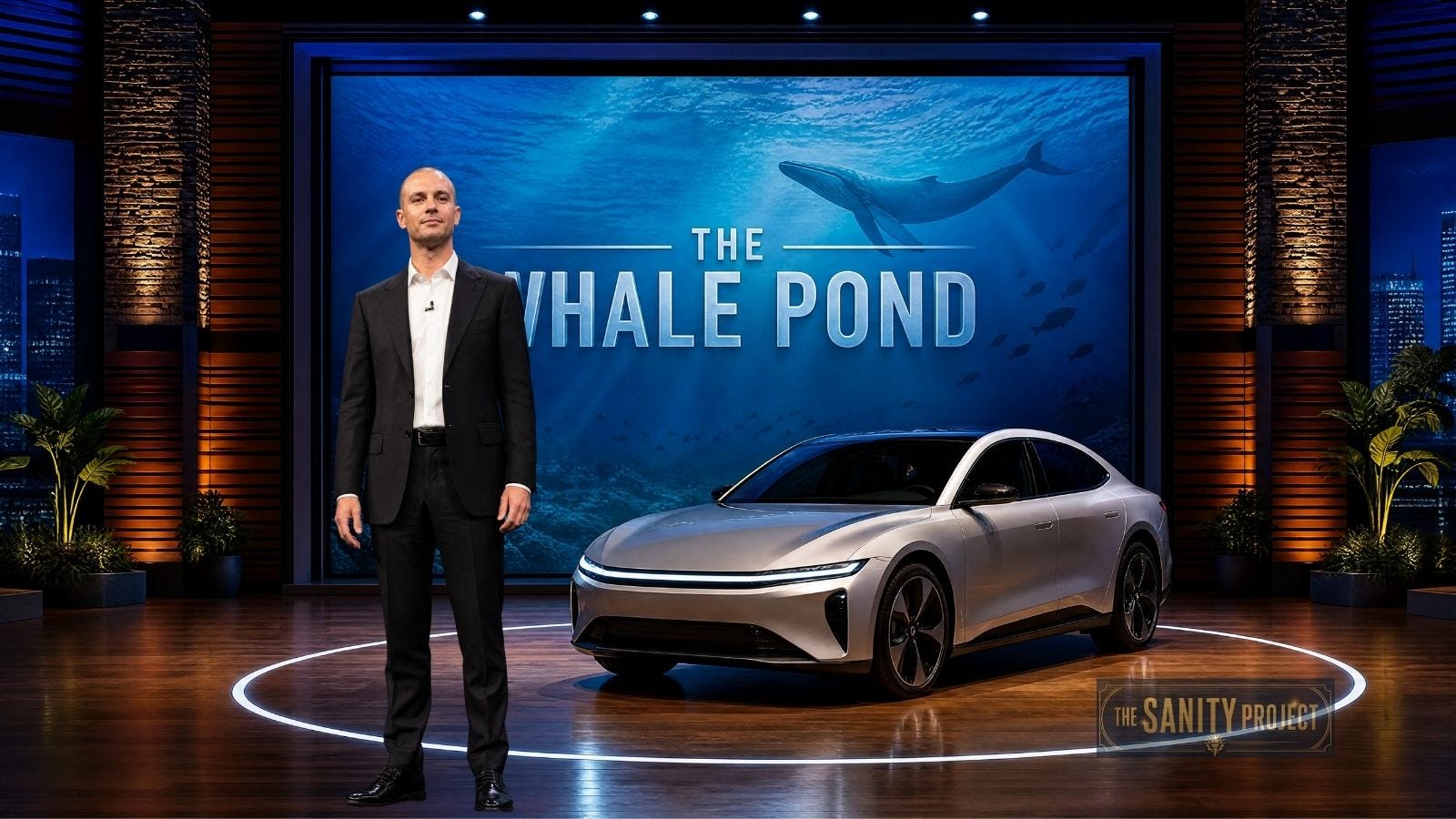
💥 “We’re Calling It the Internal Combustion Vehicle.”
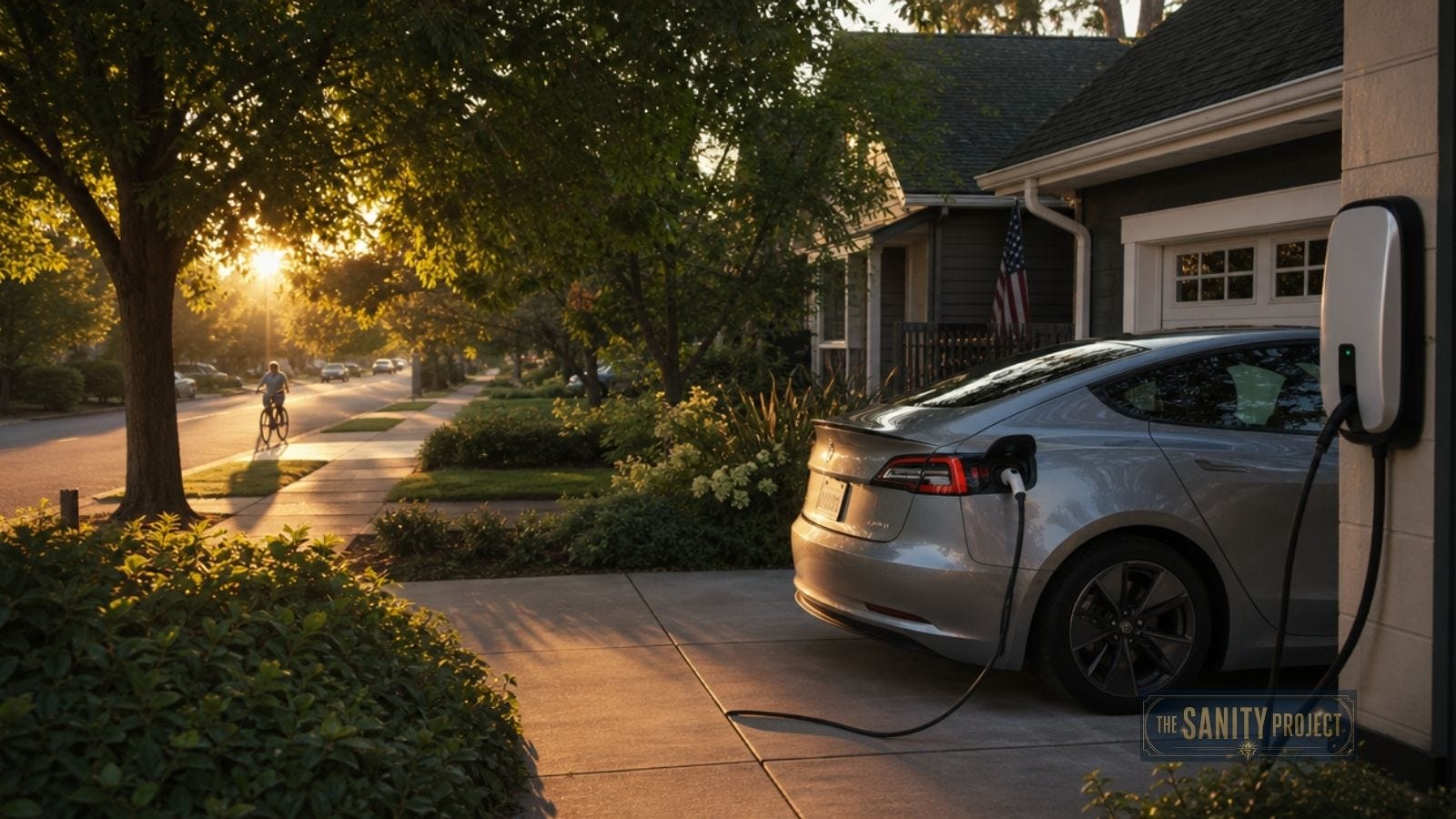
Imagine a founder. Call him Jethro. He’s standing in front of investors in a world where EVs are simply how people have always gotten around. Quiet, efficient, charged at home while you sleep. That’s the baseline. That’s normal.
Jethro has a different idea.
His vehicle, he explains, begins with a specialized liquid fuel. That fuel is introduced into a sealed chamber where it undergoes a series of precisely controlled combustion events. Those events generate pressure. The pressure generates mechanical force. That force travels through a complex drivetrain before finally reaching the wheels.
One of the investors leans forward. “Current electric vehicles already convert stored energy directly into motion. Your system appears to add multiple extra steps. What problem does that solve?”
Jethro’s answer is essentially: wrong question. True innovation isn’t about simplicity. It’s about reimagining what’s possible.
He’s not wrong, technically. He’s just describing a car engine to people who have never seen one, and watching them react the way they logically should.

🏪 The Business Model Is Genuinely Incredible
Here’s where the thought experiment gets really uncomfortable.
Jethro explains that instead of customers charging at home (which, he concedes, is incredibly convenient) they’ll need to visit dedicated fueling centers. Regularly. For as long as they own the vehicle.
The fuel itself will be:
Extracted from deep underground
Transported across vast distances
Refined in specialized facilities
Distributed nationally through a logistics network
Sold through retail fueling partners
Fuel prices, he adds, may fluctuate based on international markets, geopolitical events, supply disruptions, weather conditions, and refinery capacity.
“But investors — that’s not uncertainty,” Jethro says, with the confidence of a man who has clearly rehearsed this line. “That’s market dynamism.”
The room is quiet.
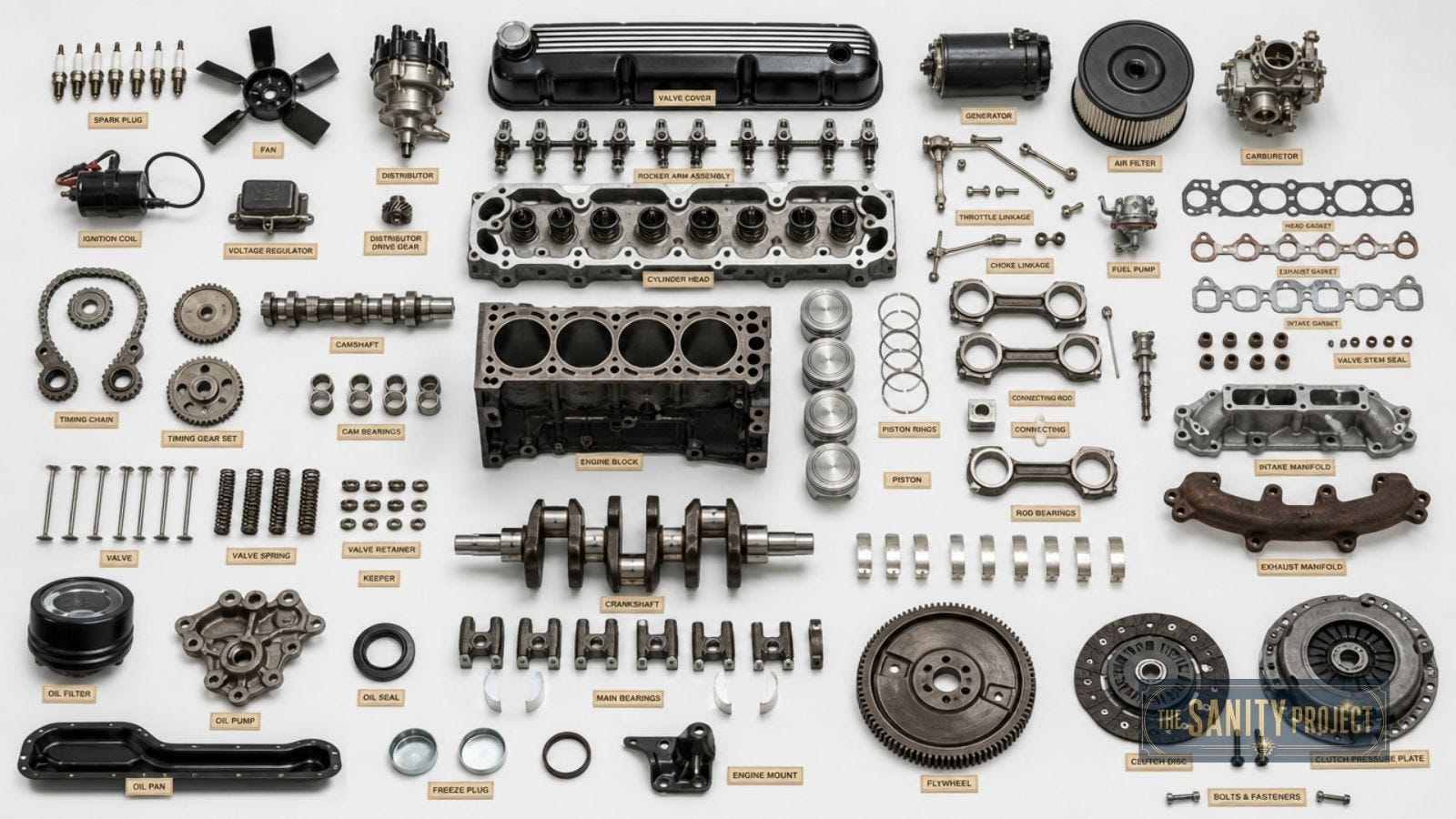
He then pivots to what he calls the “comprehensive ownership experience.” The engine contains hundreds of precision-engineered components, each one creating opportunities for servicing and replacement:
Pistons, valves, fuel injectors, spark plugs
Cooling systems, belts, pumps, filters, sensors
A sophisticated multi-speed transmission
A specialized lubricant that the engine contaminates during normal operation, and must be replaced periodically, or the vehicle will destroy itself
One investor raises a hand. “It sounds like you’ve replaced a machine that requires very little maintenance with one that requires constant attention.”
Jethro nods enthusiastically. That’s the point.
And here’s the thing. He’s not lying. He’s describing, accurately and in good faith, the actual economic architecture of the global automobile industry. It’s just that when you hear it described fresh, without decades of familiarity softening the edges, it sounds completely insane.
🏎️ The Performance Numbers Don’t Help
When the investors ask about speed, Jethro reveals that his vehicles reach highway speed in approximately eight seconds.
Current EVs, one investor notes, do it in three or four. Some faster.
Jethro’s response: “You’re viewing performance through the lens of efficiency. We’re viewing performance through the lens of emotion.“
He argues that immediate, predictable acceleration is boring. His engine produces a distinctive acoustic signature. You feel it working. You hear it working. You participate in the journey.
The investors are not moved by the participation angle.
One of them points out, gently but firmly, that after all the added complexity, maintenance, and infrastructure, the vehicle is actually slower and less efficient than the technology it’s replacing.
“What exactly am I missing?” she asks.
It’s a fair question. Jethro doesn’t really have an answer that works here. Because in this context, a world that never normalized the gas engine, there isn’t one.
🦈 The Part Where Everyone Goes Out
By the end of the pitch, the investors have heard the full picture:
Flammable liquid is carried inside every vehicle
An engine that contaminates its own lubricant and self-destructs if the owner skips maintenance
Visible exhaust released directly into the atmosphere (which Jethro frames as a feature: “tangible confirmation that energy is being consumed”)
A global fuel supply chain vulnerable to geopolitical disruption
Performance that trails existing technology at every measurable metric
“I was out at the explosions. The rest of the presentation just helped me understand why.”
“I honestly can’t tell if this is a transportation company or a practical joke.”
Jethro takes it in stride. He points out, not unreasonably, that people laughed at powered flight, at the internet, at electric vehicles.
One investor responds: “We’re not laughing, Jethro. Honestly, we’re a little concerned.”
It’s the funniest line in the whole thing. And it lands because it’s true. In that version of history, genuine concern would be the rational response.
🧠 What This Actually Means
The point of the thought experiment isn’t that gas cars are bad and EVs are good. That framing is too simple, too political, and it misses what’s actually interesting here.
The point is about familiarity. About how comfortable we get with the systems we were born into. About how much of what we call “normal” is really just “what arrived first.”
A technology that requires a global extraction and distribution network, releases combustion byproducts into the atmosphere, needs hundreds of interdependent parts to function, and fails catastrophically if the owner misses a maintenance appointment. That technology would face enormous skepticism today if it were new.
But it isn’t new. It’s everywhere. It’s what most of us grew up with. And so we evaluate it the way we evaluate most familiar things: not on first principles, but against the baseline of what we already know.
The real question this thought experiment is asking:
When we judge new technology, are we evaluating it on its actual merits — or are we just measuring it against whatever we’re already used to?
That question doesn’t only apply to cars. It applies to how we evaluate new media, new institutions, and new ideas in general. The status quo has a home-field advantage that has nothing to do with whether it’s actually good.
And sometimes it takes someone pitching the old thing as if it were new to make that visible.
Every technology in Jethro’s pitch is real. The engines, the fuel, the maintenance schedules, the emissions. The only thing that changed was the order in which things arrived.
Keep questioning the obvious.