


Who Actually Owns Canada’s Greenhouse Boom
Canada keeps citing greenhouse growth as a food security win. Nobody in that conversation is tracking who cashes the cheque, and under the Investment Canada Act, mostly nobody has to.
Key Takeaways
Mucci Farms, a 60-year-old Ontario family business, is now owned by Cox Farms, a subsidiary of Atlanta-based telecom conglomerate Cox Enterprises, which became North America’s largest greenhouse operator within eight months of launching.
A separate Ontario deal handed a U.S. real estate company 50 percent ownership of two more established Canadian greenhouse operations in early 2023.
The Investment Canada Act’s review threshold sits above $1.3 billion in enterprise value for most foreign buyers, far above the scale of any greenhouse acquisition made public so far, meaning none of this faced federal scrutiny.
Ontario, home to 72 percent of Canada’s greenhouse vegetable production, has no provincial restriction on foreign ownership of either farmland or agricultural businesses.
Ottawa’s $750 million Controlled Environment Agriculture Growth Pathway has not published eligibility rules addressing ownership at all, as of this writing.
None of this proves foreign ownership is bad for Canadian food security. It proves nobody is currently measuring whether it is.
Every number in this series so far has pointed the same direction: Canada’s greenhouse sector is growing, 974 operations, 866,484 metric tonnes in 2024, a 5 percent jump from the year before, and hundreds of millions in new federal funding on the way. Every one of those numbers gets cited as evidence of Canadian food security. None of them says who owns the greenhouse.
That turns out to be a genuinely interesting gap, because the answer is changing fast, and almost nobody is tracking it. A family business that spent sixty years building itself into one of Ontario’s greenhouse flagships can be absorbed by a private American conglomerate in under three years, and nothing in Canadian law requires anyone to review the deal, disclose it publicly beyond a press release, or count it differently in next year’s greenhouse statistics.
Subscribe to The Sanity Project, free →
A Sixty-Year Family Business Becomes North America’s Largest Greenhouse Operator
Key Insight: Mucci Farms spent six decades as an Ontario family business. It took Cox Enterprises less than three years to turn it into the anchor of North America’s largest greenhouse operation.
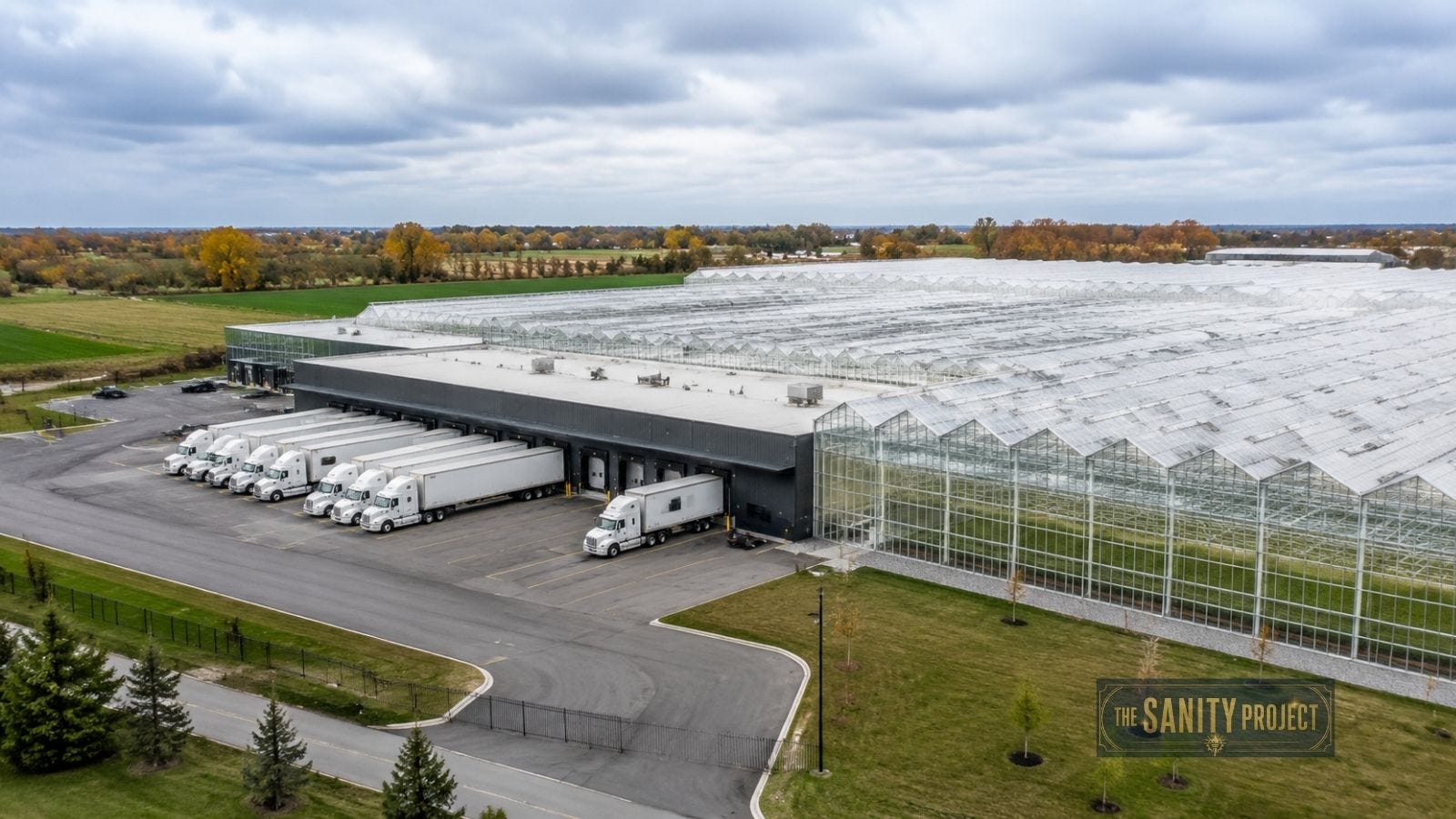
Mucci Farms was founded in Kingsville, Ontario, in the early 1960s and built by the Mucci and Spano families into one of Canada’s best-known greenhouse names, growing tomatoes, peppers and cucumbers for retailers across North America. In 2022, Cox Enterprises, a privately held Atlanta conglomerate best known for cable television and car auctions, with roughly $23 billion in annual revenue from its communications and automotive divisions, made a strategic investment in Mucci Farms. It was not Cox’s first move into agriculture. The company had acquired leafy greens grower BrightFarms the year before, part of more than a billion dollars Cox says it has put into sustainable technology since 2007.
In March 2024, Cox formally launched a dedicated agriculture subsidiary, Cox Farms, folding in both BrightFarms and its stake in Mucci Farms. By November of that same year, Cox Farms announced it had become North America’s largest greenhouse operator, with more than 700 acres across its two brands, after Mucci Farms acquired the Greenhill Produce facility in Kent Bridge, Ontario. Mucci also picked up Hacienda North Farms in Ontario and expanded into California the same year. Cox Farms now reports more than 2,500 employees and revenue approaching a billion dollars.
“A family business that spent sixty years building an Ontario greenhouse flagship became the anchor of North America’s largest greenhouse operator in under three years, and nothing in Canadian law required anyone to review it.”
Mucci Farms Isn’t the Only Deal
Key Insight: A separate, smaller deal shows the same pattern: American capital, Canadian greenhouse acreage, and almost no public scrutiny.
In January 2023, Land Betterment Corporation, a U.S. company built around redeveloping former industrial and mining sites, announced that its subsidiary Betterment Harvest had closed on 50 percent ownership stakes in two established Ontario greenhouse operations, JC Fresh Farms and Orangeline Farms, together anchored by 65 acres of growing space. The companies’ own founder framed it as a partnership to expand into the United States, and it may well work out that way. It is still, functionally, half of two Canadian greenhouse operations now sitting on an American company’s balance sheet.
Not every major name in the sector has gone this way. Mastronardi Produce, the SUNSET brand and by most measures Canada’s largest greenhouse platform, remains family owned four generations in, and Nature Fresh Farms is similarly still family run out of Leamington. The pattern isn’t universal. It is, however, real, established, and moving in one direction.
Why Nobody Reviewed Any of These Deals
Key Insight: Canada does have a law governing foreign takeovers. Its review threshold sits so high that a deal would need to be worth over a billion dollars before anyone in Ottawa has to look at it.
Canada’s main tool for screening foreign acquisitions is the Investment Canada Act. For most foreign buyers, the threshold that triggers a federal review of a straight acquisition of control currently sits above $1.3 billion in enterprise value, a figure indexed each year upward with economic growth. Every greenhouse deal named in this piece is almost certainly a fraction of that size. None of the public reporting on Mucci Farms, JC Fresh or Orangeline mentions an Investment Canada Act review, because none was legally required.
Provincial rules add a second, patchier layer, and this is where geography matters again. Saskatchewan and Manitoba cap how much farmland a foreign-controlled entity can hold without a special exemption, and Quebec restricts non-resident purchases of agricultural land below a small threshold. Ontario, where 72 percent of Canada’s greenhouse vegetable production actually sits, has no such restriction on foreign ownership of farmland or agricultural businesses. The province producing most of the country’s greenhouse vegetables is also one of the most open to whoever wants to buy the greenhouses growing them.
Does Ottawa’s $750 Million Care Who Owns the Greenhouse
Key Insight: The federal government’s own controlled environment agriculture fund hasn’t published eligibility rules yet, which means the ownership question hasn’t been answered because it hasn’t been asked in public.
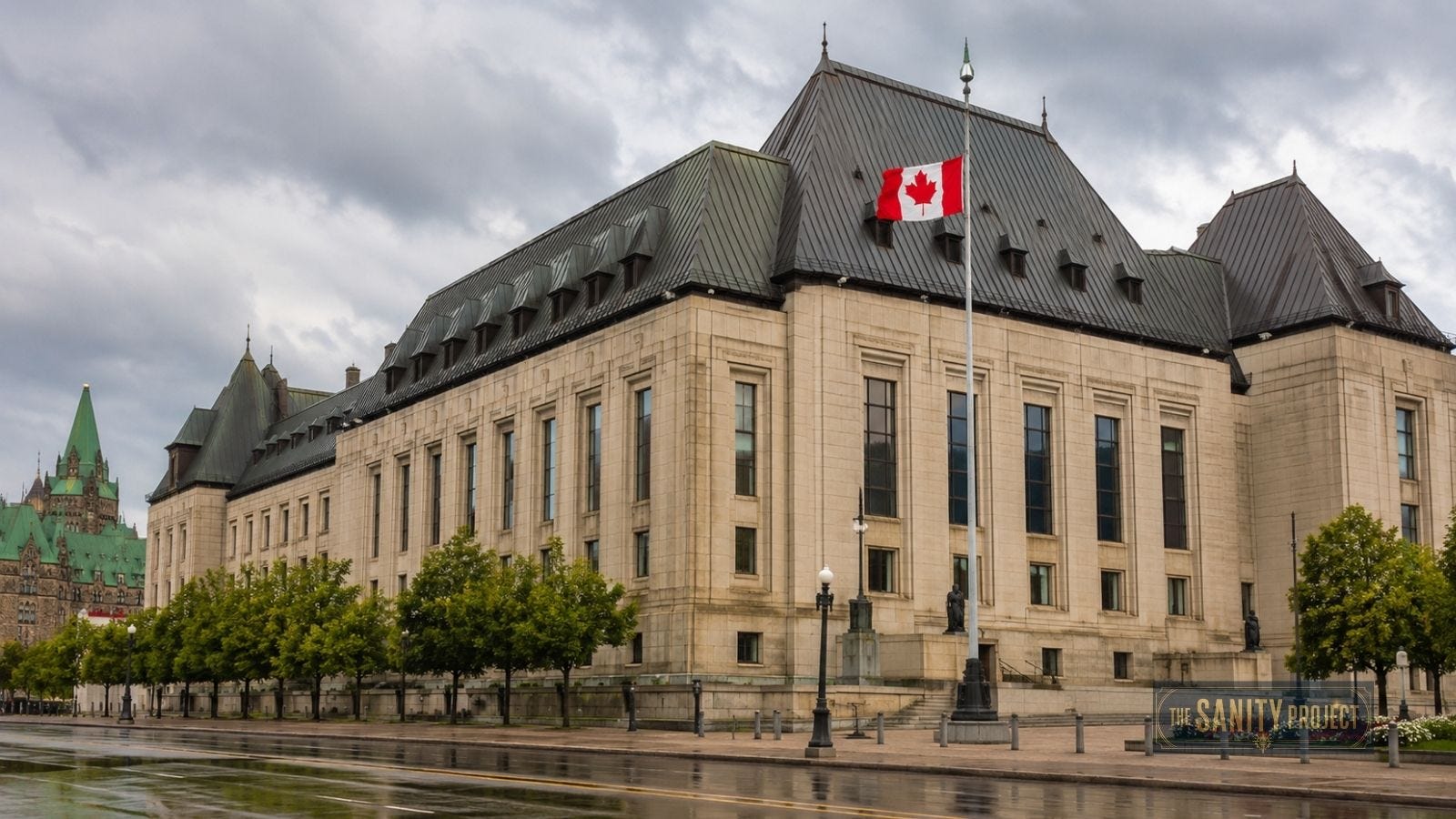
Canada’s National Food Security Strategy backs the sector this piece is describing with $750 million over seven years through the Controlled Environment Agriculture Growth Pathway, split into a $650 million technology adoption stream and a $100 million rural and northern stream, aimed at doubling domestic controlled environment production value by 2032 and cutting Canada’s dependence on imports it could grow at home.
As of this writing, the detailed application process and eligibility criteria for that funding have not been fully published. That means there is currently no public answer to a fairly obvious question: does a greenhouse operation majority-owned by a private American conglomerate qualify for the same federal support as one owned by a Canadian family business, provided both grow food in Ontario and employ Canadian workers? Maybe it should. Maybe ownership shouldn’t matter if the food and the jobs stay here. But that’s a policy choice somebody should have to make out loud, not one that gets decided by default because nobody wrote it into the rules.
Get the next Sanity Project piece the day it drops →
Does Ownership Actually Matter for Food Security
Key Insight: Food still grown here by workers still paid here is a real form of resilience. Who makes the decisions when a continental supply chain gets stretched thin is a separate question, and it’s the one ownership actually changes.
It would be easy to overstate this. A greenhouse owned by Cox Enterprises still grows real tomatoes in real Ontario soil, still employs Canadian workers, and still ships product to Canadian grocery stores. On the narrow question of whether food is physically available, foreign ownership doesn’t obviously make things worse, and in Mucci’s case, backing from a $23 billion parent company likely means more stable financing than a family business could raise alone.
Where it does matter is in exactly the distinction this series drew earlier between resilience and sovereignty. Resilience asks whether the system bends without breaking. Sovereignty asks who gets to make the decisions when it’s tested. A Canadian-owned greenhouse answers to Canadian owners when a cross-border supply chain gets strained by tariffs, a currency shock, or a corporate parent deciding its Canadian assets are less strategic than its American ones in a given year. A greenhouse owned by an Atlanta conglomerate answers to Atlanta. That may never matter in practice. It’s still a different answer to the sovereignty question than the one implied every time a government press release counts that greenhouse’s tonnes as a Canadian food security win.
The Verdict
Canada doesn’t need to close the door on foreign investment in its greenhouse sector, and there’s a real argument that capital from anywhere helps build the capacity this whole series has been arguing Canada needs. But right now, Canada isn’t making that trade-off on purpose. It’s making it by accident, because the federal review threshold was built for enormous mergers, not mid-sized agricultural acquisitions, and because the province that grows most of the country’s greenhouse vegetables never wrote an ownership rule into its books.
The fix isn’t a ban. It’s a tally. If Ottawa is going to spend $750 million on the premise that more controlled environment agriculture means more Canadian food security, the least it can do is track and publish who actually owns the greenhouses cashing those cheques. Right now nobody has to ask, which means nobody currently knows the answer.
Editor’s View
This piece exists because a reader asked a simple question during the last series: who actually owns the biggest greenhouses in this country. I expected a quick factual answer. Instead I found a sixty-year-old Ontario family business folded into a telecom conglomerate’s balance sheet in under three years, and a federal law with a review threshold so high it never had to notice.
I don’t think that makes anyone in this story a villain. Cox Enterprises isn’t hiding what it bought, and the Mucci family got to choose their buyer. What bothers me is simpler: Canada talks about greenhouse growth as a food security number, and ownership is nowhere in that number. It should be, if only so the next $750 million gets spent with its eyes open.
Thank you, Stanfield Veilleux for posting this question,
Publications Consulted
Agriculture and Agri-Food Canada, Cox Enterprises, GroceryTradeNews, The Packer, Agriculture Dive, HortiDaily, Lexology, Blakes, DLA Piper REALWORLD
Were the conservatives in power when all the USA companies bought it all up???? No wonder Canadian owned produce is being sold south! Canadian owned co-op companies can start up, get loans and freeze the US owned out just like we did their alcohol. Soooo sick of this US monopoly of all Canadian owned businesses. F¥<k Harper, Mulroney and all the fascist pigs who sold out/ off Canada 🇨🇦. We’ll take it all back 💪
Excellent, again thank you.