


The $238 Million Question: Who Is Alberta’s Government Working For?
Two Australian coal companies didn’t get their mines. They got Alberta’s chequebook instead, and the bill traces back to one government’s flip-flop on Alberta's coal policy.
Last week, we traced how the Grassy Mountain open-pit coal project, rejected by two independent regulatory bodies in 2021, came back under three different corporate names, using Alberta’s provincial process to sidestep the federal review that killed it. This week, we follow the money.
Fifteen million dollars. That’s what Montem Resources, an Australian coal company, told an Alberta court it had spent developing two coal projects in the province’s Eastern Slopes.
Ninety-five million dollars. That’s what the Alberta government paid the same company, now renamed Evolve Power, to settle the lawsuit over those same projects.
Sit with that gap for a second. Nobody disputes the $15 million figure. It’s in the company’s own statement of claim. Where the other $80 million came from is a separate question entirely, and it’s one Alberta hasn’t really answered.
New to this series? Subscribe to The Sanity Project to catch Part 1 on how Grassy Mountain keeps coming back.
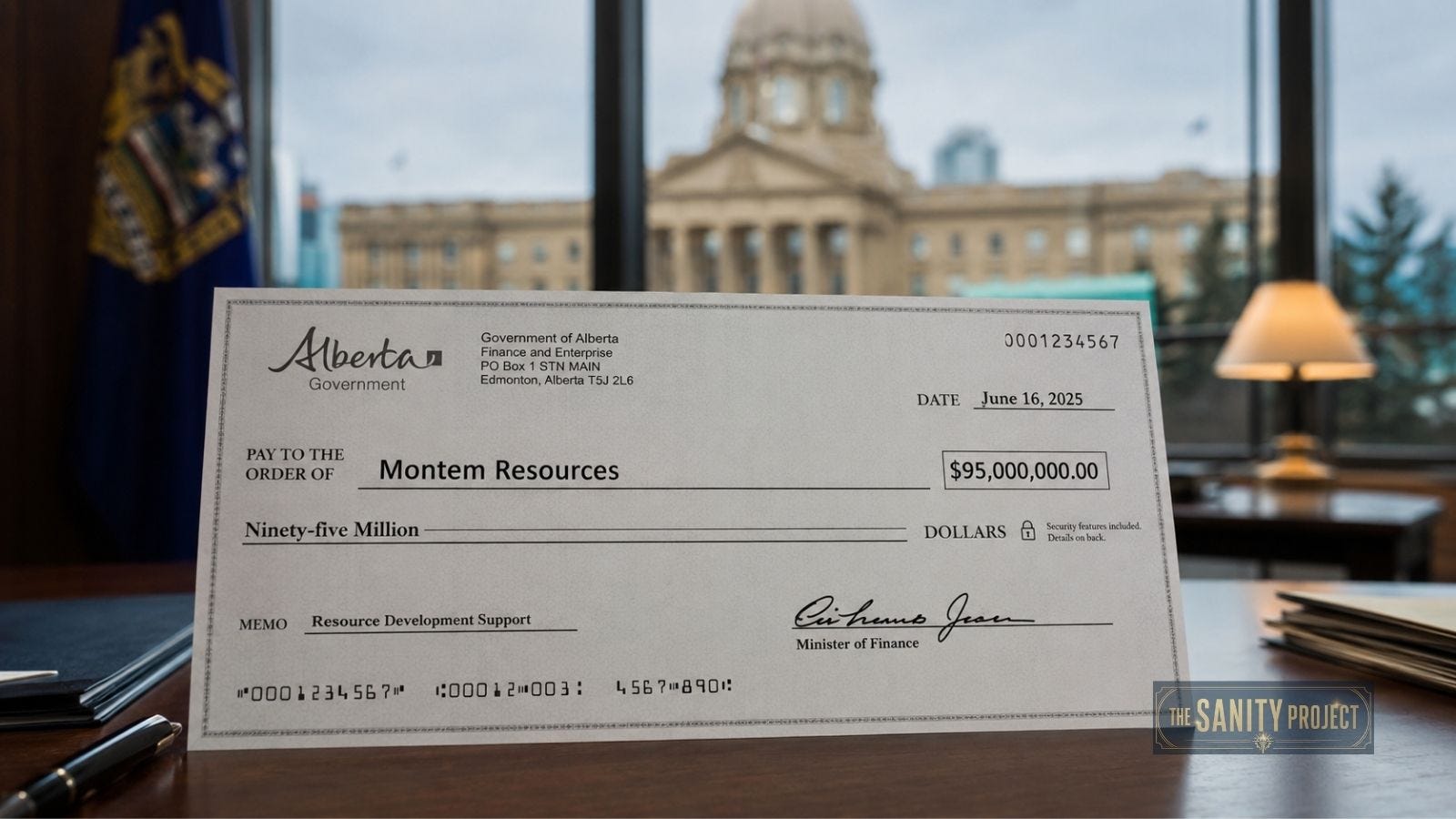
How a $15 Million Claim Became a $95 Million Settlement
Key Insight: Montem Resources, now Evolve Power, claimed $15 million in development costs in its lawsuit against Alberta. The province settled for $95 million in October 2025. A University of Calgary resource law professor has publicly asked why the gap is that large.
To understand the $95 million, you need the policy history behind it. In 2020, Alberta’s government suspended the province’s 1976 Coal Policy, a move meant to open the Eastern Slopes to new mining investment. Companies bought in. Then public backlash forced Alberta to reverse course, reinstating the policy in 2022 and declaring a moratorium on new coal exploration. Four companies, including Montem, sued, arguing the reversal amounted to an effective expropriation of the land and leases they’d been encouraged to acquire.
Montem’s own statement of claim put a number on its losses: roughly $15 million in exploration costs, alongside a much larger claim based on the project’s hypothetical future value. In October 2025, Alberta settled with the renamed Evolve Power for $95 million, and the company surrendered its Chinook and Greenfield coal leases as part of the deal.
Nigel Bankes, a longtime resource law professor at the University of Calgary, reviewed the court filings and published his analysis publicly. His question was direct: why would the Crown settle a cost-based claim of $15 million for more than six times that amount, with no public explanation for how the gap was closed?
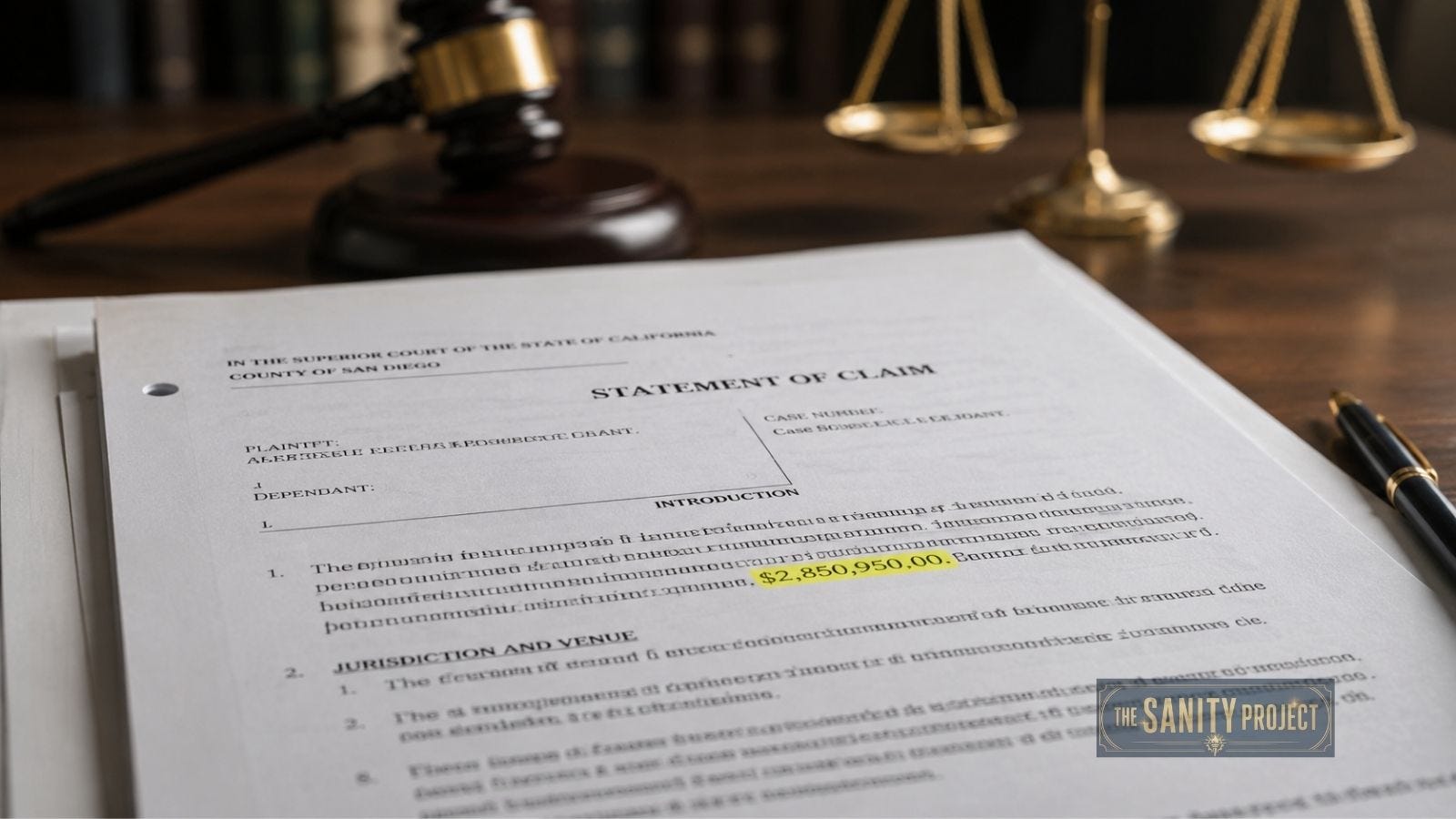
But Here’s the Real Kicker: There’s Another $142.8 Million on Top
Key Insight: Atrum Coal Ltd. finalized a $142.8 million settlement with Alberta in July 2025 over the same coal policy reversal. Combined with the Evolve Power settlement, Alberta’s total payout to rejected coal projects now sits at roughly $238 million.
But here’s the real kicker: Evolve Power wasn’t the only cheque. Atrum Coal Ltd., another company caught up in the same policy reversal, reached an agreement in principle with Alberta in April 2025 and finalized a $142.8 million settlement that became public in July 2025. The province is holding back $6 million of that until Atrum completes reclamation work, and, in exchange, Atrum has surrendered its Crown coal leases entirely.
Environmental Defence’s Stephen Legault called it “a phenomenal waste of taxpayers’ money”, and the math backs him up. The same legal analysis that flagged the Montem gap found Atrum’s own cost-based claim, drawn from its amended statement of claim, totalled around $46.3 million. Alberta paid roughly three times that.
Add the two settlements: $95 million plus $142.8 million equals just under $238 million. That’s not our estimate. It’s the figure multiple outlets reported once both settlements were public, and it doesn’t include whatever comes next.
And something is likely coming next. Northback Holdings, the same company at the center of the Grassy Mountain rebrand story we told last week, filed its own separate damages claim against Alberta in 2024 over regulatory delays. That claim is still working its way through the courts. Two other companies named in the original lawsuits, Black Eagle Mining and Cabin Ridge Holdings, hadn’t confirmed settlement terms as of the most recent public reporting either.
Tracking where Alberta’s money actually goes? This is the kind of paper trail we follow every week. Subscribe.
What Else $238 Million Buys in Alberta
Key Insight: $238 million is nearly double the province’s entire three-year commitment to the Strategic Transportation Infrastructure Program, the fund smaller Alberta municipalities rely on to fix local roads and bridges.
Numbers this size are easy to read past, so here’s a comparison that might land harder. Alberta’s Strategic Transportation Infrastructure Program, the fund that helps smaller municipalities maintain local roads and bridges, was budgeted at $126.8 million over three full years in Budget 2025. The coal settlements alone add up to nearly double that entire three-year commitment, and they were paid out in a matter of months.
This isn’t a claim about what the money should have been spent on instead. It’s a scale check. $238 million is not a rounding error in a $75 billion provincial budget, but it’s also not small enough that a government focused on fiscal discipline should be comfortable writing it off as the cost of doing business.
The $15 million figure came from the companies’ own court filings. The $238 million came from somewhere Alberta still hasn’t fully explained.
The Question the Evidence Demands
Key Insight: Nobody has proven wrongdoing here. But a government that campaigns on fiscal discipline has yet to explain, in public, why it paid two Australian coal companies far more than their own cost-based claims, for projects its own regulators had already rejected.
None of this proves corruption, and we’re not alleging any. What it proves is a pattern, and patterns are worth asking about out loud. A self-described fiscally conservative government settled two lawsuits for a combined $238 million, on projects that independent experts had already found unsafe or not in the public interest, at settlement values several times higher than the companies’ own documented costs. Every one of those facts is on the public record. None of them has a public explanation attached.
That’s the question this piece leaves on the table. Not “was this corrupt,” because nobody has shown that. The real question is simpler and harder to dodge: what, exactly, justified paying these companies so far above what they say they spent, and why has the government let coal company shareholder notices, not its own disclosures, be the only place Albertans have learned any of this?
Next week in Part 3, we turn to the 200,000 Albertans who tried to do something about it. A rancher and country musician named Corb Lund gathered the largest anti-coal petition in Alberta’s modern history, and delivered it to Elections Alberta demanding a referendum. On July 3, 2026, that petition was dismissed. We’ll look at what happened, and what it means for democracy in this province.
Follow for more fact checks that cut through the noise.
Why Albertan’s are not more angry about the constant misuse of our tax dollars is beyond me. They yell and scream about paying taxes which are required to support society but say diddly squat re their tax dollars being misused. That is the more serious offense.
Easy answer: Trump.