


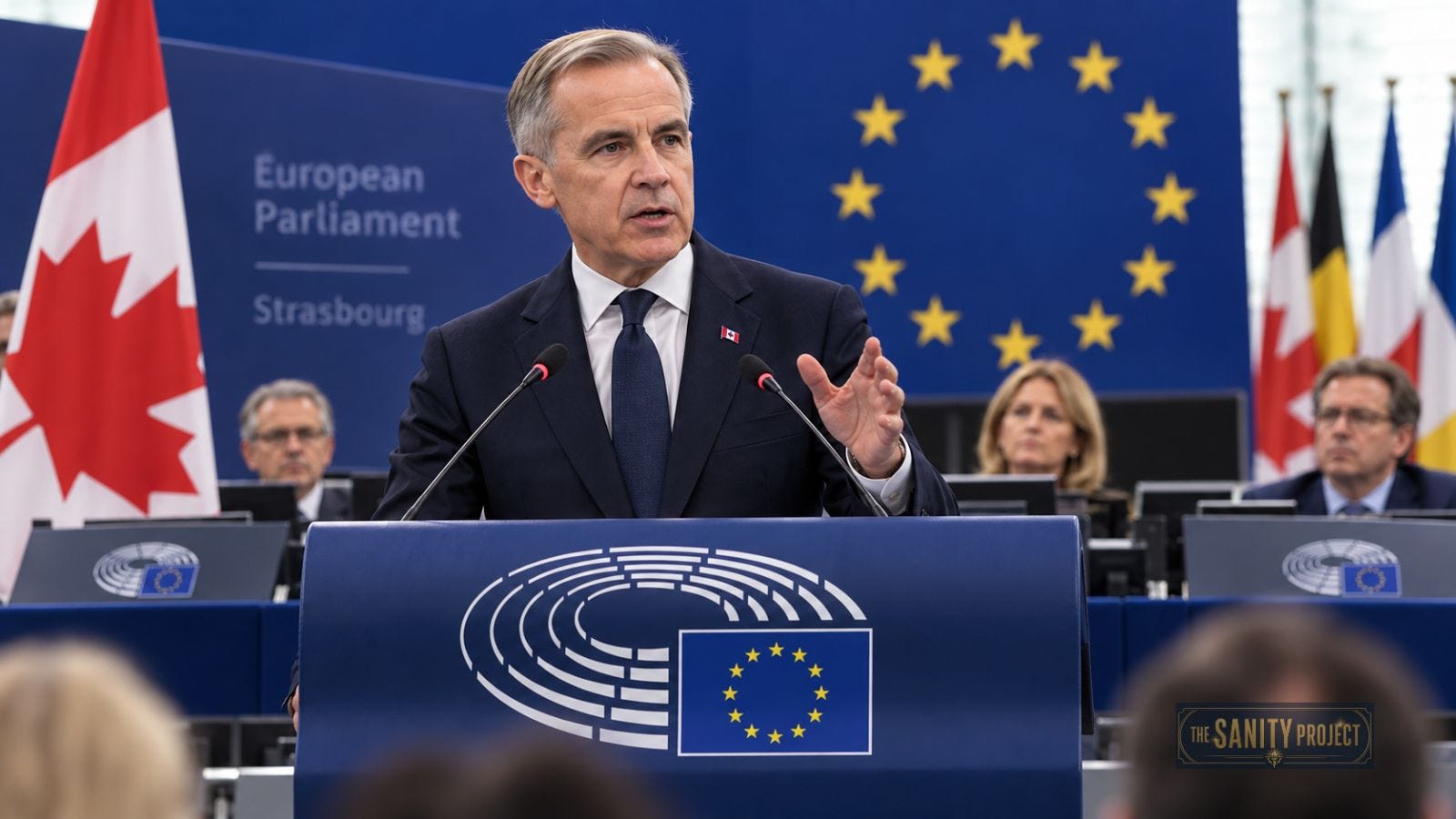
Carney Tells EU Parliament Canada Won't Bow to Trump's Tariff Threats
Mark Carney stood before the European Parliament in Strasbourg on Thursday and spent twenty minutes talking about oak trees, and somehow never once had to say Donald Trump’s name for everyone in the room to know exactly who he was talking about.
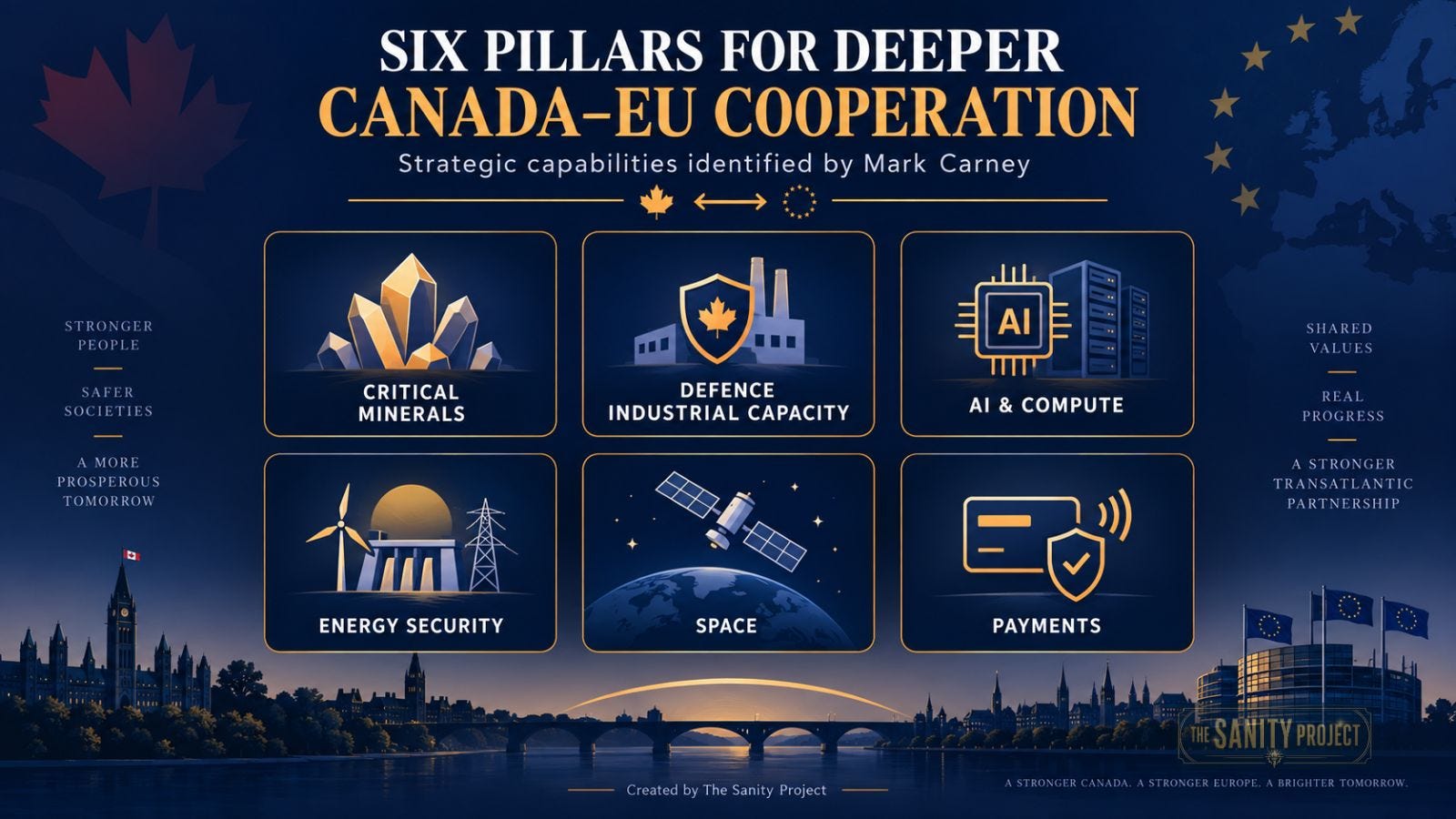
The occasion was substantial in itself. A day earlier, European Commission President Ursula von der Leyen told her own parliament that Canada should become the EU’s first Associate Member, a status that doesn’t currently exist anywhere in European treaty law and would have to be invented from scratch. Carney called it an “Alliance for the Future” and laid out a list of concrete areas of cooperation that ranged from critical minerals processing to sovereign AI compute to a shared financial services market. That alone would have made news.
What made it sharper is what Carney didn’t say. He talked about tariffs “being used as a means of pressure.” He talked about financial mechanisms “used for coercive purposes” and supply chains becoming “vulnerabilities to exploit.” He described technology platforms that want to dictate their own rules and companies that prove national the moment things get difficult.
Not one word named the United States. He didn’t need to. Two days earlier, Trump had already called the EU’s Canada offer a possible “hostile act” and threatened Europe with heavy tariffs if he decided the relationship was unfriendly toward Washington.

That’s the real story buried in a speech built around a century-old oak tree from Vimy Ridge. Canada sends roughly seven in ten of its exported dollars south of the border. The country’s own prime minister just spent a formal address to a foreign legislature describing exactly the kind of economic coercion Ottawa has spent the past year absorbing, in a room full of people who understood the reference without a footnote.

Carney was more direct when reporters pressed him on Trump’s comments afterwards. Canadians are united, he said, that nobody is going to tell them what language they speak, and no one is going to dictate their culture or who they strike agreements with. That’s not diplomatic hedging. That’s a prime minister telling the White House, in a foreign capital, that the era of asking permission is over.
None of this means Ottawa is walking away from Washington. Carney was explicit that he isn’t building a third power bloc to rival anyone, only pursuing what he called resilience, the kind that keeps any single partner from controlling Canadian markets or dictating Canadian choices. But resilience only means something if you’re building an alternative, and Thursday’s speech was Canada publicly building one, in front of the ally that keeps threatening to punish it for trying.
Watch for the Montreal summit at the end of October, when Canada and EU leaders sit down to define what Associate Member status actually means. That’s when this stops being a speech and starts being a treaty.
Trump’s name is not worth the saliva.
The point about not building a third bloc is important. That’s the thing the press and some foreign leaders failed to understand after the Davos manifesto. Blocs are about control and exclusion. This arrangement is about opening the world to new possibilities, capabilities and relationships. Eventually, it is about bringing people closer together. It’s hard to go to war with someone you know.