


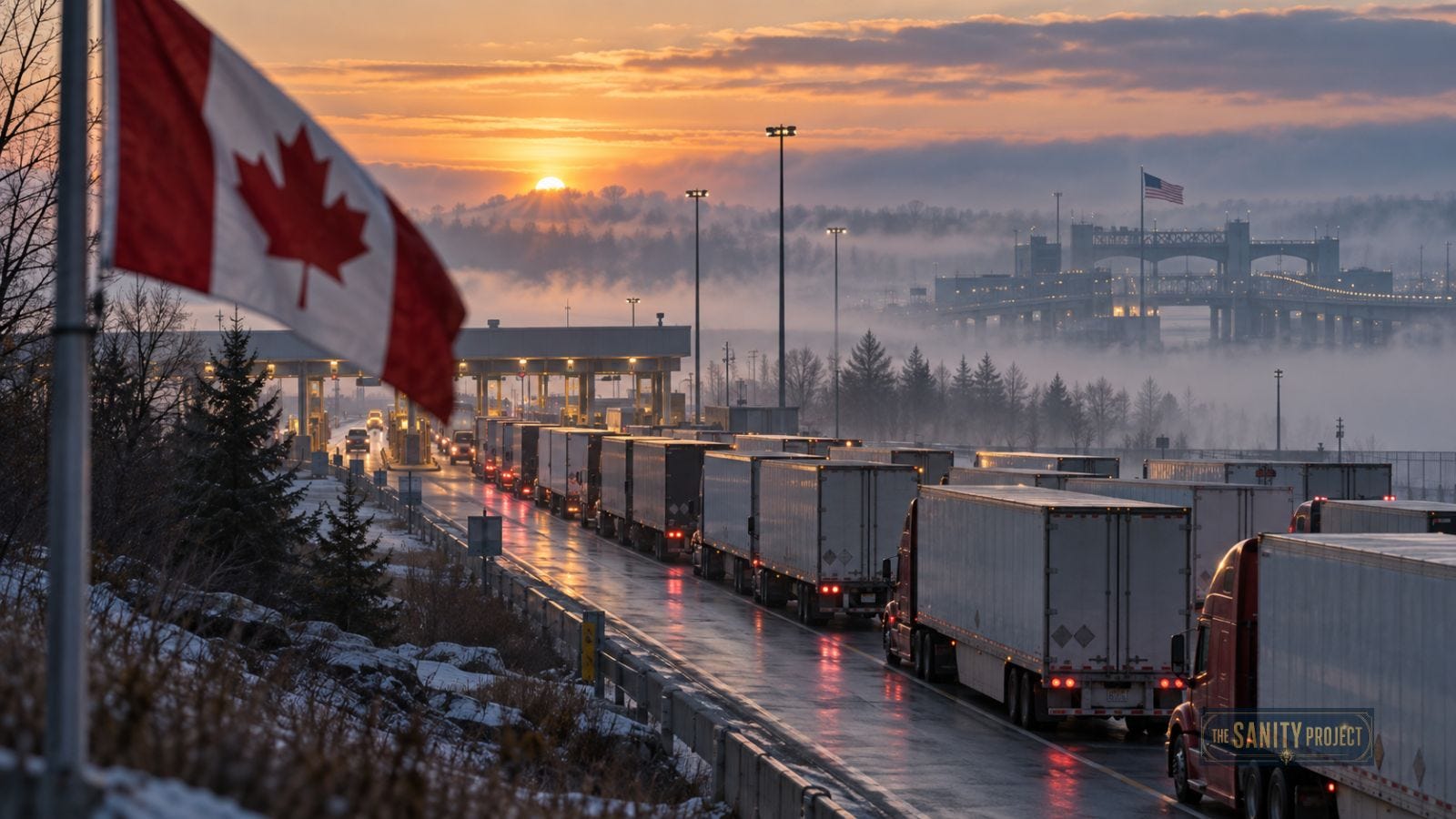
9 Reasons Canada Will Prevail in the Trade War With the US
One country has a plan. The other has a Truth Social account, and the Supreme Court keeps overruling it.
Key Takeaways
This trade war is hurting real people right now, especially workers in steel, auto, and lumber, and this piece does not pretend otherwise.
Canada’s share of exports to the US has fallen from 75.9 per cent to roughly 68 per cent in under two years.
Nine structural reasons, from Carney’s record to Canada’s rules-based standing, explain why Canada is built to outlast this fight rather than fold.
None of it depends on Canadians staying angry forever. It depends on capacity, and Canada has more of that than Washington seems to be counting on.
“You’re at war when you get attacked. We got attacked.” Mark Carney said that on a Saturday in August, hours after Washington began enforcing fresh 50 per cent tariffs on Canadian goods, tariffs that took effect on August 19 with no CUSMA exemption at all, a first. Carney answered by matching new US tariffs on $ 20 billion of Canadian goods, dollar for dollar, effective September 8. Talks between the two countries collapsed that same week, with no date set to resume them. By September 29, Washington had gone further still, banning Canadian dairy, motorcycles, and alcohol outright.
This is not a hypothetical dispute or a negotiating posture. It is an active, escalating fight, and in this Canada trade war with us, it is genuinely costing people their livelihoods. So before laying out why Canada holds the stronger hand, it is worth being honest about what that phrase does not mean.
What This Is Actually Costing Canadians Right Now
Key Insight: Steel, auto, and lumber workers are carrying the weight of this fight, while diversification has not yet reached their industries.
Finance Minister François-Philippe Champagne has been blunt about it. The tariffs, he said, “will have real consequences for Canadian workers, businesses, and communities across our nation.” He is right. Steel and aluminium tariffs now sit at 50 per cent on both sides of the border. Auto parts cross that border several times before a finished vehicle rolls off the line, and every crossing gets taxed. The layoffs and slowdowns in these sectors are not rhetorical. They are already happening.
The diversification numbers Ottawa likes to cite are real, but they hide an important detail. Most of the growth in non-US exports has come from a surge in gold prices and a handful of new markets, such as the United Kingdom, rather than from steel, autos, or lumber finding new buyers. Those specific industries are still absorbing the tariffs directly, with nowhere else to sell.
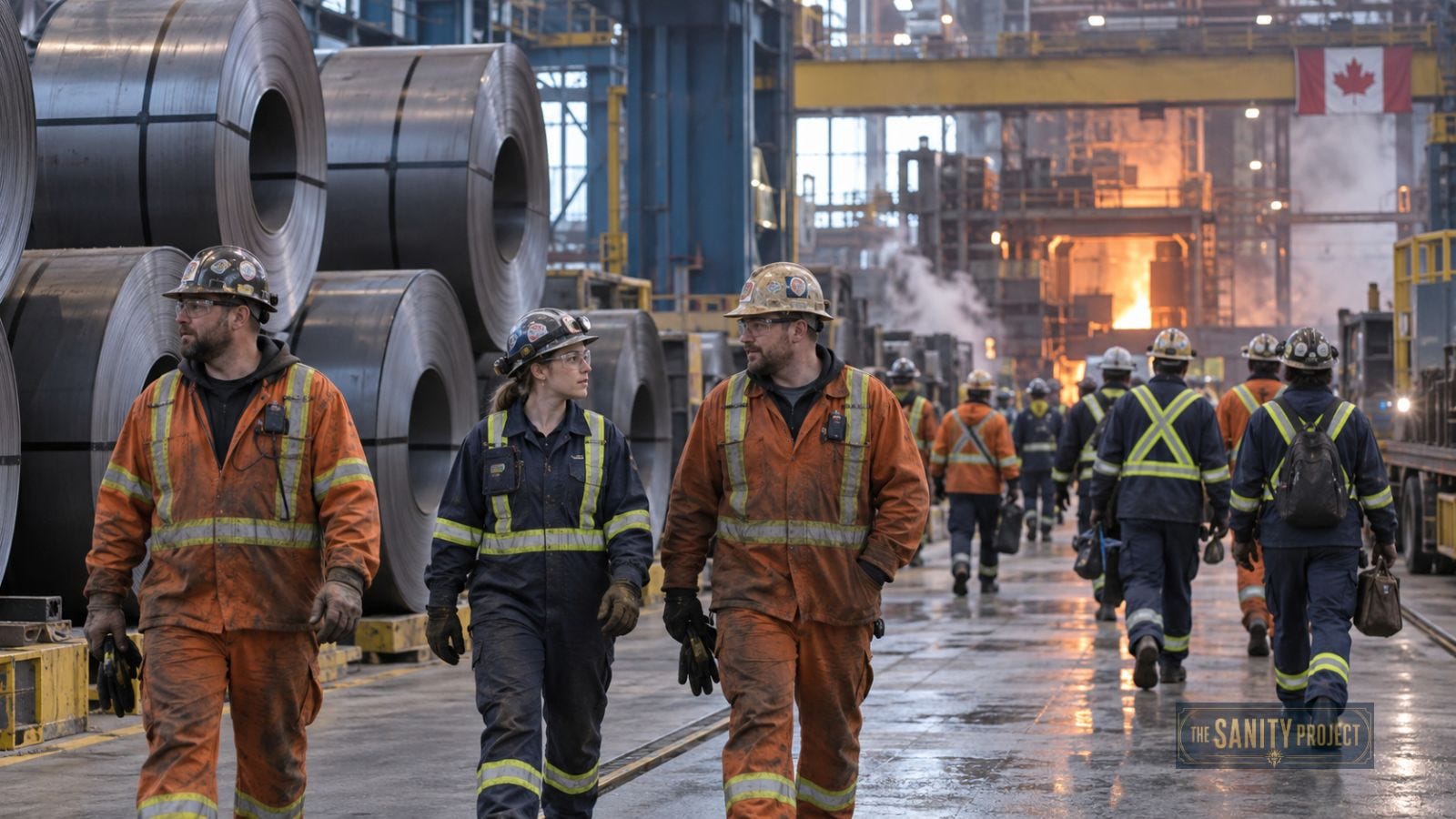
We have covered the broader arc of this fight before, including our overview of the Canada-US trade war, but the industries on the front line right now deserve an honest accounting first. So why, despite all that, does Canada still come out ahead? Nine reasons.
Reason 1: The Defender’s Advantage
Key Insight: People and countries fight harder to keep what is theirs than an aggressor fights to take it.
This is not just patriotism. It is basic behavioural economics. Losing something you already have hurts more than gaining an equivalent amount, and that asymmetry shows up in how long each side can stomach a drawn-out fight. Canada is defending sovereignty. The US is trying to extract concessions. Defenders tend to outlast attackers, though resolve is a resource that gets spent, not a bottomless well, which is exactly why the next reason matters.
Reason 2: A Country That Rallies, Even If It Tires
Key Insight: Canadian unity spikes with each new provocation, fades, then spikes again, and that pattern has held for 19 months.
The Buy Canadian movement is real. Eighty-two per cent of Canadians say they will continue to prioritise Canadian products even after this ends, according to Ipsos polling. But the same tracking shows active avoidance of American goods peaked near sixty-five per cent in early 2025 and drifted under half by that December, before this summer’s escalation reignited it. Alberta is holding a referendum on October 19 that includes a question about pursuing independence, with polling putting “remain” ahead by roughly two-to-one. None of that describes a country on the edge of collapse. It describes one capable of rallying hard when provoked, which is exactly what has been happening since August.
Reason 3: Steady Leadership vs. a Moving Target
Key Insight: One side is being run by a former central bank governor. The other keeps having his own emergency powers overturned.
Carney ran the Bank of Canada through 2008 and the Bank of England through Brexit before this job. That is not a talking point. That resume reads the same way to markets and dispute panels: steady hands. Compare that to the other side of the table. The Supreme Court has already struck down a chunk of Trump’s emergency tariff authority. His own Treasury Secretary, Scott Bessent, said in August that Carney “needs to stop campaigning and start governing,” an odd line to aim at another country’s leader while your own administration keeps losing in court.
“One side is run by a former central bank governor. The other keeps losing in their own Supreme Court.”
Reason 4: Resource Leverage Washington Can’t Quickly Replace
Key Insight: The US buys close to all of its imported natural gas and 81 per cent of its imported electricity from one neighbour with no backup supplier.
Canada’s own energy regulator puts the numbers plainly. In 2025, Canada supplied 81.3 per cent of the electricity the US imported, close to 100 per cent of its natural gas imports, 97.9 per cent of its imported natural gas liquids, and 63.4 per cent of its imported crude oil. Add potash, uranium, and the critical minerals feeding EV battery and defence supply chains, and there is no fast substitute sitting on a shelf.
Ottawa has not used any of it yet, instead targeting steel, dairy, and electronics with retaliation rather than energy. That restraint is its own kind of leverage. The threat is more useful unspent than spent, as we laid out in our piece on Canada’s hidden resource power.

Want the full breakdown of Canada’s energy leverage before it becomes a headline? Subscribe below.
Reason 5: Integrated Supply Chains Cut Both Ways
Key Insight: A tariff on Canadian auto parts is also a tax on the American factory bolting them into a finished vehicle.
North American manufacturing does not respect the border. A single part can cross it several times before a car is finished, and every crossing now carries a tariff. Every one of those tariffs lands on a US assembly line just as hard as it lands on a Canadian supplier. Washington is not only squeezing Canada here. That squeezes its own industrial base too, an odd way to try to win a fight.
Reason 6: A Diversifying, if Uneven, Trade Network
Key Insight: The US share of Canadian exports has fallen from 75.9 per cent to roughly 68 per cent in under two years.
Statistics Canada puts the full 2025 figure at 71.7 per cent, and RBC’s more recent quarterly data show it slipping further to around 68 per cent by year-end. That is genuine progress against a decades-old dependency. But be honest about where the growth is coming from. Most of it comes from a surge in gold exports and a handful of new markets, such as the UK, rather than from the steel, auto, and lumber sectors, which are still directly affected by the tariffs. Diversification here is a real trend, though still unfinished.
Reason 7: Still Playing By the Rules
Key Insight: Washington declined to renew its own trade agreement in July, then, for the first time, stripped its exemption from Canada’s tariffs in August.
CUSMA has always carried a built-in exemption for compliant goods, and every US tariff action honoured it until this summer. That changed on August 19, when a new 50 per cent tariff was applied to Canadian goods, with no CUSMA carve-out. Washington had already declined to confirm the agreement’s renewal weeks earlier. Carney called it a “unilateral breach,” and he is not wrong. Canada is still operating under the rules it signed. The US is rewriting them as it goes, and that distinction costs an aggressor allies over time, even while the formal dispute panels sit idle.
Reason 8: A Financial System Built to Absorb a Hit
Key Insight: Both the Bank of Canada and the IMF describe the financial system as resilient, and both acknowledge that vulnerabilities are rising too.
The Bank of Canada’s 2026 Financial Stability Report says the country’s banks have strengthened their capacity to absorb shocks, while flagging that vulnerabilities have grown in parts of the system. The IMF’s most recent review reached a similar conclusion: resilient, with downside risk tied to trade uncertainty. Canada also holds the lowest net debt-to-GDP ratio in the G7. This does not make the fight painless. It means the country can absorb a long one without its financial system cracking under the strain.
Reason 9: The Politics of Pain Favours the Defender, Eventually
Key Insight: Retaliatory tariffs show up at the American checkout counter faster than the industries demanding them show up at the ballot box.
A relatively small number of US industries pushed for these tariffs. A much larger number of American consumers, farmers, and manufacturers are absorbing the cost in higher grocery prices and pricier steel for anyone building anything. That is a familiar setup for political blowback: concentrated benefits eventually facing diffuse but growing opposition.
It has not produced a US reversal after nineteen months, and it will not happen overnight. But the pressure compounds the longer this runs, and it compounds inside the United States, not just inside Canada, a pattern we traced in more detail in our look at how these tariffs are backfiring on the US.
If you want the receipts behind every one of these nine reasons as this story develops, subscribe now.
Endurance, Not Triumph
None of this promises Canada a clean, decisive victory. Wars of attrition do not work that way. What these nine reasons add up to is more modest and more durable. Canada can still be standing, still rallying when it needs to, still solvent, and still trading with the rest of the world by the time this one ends. Carney said Canada is at war. He did not say Canada would win a quick one. He is betting on outlasting it instead, and on the numbers above, that bet holds up.
Editor’s View
I will admit where my own confidence wavers here. Reasons four, six, and eight rest on hard trade and financial data I trust without much hedging.
Reasons one, two, and nine are about human and political behaviour, and behaviour is harder to bet on than customs figures. Buy Canadian sentiment already faded once, from sixty-five per cent down toward half, before this summer reignited it. It could fade again if this drags into 2027, as it did through 2025 and 2026.
My honest read: Canada does not fold, but exhaustion, not victory, will probably define how this ends for both countries. I would rather publish that uncertainty than pretend nine reasons add up to a guarantee.
Corrections and Updates Protocol: This article will be updated if new data or developments materially change the analysis above. Corrections are noted inline as “Update (Month Year):” rather than edited silently.
Publications Consulted: Statistics Canada, Canada Energy Regulator, Bank of Canada, International Monetary Fund, RBC Economics, NPR, Al Jazeera, CNN, The Globe and Mail, Ipsos, Elections Alberta, Just Style, JD Supra legal analysis.
Heard on the national last night, “Trump said we may have a deal soon”. They have GOT to stop the parroting, until CARNEY says it is. Where have our media been, under a freaking rock? They’ve WON the Iran war has come out of his mouth, what 60 times! You look idiotic Canadian media.