


We Grow It Here. So Why Are We Buying It Back?
Pork, beef, potatoes, wheat, and tomatoes: five products Canada already produces enough of and still buys back from the United States.
Key Takeaways
Canada runs multi-billion-dollar trade surpluses in pork, beef, and potatoes, and still imports meaningful volumes of the same products from the U.S.
Wheat grown in Canada can cross the border three to five times before it becomes a loaf of bread on a Canadian shelf.
A real Leamington, Ontario tomato can travel to Ohio and back before it reaches a shelf just minutes from the farm where it grew.
Ottawa has already named this gap the “missing middle,” a real, partially funded, still unresolved policy problem.
This is Part 2 of a three-part series building toward a petition asking Canada’s grocery chains to make the Canadian option the easier one.
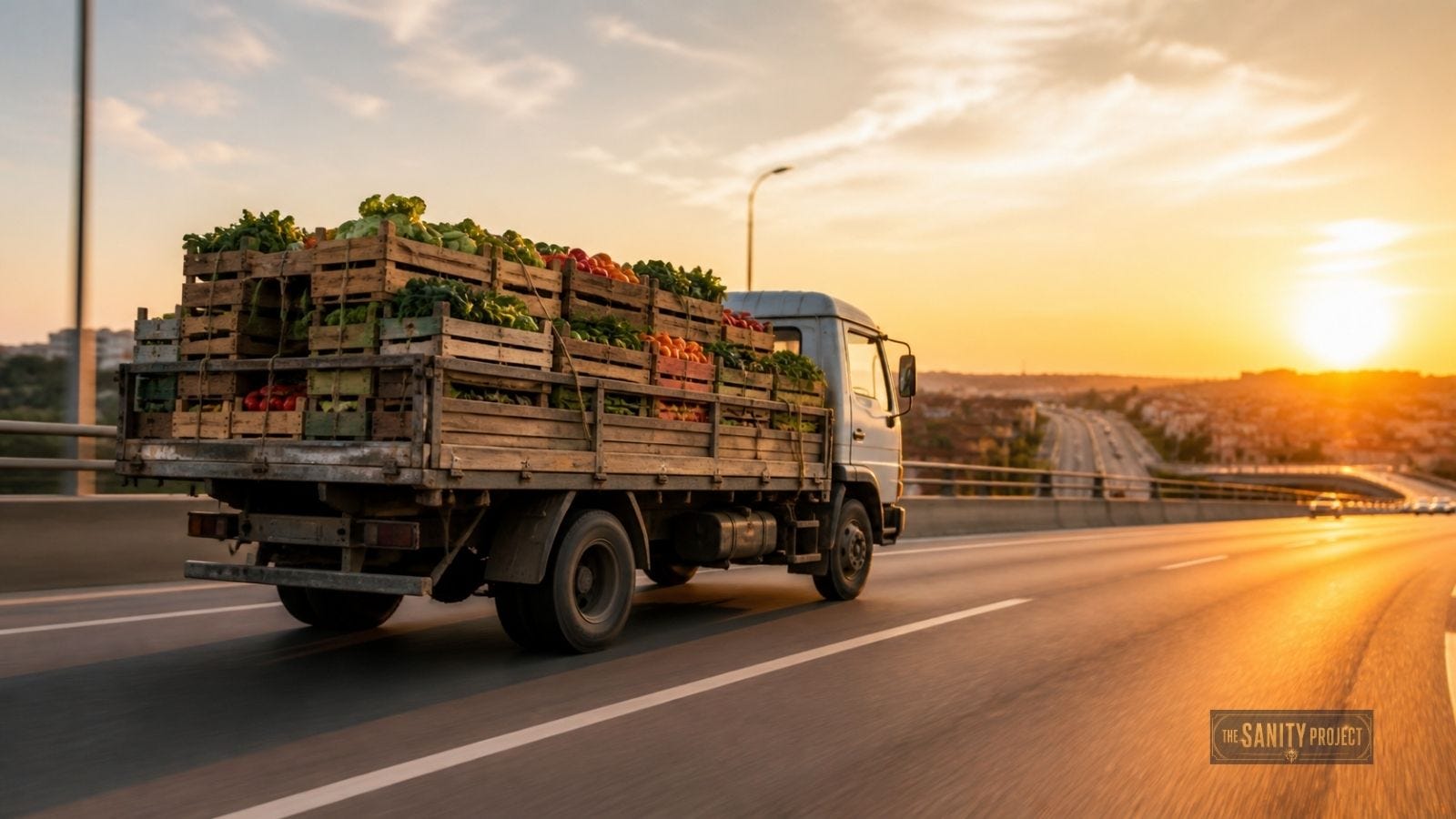
In 2014, Heinz shut down a tomato processing plant in Leamington, Ontario, that had been running for 106 years. Nearly a thousand workers lost their jobs. Local tomato farmers lost their only buyer. A company called Highbury Canco eventually took over the plant, and a few years later, French’s committed to using tomato paste made entirely from tomatoes grown around Leamington.
Here’s the part that undercuts the tidy version of that story. Highbury Canco ships that Leamington-grown paste to Toronto and to the United States, where it becomes ketchup. The bottle that ends up on a Canadian grocery shelf, carrying French’s name, gets manufactured at a plant in Ohio.
We grow the tomato. Somebody else makes the sauce. Then we buy it back.
That’s not a metaphor. It’s the literal supply chain behind a condiment sitting in your fridge right now, and it turns out to be the exact shape of a much bigger pattern running through Canadian food, from pork to beef to potatoes to bread. This is Part 2 of a series asking a basic question about Canadian food security: if we grow it, raise it, or process most of the raw material ourselves, why does so much of the finished product still cross a border twice before it reaches us?
The Two-Way Trade Nobody Explains
Key Insight: Canada’s agricultural trade with the U.S. runs deep in both directions at once. Selling and buying inside the same category is normal, not proof of a broken system.
Start with the honest framing, because the instinct to treat any American import as a failure gets the picture backward. In 2025, Canada’s global agricultural exports totaled about $67.7 billion, and its global agricultural imports totaled roughly $54.8 billion. The United States bought 60.3 percent of what Canada exported and supplied just over half, 50.3 percent, of what Canada imported. That’s not evidence that Canada can’t feed itself. It’s evidence of how thoroughly two economies have folded into each other’s supply chains over three decades of continental trade.
Economists call this intra-industry trade when a country exports and imports the same category of goods simultaneously. It shows up constantly in food: grain and feed products alone include mixes and doughs, pastries, breakfast cereal, and pasta moving in both directions across the border, often more than once before reaching a shelf. None of that is inherently a problem. Much of it reflects genuine specialization, with different regions excelling at different parts of a process.
The problem isn’t that trade runs both ways. The problem is that the value-added work increasingly happens elsewhere, not here.
What You Can Do: Check the manufacturer’s address printed on the package, not just the brand name or logo, before assuming a purchase does or doesn’t support a Canadian business.

The Pork Paradox
Key Insight: Canada ran a $3.9 billion pork trade surplus through November 2025, while still buying pork from the very country it exports to.
Pork is the cleanest version of this pattern. Canada exported $5.4 billion in pork in the first eleven months of 2025 alone, while importing $1.4 billion, a net surplus of nearly $4 billion. Roughly a quarter of Canada’s pork exports go specifically to the United States, and more than 60 percent of everything Canadian pork producers raise leaves the country. For six months in 2025, Canada put a 25 percent retaliatory duty on American sausages entering the country, a real, dated countermeasure most shoppers never noticed.
Canada isn’t short on pork. It’s short on reasons to keep buying someone else’s.
What You Can Do: Look specifically for Canadian-raised, Canadian-processed pork at the meat counter. Producers here export most of what they raise, so choosing local doesn’t mean giving anything up.
Beef Goes South. Beef Comes Back.
Key Insight: Same pattern as pork, different scale: a $2.3 billion surplus that still includes billions of dollars in imports.
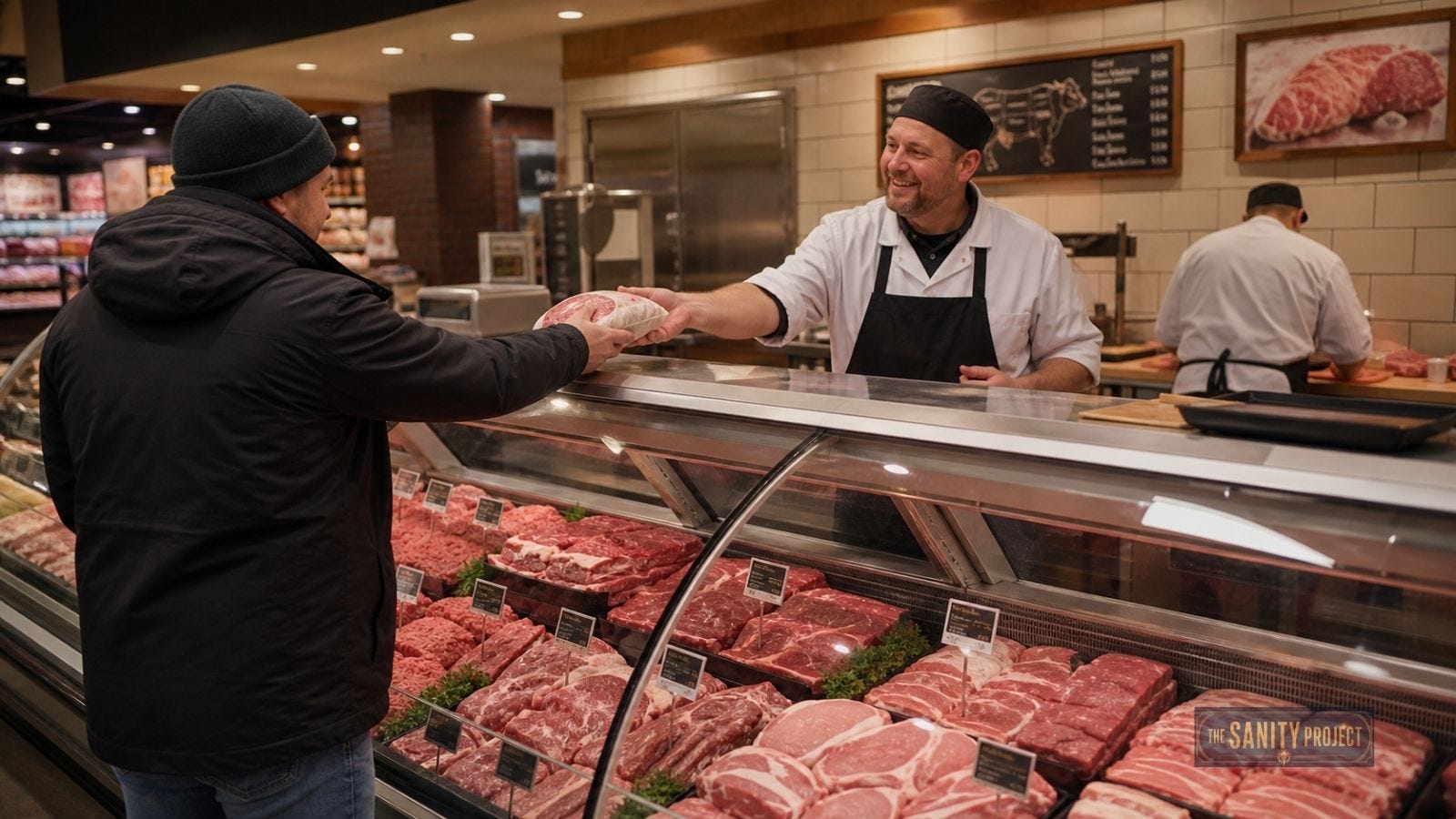
Beef follows a similar shape, with a narrower margin. Through November 2025, Canada exported $4.8 billion in beef and veal and imported $2.6 billion, resulting in a surplus of about $ 2.2 billion. That narrower gap points to something real: Canadian and American cattle operations are tightly interlaced, with animals and cuts crossing the border at multiple stages, feeding, slaughter, and processing, before a final product reaches a store shelf. It’s harder to draw a clean line between “Canadian beef” and “American beef” than the package suggests.
What You Can Do: Ask your butcher counter directly where the animal was raised and processed. Those are often two different countries, and only one appears on the sticker.
The Potato Boomerang
Key Insight: Canada supplies 86 percent of all frozen French fry imports into the United States, and still buys back $126 million worth of American fries every year.
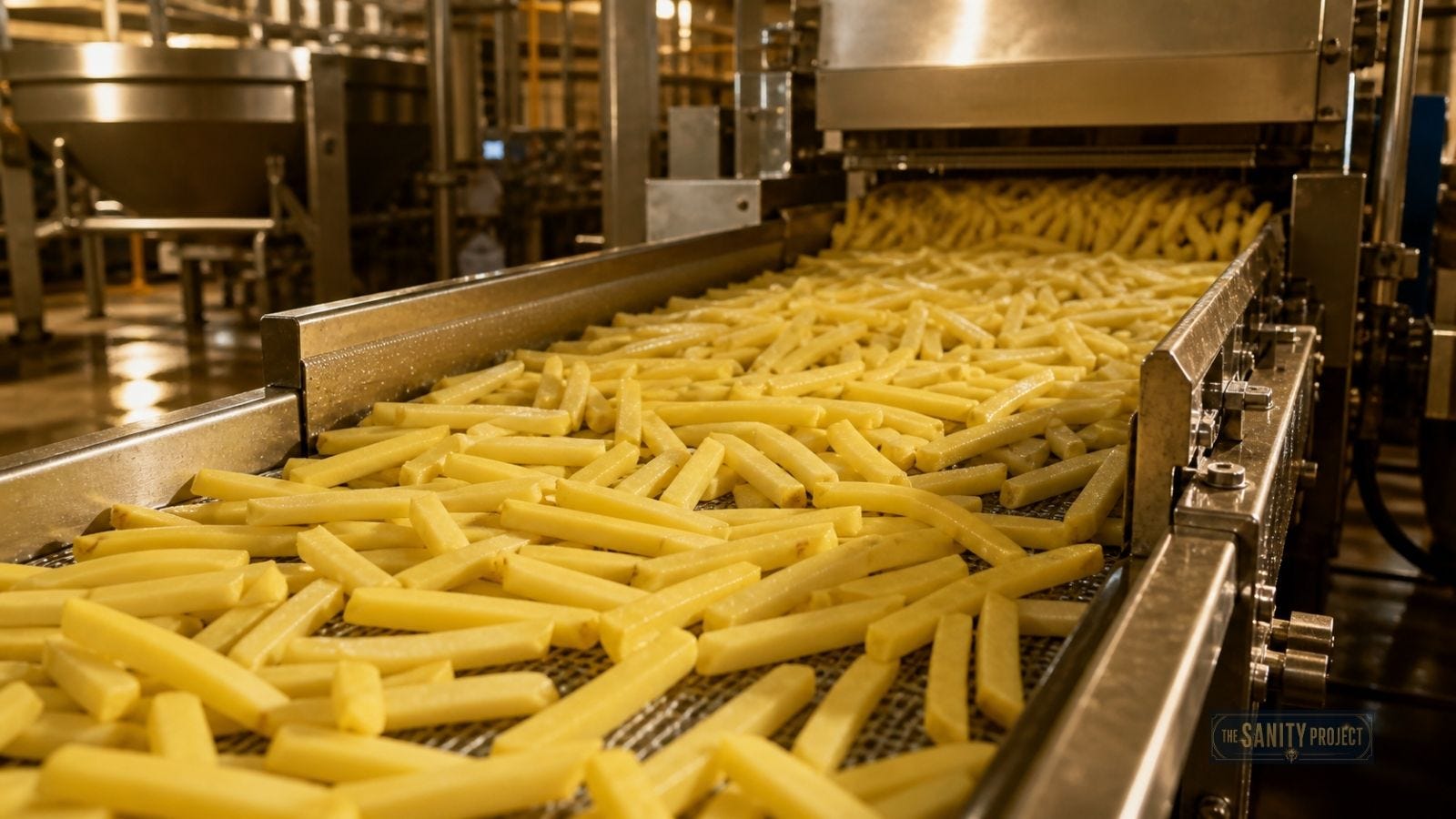
Potatoes make the strongest case in this whole series. Canada dominates the U.S. frozen-fry market, supplying 86 percent of the U.S.'s imports in that category. In 2023/24, Canada shipped $2.4 billion worth of frozen fries south, 91 percent of all Canadian fry exports. Fresh potato exports added another $493 million, with 92.6 percent of that also going to the U.S.
In that same trade year, Canada imported back $126 million in frozen French fries from the United States, plus another $314 million in other processed potato products. Canada isn’t a minor player asking to be let into a market it can’t compete in. It’s the dominant supplier buying back a fraction of a market it already controls.
What You Can Do: Check the processor’s name on frozen potato products, not just the store brand. Canadian plants supply most of the fries sold on both sides of the border, so a Canadian-made option is almost always sitting right next to the imported one.
Part 3 asks what it would take for grocers to make this choice easier.
Subscribe to The Sanity Project
Listen to the Sanity Project Podcast

Billions in Bread We Didn’t Need to Buy
Key Insight: Canadian wheat can cross the border three to five times, milled, shipped, mixed, shipped again, before it comes home as a bag of bread or a box of cookies.
Wheat is where this gets almost absurd. Canada exported roughly $5 billion in bread and bakery products to the United States in 2023, while importing about $1.3 billion in baked goods from the United States. Scotiabank’s own explainer on cross-border trade lays out the actual journey: wheat grown in Canada gets exported to the U.S. to be milled into flour, shipped back to Canada to be mixed with other ingredients, sent to the U.S. again for further processing, and finally returned to Canada as packaged bread or cookies. Depending on the product, a flour-based food can cross the border three to five times before it reaches a Canadian shelf.
Canada is one of the world's highest-quality wheat producers. Somewhere between the field and the bakery aisle, that advantage gets diluted across four border crossings.
What You Can Do: Buy from a local or regional bakery when you can. It skips the cross-border relay race entirely, and the bread is usually better for it anyway.
We Grow the Tomato. Somebody Else Makes the Sauce.
Key Insight: The Leamington story from the top of this piece isn’t an isolated anecdote. It’s the clearest single example of the pattern running through this entire series.
Go back to the opening of this piece. Highbury Canco processes tomato paste from Leamington-area farms. French’s ships that paste to Toronto and to the United States. The finished ketchup that ends up back on a Canadian shelf is bottled at a plant in Ohio.
There’s already a real Canadian alternative on the market. Sun-Brite Foods, also based in Leamington, produces a Primo-brand ketchup made entirely in Canada, from Ontario tomatoes, Ontario labour, and Ontario packaging, with no cross-border detour at all. It exists. It’s just not the one most shoppers grab by default, because nothing on the shelf makes the distinction obvious. That’s the exact problem Part 1 of this series was about.
What You Can Do: Look specifically for ketchup and sauce brands that name Leamington or Ontario tomatoes on the label, not just a maple leaf logo. The genuinely local option is sitting on the same shelf as the one that took a detour through Ohio.
Why “Just Stop Buying American” Could Hurt Canada
Key Insight: A blanket boycott ignores how deeply these supply chains are laced together. The fix isn’t less trade. It’s more of the finishing work happening here.
Here’s the steelman for keeping this trade relationship intact, because it deserves a fair hearing before anyone reaches for a boycott. Canadian pork, beef, and grain producers rely on U.S. processing capacity, U.S. distribution networks, and U.S. consumers buying the majority of what they grow. Cut that relationship abruptly, and the first people hurt aren’t executives in Pittsburgh or Ohio. They’re the same Canadian farmers this whole campaign is trying to protect, plus the truckers, plant workers, and small processors whose jobs depend on that cross-border flow continuing to move.
A blanket “don’t buy American” instinct also misses the actual lever available here. Canada doesn’t need to sever a trade relationship that, on balance, runs a significant surplus. It needs to capture more of the value-added work currently happening on the other side of that border, so fewer of these products need to make the round trip at all.
What You Can Do: Support Canadian companies actively building processing capacity here, rather than treating every business with any American tie the same way. The goal is to shift where the work happens, not to punish every cross-border relationship.

Canada’s Missing Middle
Key Insight: Ottawa has already named this problem. The gap in Canada’s food system isn’t farming. It’s everything that happens between the farm and the finished product on a shelf.
There’s a real term for what’s missing here, and it isn’t new to policy circles: the “missing middle.” It refers to the layer of Canadian food processing, packing, and manufacturing capacity that sits between what farmers grow and what shoppers buy, the layer that turns a Leamington tomato into a jar of sauce without a stop in Ohio first.
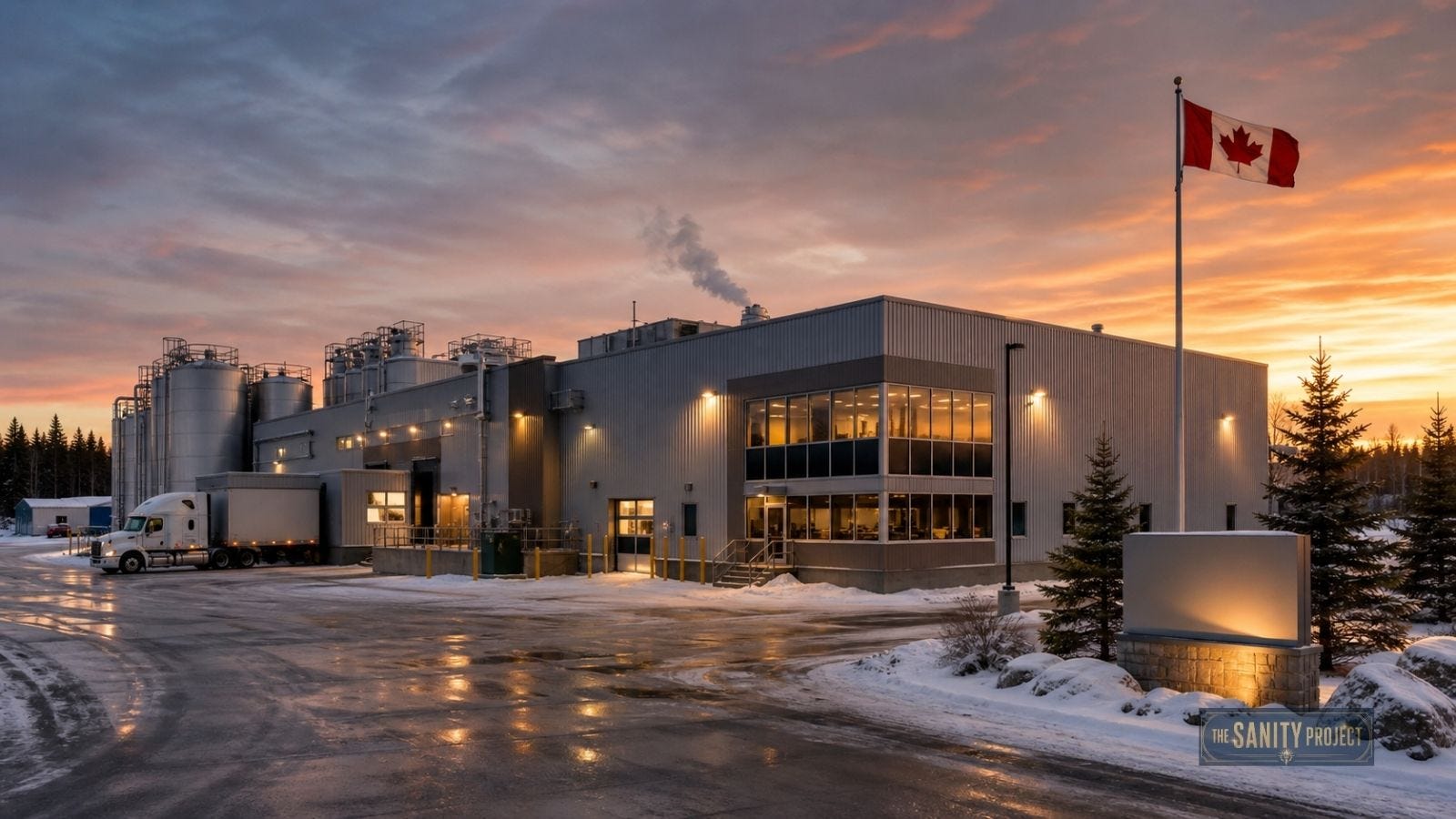
The federal government has acknowledged this directly through a National Food Security Strategy, with committed investment in food processing infrastructure and separate reporting on a dedicated Domestic Food Processing Fund. Recognition is a real first step. It is not the same as having closed the gap. Ninety-two percent of Canada’s food processing sector is made up of small and mid-sized businesses with fewer than 100 employees, businesses that often lack the capital to scale up fast enough to absorb the work currently happening south of the border.
Recognition is a real first step. It is not the same as having closed the gap.
This is where the farmers, the factory workers, and the truckers all show up in the same sentence, because they’re all on the same side of this problem. More Canadian processing capacity means more Canadian jobs at every link in that chain, not just the ones already protected by supply management.
What You Can Do: Tell your MP that food processing infrastructure is a policy priority, not a footnote. This is a genuine capacity gap, and it responds to public pressure the same way trade policy does.
Buy Canadian at home. Sell Canadian to the world. Process more of it here.
That’s the actual ask underneath every number in this piece, not fewer exports, not a boycott, just less of the round trip. The tomato doesn’t need to travel to Ohio to become sauce. The wheat doesn’t need four border crossings to become bread. Canada already grows, raises, and produces enough to make most of this domestically. What’s missing is the will, and increasingly the policy, to keep more of that value here instead of shipping it out and buying it back.
Part 3 of this series looks at what it would actually take to get Canada’s grocery chains to make that choice easier for the rest of us.
Part 3 is where this series makes its actual ask.
Subscribe to The Sanity Project
Editor’s View
I’ll be straight about what surprised me while writing this one. I expected the pork numbers to be the strongest case in the piece. They’re not. The tomato story is. A tomato grown forty minutes from where I’m writing this can travel to Ohio and back before it reaches a shelf ten minutes from that same farm, and nothing on the ketchup bottle tells you that happened. My prediction for the rest of this series is that the trade numbers will convince people. Stories like Leamington’s are what actually convince people to check a label before checking out.

Publications Consulted
Agriculture and Agri-Food Canada, Statistics Canada, USDA Foreign Agricultural Service and Economic Research Service, Scotiabank, CBC News, The Western Producer, Alberta Grains, Arrell Food Institute (University of Guelph), Sun-Brite Foods corporate materials.
Thanks. I'm glad I stopped eating meat decades ago, rarely use ketchup so never buy it, and already buy all my bread and most other baked goods from local bakeries. I don't intentionally buy anything from the USA, and didn't realize how complicated this is, so this is very useful information.
One should also be questioning the environmental impact of all this shipping across borders several times for a single product. As well, consumers have been asking far too long for better and more detailed labeling on products. And don’t forget food safety concerns. That alone is worth a boycott on American fruit and vegetables. Explosive diarrhea salmonella listeria metal shards. Yikes!!!!