


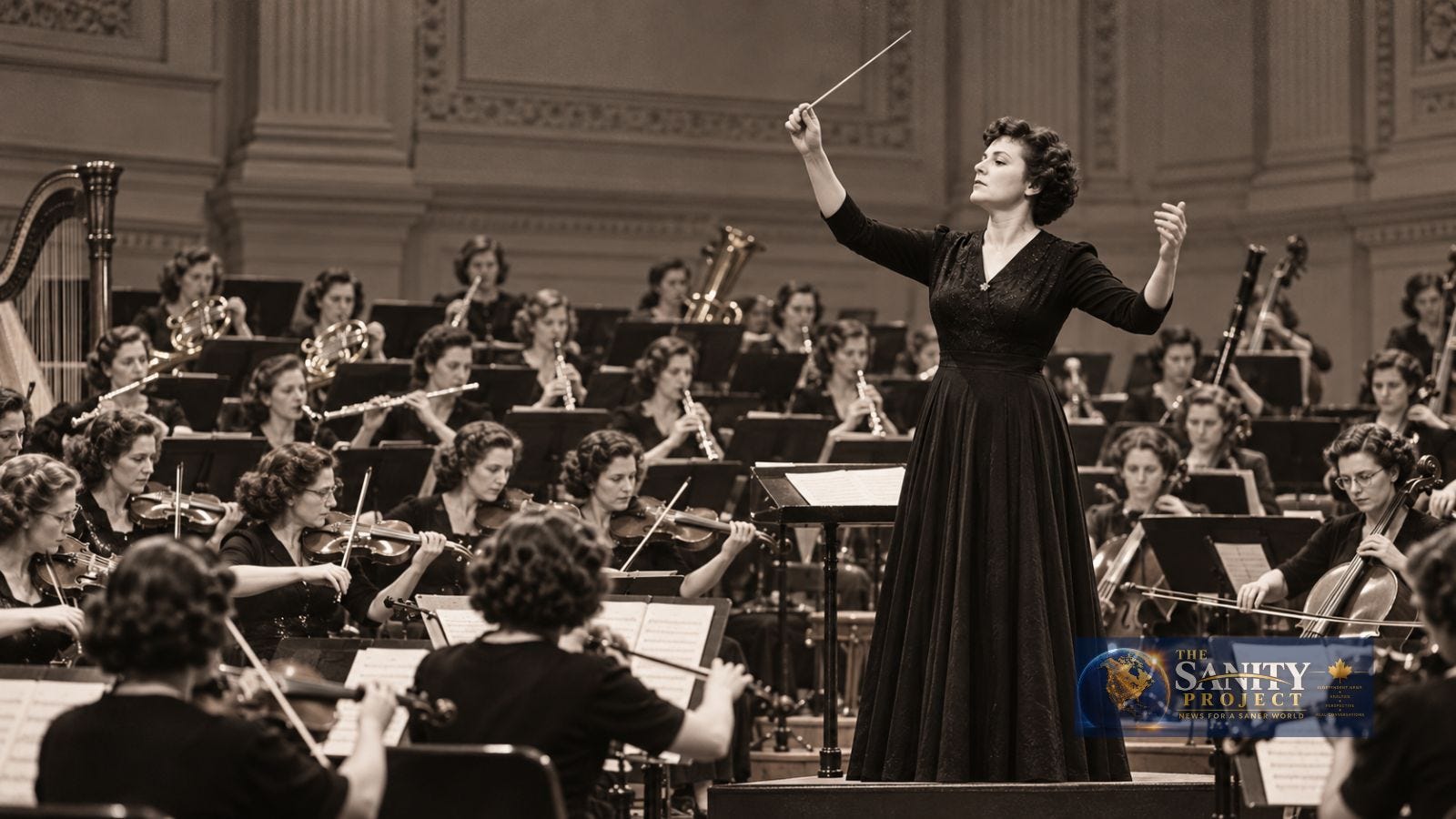
The Women Who Conquered Carnegie Hall
How Ethel Stark Made Canadian Music History
A Canadian Orchestra Nobody Expected
New York City. October 22, 1947.
Inside Carnegie Hall, one of the world’s most celebrated concert venues, a Canadian conductor prepared to lead her musicians through an ambitious evening of classical music. Her name was Ethel Stark, and she had travelled from Montreal with an orchestra that had spent seven years fighting for acceptance.
These musicians had rehearsed through the Second World War, struggled to find instruments, and overcome a musical establishment that rarely welcomed them.
And every single one was a woman.
That evening, the Montreal Women’s Symphony Orchestra became the first Canadian orchestra ever to perform at Carnegie Hall. Not the Toronto Symphony. Not Montreal’s established symphony orchestra. A group of determined women who had been told that professional orchestral music wasn’t their place.
Their remarkable journey began seven years earlier, when a talented Canadian violinist decided that if the doors of professional music wouldn’t open for women, she would build an orchestra of her own.
A Woman Who Refused to Accept the Rules
Ethel Stark was born in Montreal in 1910 and showed exceptional musical talent from childhood. After studying at the McGill Conservatorium, she became the first Canadian admitted to Philadelphia’s prestigious Curtis Institute of Music in 1928.
According to the Jewish Public Library’s historical collection, Stark studied under accomplished musicians and developed into an internationally respected violinist. By 1934, she had become the first Canadian woman to appear as a soloist on a nationally broadcast American radio program.
But talent wasn’t the problem.
In the 1930s, professional orchestras were overwhelmingly male institutions. Women could teach piano, perform in small ensembles, or appear as soloists, but permanent positions in symphony orchestras were another matter.
Certain instruments were considered especially unsuitable for women. The trombone was supposedly too masculine, the double bass too physically demanding, and the trumpet hardly ladylike.
Apparently, some people believed musical ability depended less on talent than on whether the musician wore trousers.
Stark wasn’t buying it. She had trained alongside accomplished male musicians and understood what professional performance required. She also knew that women could meet those standards.
What they lacked wasn’t ability. It was opportunity.

A Meeting Over Tea That Changed Canadian Music
In 1940, Stark met Montreal socialite Madge Bowen at the Ritz-Carlton Hotel. Bowen wanted to create opportunities for women musicians, suggesting that an all-women string orchestra might be a good place to start.
Stark had considerably bigger ambitions. She wanted a complete symphony orchestra, including strings, woodwinds, brass, and percussion.
There was one rather obvious problem. Montreal didn’t have enough experienced women musicians to fill those positions, partly because women had been discouraged from learning certain instruments.
As historian Maria Noriega Rachwal explains in her University of Toronto interview, Stark and Bowen faced a remarkable challenge. They needed to recruit musicians, train beginners, find instruments, and build a professional organisation almost from scratch.
Stark refused to lower her expectations. If women weren’t already playing certain instruments, they would have to learn.
And so, in 1940, the Montreal Women’s Symphony Orchestra was born.
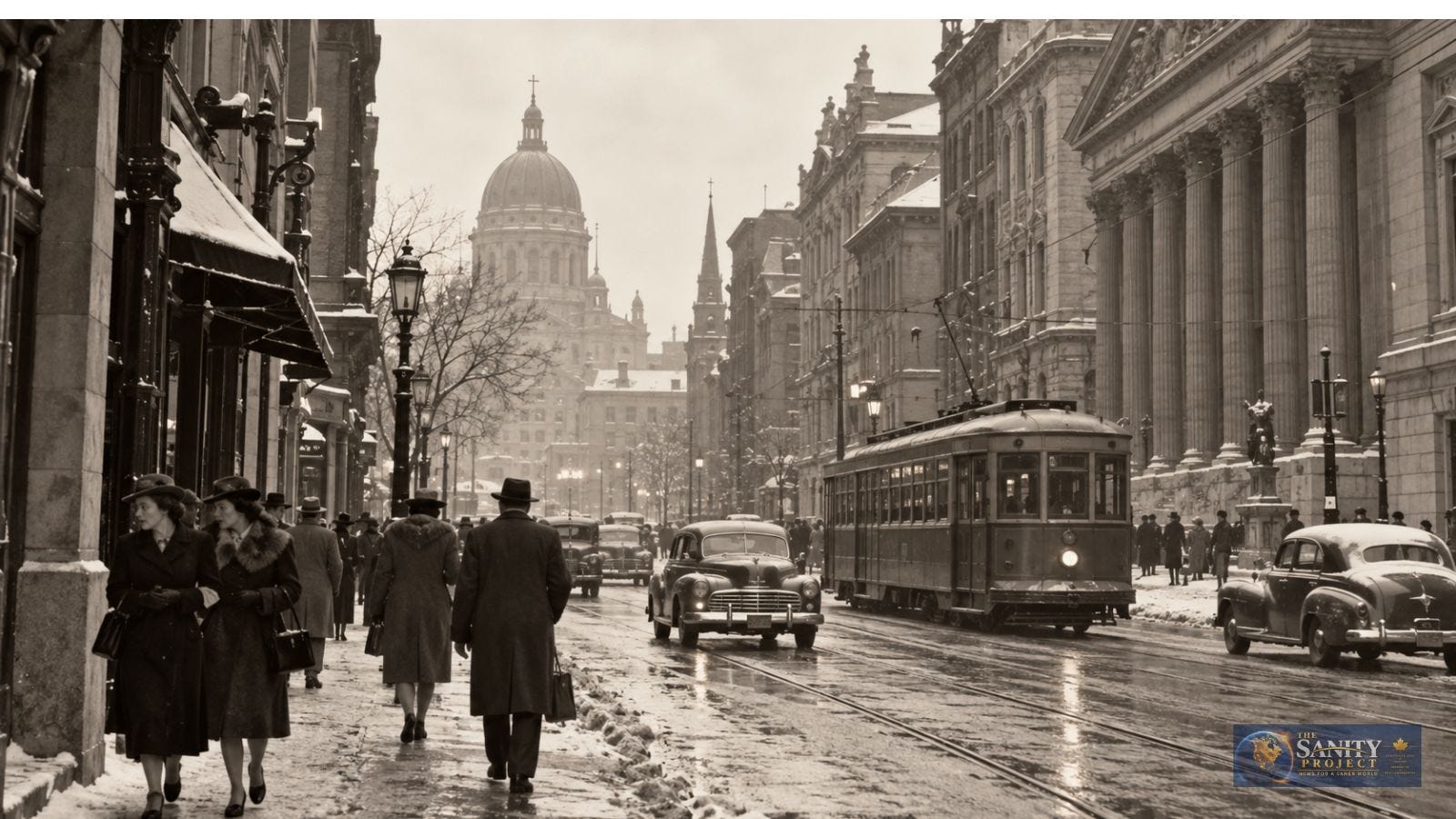
Building an Orchestra From Almost Nothing
The orchestra brought together women from different religions, social classes, ethnic backgrounds, and occupations. Some were trained musicians, while others were students, homemakers, or working women who had never imagined performing in a symphony.
Their instruments were sometimes borrowed, donated, or needed repair. Rehearsals demanded countless hours, often squeezed between jobs, household responsibilities, and raising children.
Stark was a demanding conductor. She expected careful preparation, discipline, and professional performances because she wasn’t creating a novelty act for curious audiences.
She was building a real orchestra.
The timing was remarkable. While Canada was fighting the Second World War, women across the country were challenging traditional expectations in factories, laboratories, and other workplaces.
We explored another example in our feature on Elsie MacGill, the Canadian engineer who helped build Canada’s wartime aircraft. Like MacGill, Stark refused to accept that being a woman should determine what she could accomplish.
The Montreal musicians worked hard for years, but for many, the orchestra offered something they had never experienced before: a place where their musical ambitions were taken seriously.
From Unlikely Experiment to Serious Orchestra
Only months after its founding, the orchestra began performing publicly. Its first concert took place on Montreal’s Mount Royal in July 1940, an extraordinary achievement for an ensemble assembled so recently.
The musicians tackled substantial classical works rather than light entertainment designed to impress curious spectators. Over time, the orchestra established regular performances at Montreal’s Plateau Auditorium and developed a growing reputation.
Sceptics remained. Critics sometimes expressed surprise that women could successfully perform music considered too demanding for them.
Imagine spending years mastering an instrument, only to have someone congratulate you for being surprisingly capable of playing it.
Nevertheless, the women continued, performing Canadian compositions alongside familiar European classics. Their growing success attracted attention beyond Montreal, and in 1946, Stark was invited to guest-conduct the Toronto Symphony Orchestra.
By the end of that year, the Montreal Women’s Symphony had presented dozens of concerts. The unlikely experiment had become a serious musical institution.
Then came an invitation that would change everything.
Carnegie Hall. New York City.
No Canadian orchestra had ever performed there. Now the women who had struggled to find professional opportunities in their own country were being offered the chance to make history.
But Carnegie Hall was one of the world’s most demanding stages. Could this orchestra, built from modest resources and years of determination, satisfy New York’s critics?
And would these women finally be judged as musicians rather than as women attempting something unusual?

Get the rest of the story…..
They built an orchestra when the world told them they couldn’t. Now came the night that would prove what they had accomplished.
In the rest of this Canadian history feature, we follow Ethel Stark and her musicians to Carnegie Hall, meet a remarkable Black Canadian clarinettist who broke barriers of her own, and discover what the New York critics actually thought.
Subscribe for free to The Sanity Project to continue reading. No payment required. Just more remarkable Canadian stories that deserve to be remembered.
From Canadian History to Historical Fiction
The remarkable story of Ethel Stark and the Montreal Women’s Symphony Orchestra inspired our latest historical novel, Thunder in Their Hands. Based on real events, the novel brings this extraordinary chapter of Canadian history to life through fictional characters, personal struggles, and the determination of women who refused to accept the limits placed on them.
The novel will be available for purchase on November 10, 2026, through Ashwood Publishing.
But there’s a special benefit for our most dedicated readers!
Everyone with an active annual paid subscription to The Sanity Project will receive this novel FREE, along with future novels published by Ashwood Publishing, for as long as their annual subscription remains active.
It’s our way of thanking the readers who support independent Canadian journalism, storytelling, and the preservation of our country’s remarkable history.
Great Canadian stories deserve to be told. And our annual Supporters deserve to enjoy them.
Many thanks for the pair of inspirational stories 🙏
My silly (and optimistic) side hopes that if such a thing doesn’t already exist, a future Democrat US government will create a Violet Grant-States State Grants school & community music funding program as part of rebuilding a cultural heritage that USians can be proud of, and whose beneficiaries might well perform at the rededicated & repaired Kennedy Center for the Arts 🎭
Every single privilege and access western women have today is because they stand on the shoulders of women who forced their way in to a massively male dominated society and created the pathways for us to follow!