


Underwater Data Centers Are One Answer to the Water Problem. Here’s the Other.
Two engineering teams looked at the same water problem and came up with completely opposite solutions. Only one of them works if you don’t live near an ocean.
Key Takeaways
Two fundamentally different, already-operating answers to data center water waste now exist: China’s underwater data centers and Microsoft’s closed-loop “zero-water” design.
China’s approach eliminates freshwater cooling and, per a Tsinghua University estimate, cuts cooling’s share of total electricity from roughly a third to about a tenth.
Microsoft tried the underwater approach first, back in 2018, and walked away from it in 2024 over serviceability costs. China’s facility has been running commercially since May 2026.
Almost none of North America’s AI data center boom is happening on a coastline, which is why the quieter zero-water design, not the dramatic underwater one, is the version most likely to show up near you.
In Part One of this series, we did the math on data center water use, and one number stuck with us: global data centers already use more water in a year than Toronto’s entire water system delivers to the city. By 2030, that gap triples.
What we didn’t get to is this: two engineering teams, thousands of kilometers apart, looked at that exact problem and built completely opposite solutions. One team built an underwater data center and sank it into the Pacific. The other kept its servers on dry land and simply stopped letting the cooling water evaporate in the first place.
If you read Part One, you already know the three broad categories of cooling technology: evaporative towers, closed-loop or immersion systems, and once-through systems that pull water from a large source and return most of it. What follows are two real examples of engineers pushing those last two categories about as far as they currently go.
Both approaches are real, funded, and already running, not concept renders or investor decks. And here’s the part worth sitting with before picking a side: the more dramatic solution is not the more useful one for most of the AI infrastructure actually being built in North America right now. Let’s look at both, honestly, starting with the one that gets all the headlines.
New here? Subscribe to catch Part One, the real math behind data center cooling and water, before you go further.
Inside China’s Underwater Data Center
China's Shanghai facility eliminates freshwater cooling entirely and, according to a Tsinghua University estimate, cuts cooling's share of total electricity from roughly a third to about a tenth.
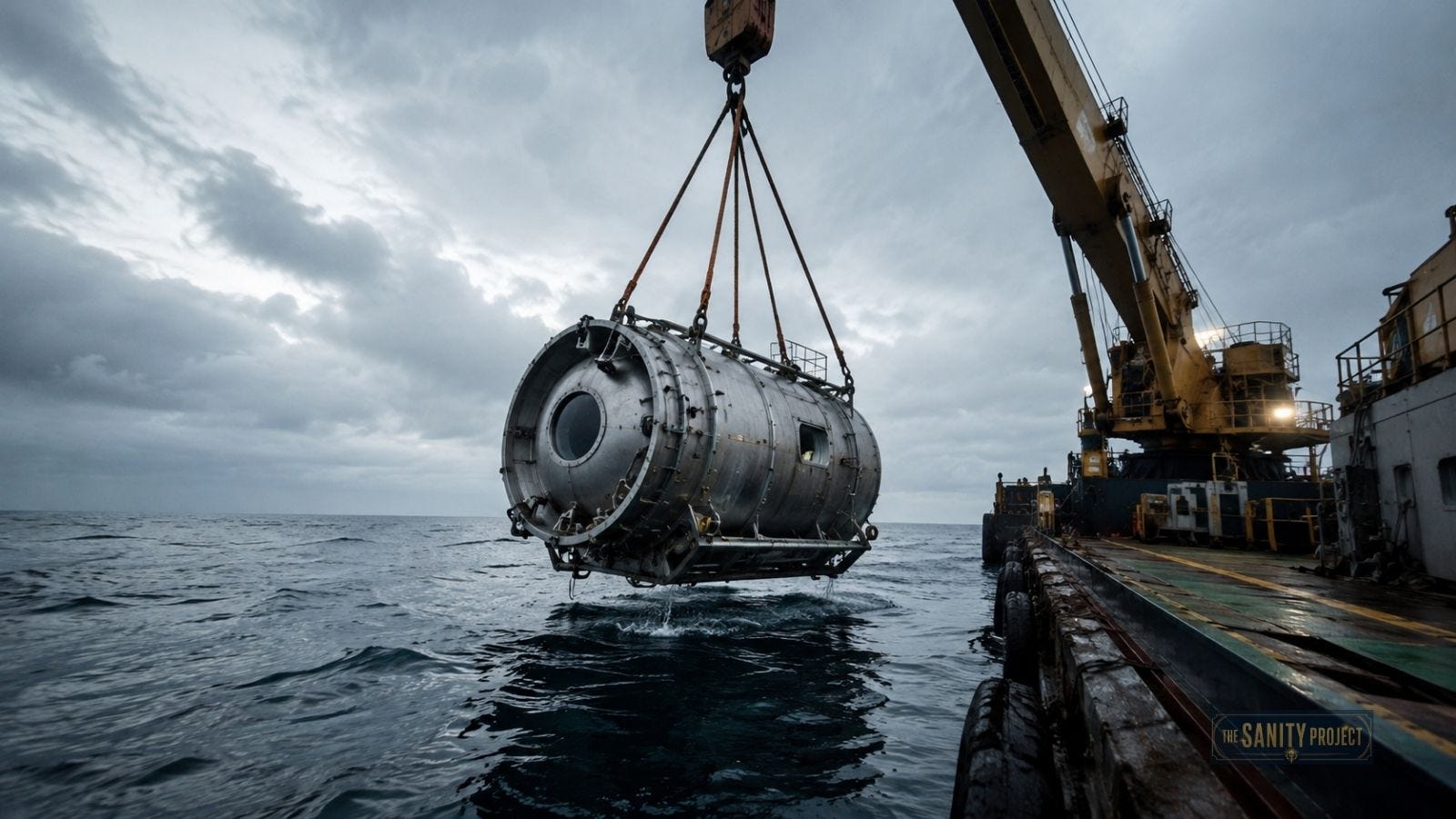
Off the coast of Shanghai’s Lingang Special Area, sunk somewhere between 10 and 35 meters underwater depending on which outlet you trust (the official Lingang government listing says 10, several major tech outlets say 35, and nobody has fully reconciled the gap), sits a sealed, pressure-resistant pod holding 192 server racks. It draws nearly all of its power directly from nearby offshore wind farms through a private cable that bypasses the regular electrical grid, and it uses the surrounding ocean as its heat sink.
The results are genuinely impressive. Developers report zero freshwater consumption, a 22.8 percent cut in total electricity use, and a PUE below 1.15, well ahead of the roughly 1.54 industry average we covered in Part One. Tsinghua University professor Li Zhen told China Daily that conventional Chinese data centers use about a third of their electricity to fight heat. Move that same facility underwater, he estimated, and cooling’s share drops to around a tenth, right in line with the efficient hyperscale numbers we cited from the International Energy Agency last time.
That’s not marketing math. That’s a real, operating facility, currently running at 2.3 megawatts of a planned 24, with $226 million already invested and a stated ambition to scale toward 500 megawatts.
China’s undersea data center doesn’t just eliminate water, it cuts cooling’s electricity draw by roughly two-thirds.
Worth sharing? Send this to someone who thinks the ocean-floor data center is a stunt rather than a genuine engineering solution.
Why Sinking It in the Ocean Isn’t the Only Answer
Microsoft tried exactly this approach in 2018, found it technically worked, and walked away from it in 2024. China’s facility hasn’t yet run long enough to know whether it will avoid the same fate.
Here’s the detail that rarely makes it into the coverage: this isn’t a new idea. Microsoft ran its own underwater data center, Project Natick, off Scotland’s Orkney Islands starting in 2018: twelve racks, 864 servers, sealed inside a shipping-container-sized pod on the seabed. When they pulled it up two years later, the failure rate was roughly one-eighth of an identical batch running on land. No dust, no humidity swings, no technician accidentally bumping a cable.
Microsoft shelved the project anyway in 2024. Not because the engineering failed, but because the economics and serviceability didn’t work at commercial scale. A land-based data center lets a technician walk in and swap a failed drive in minutes. An underwater one means calling a boat, a crane, and a weather window, then hauling the entire sealed module to the surface just to fix one part.
China’s Shanghai facility is a genuinely impressive piece of engineering, and it’s still early. Full commercial operation began in May 2026, meaning months of runtime, not years. And it only works if you happen to be building near a coastline with suitable seabed and offshore wind access nearby, which rules out most of the world’s actual AI infrastructure buildout, including nearly all of it in North America.
Microsoft tried this underwater in 2018. It walked away from the project in 2024.
The Quieter Fix: Zero-Water Cooling
Microsoft’s newest data centers are engineered to consume zero water for cooling, and CEO Satya Nadella claims their annual water use is now comparable to a single restaurant.
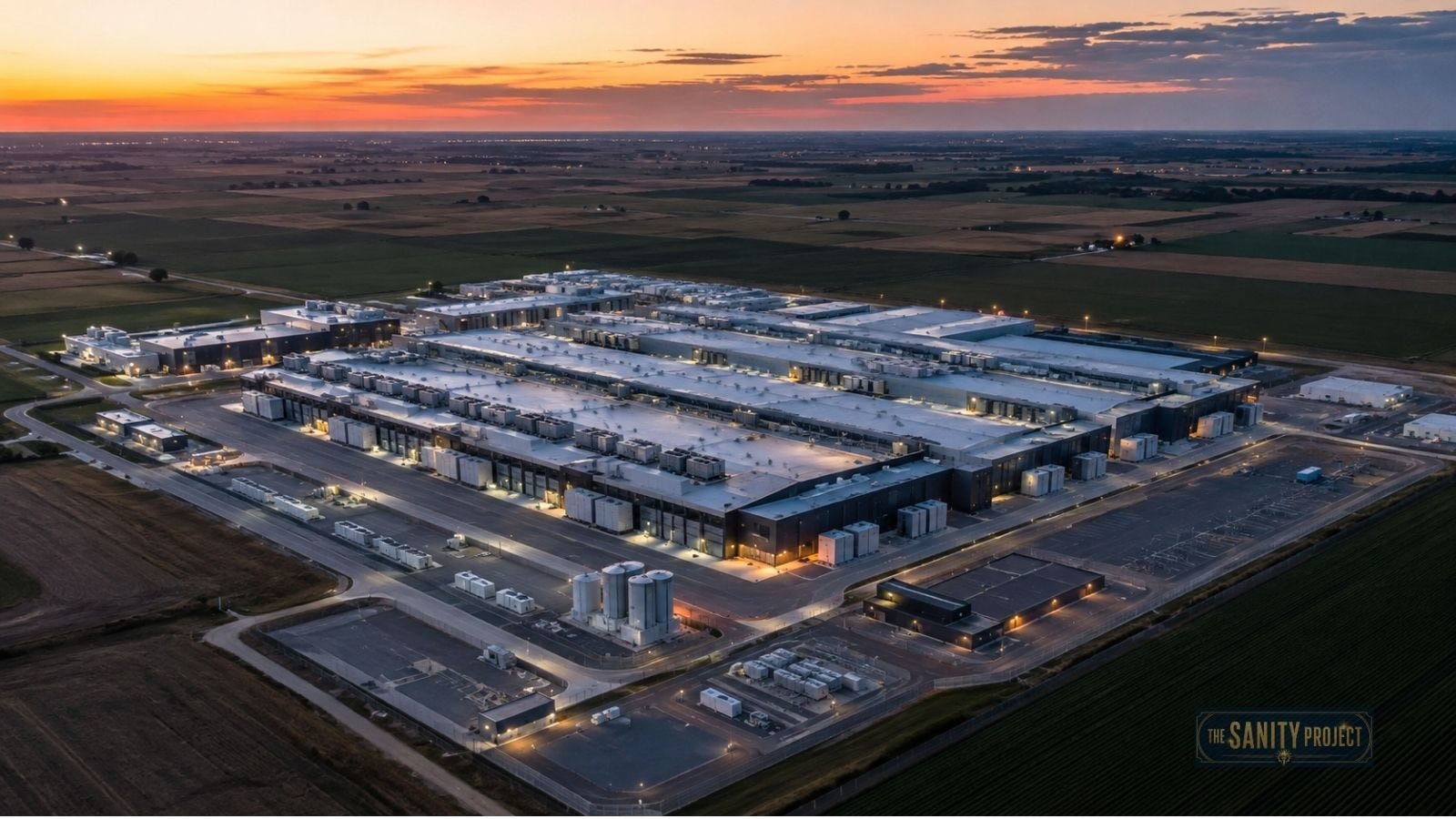
While one team was sinking servers into the Pacific, another was solving the same problem without leaving the parking lot. Microsoft’s newer data center design uses closed-loop, chip-level liquid cooling: a fixed volume of water is sealed into the system once during construction and recirculates between the servers and the chillers indefinitely. No evaporation, no fresh water pulled from a stressed reservoir, barring a leak.
Microsoft says the design saves more than 125 million liters of water per facility each year, and it’s piloting the approach now at new builds in Phoenix and Mount Pleasant, Wisconsin—both landlocked, both hot, both nowhere near an ocean. At the company’s Build conference in June 2026, Nadella claimed the newest generation of AI data centers uses roughly as much water annually as a single restaurant.
The tradeoff is worth stating plainly: Microsoft’s own engineers admit the switch results in a small increase in electricity use compared to evaporative cooling, since mechanical chillers consume more power than letting water evaporate for free. This solves the water problem cleanly. It doesn’t deliver China’s electricity win.
Don’t miss what’s next. Subscribe for the rest of this series as it develops.
Why the Quieter Version Wins for Most of North America
Almost none of North America’s AI data center boom is happening on a coastline. Geography decides which of these two solutions applies to you, not which one is more impressive.
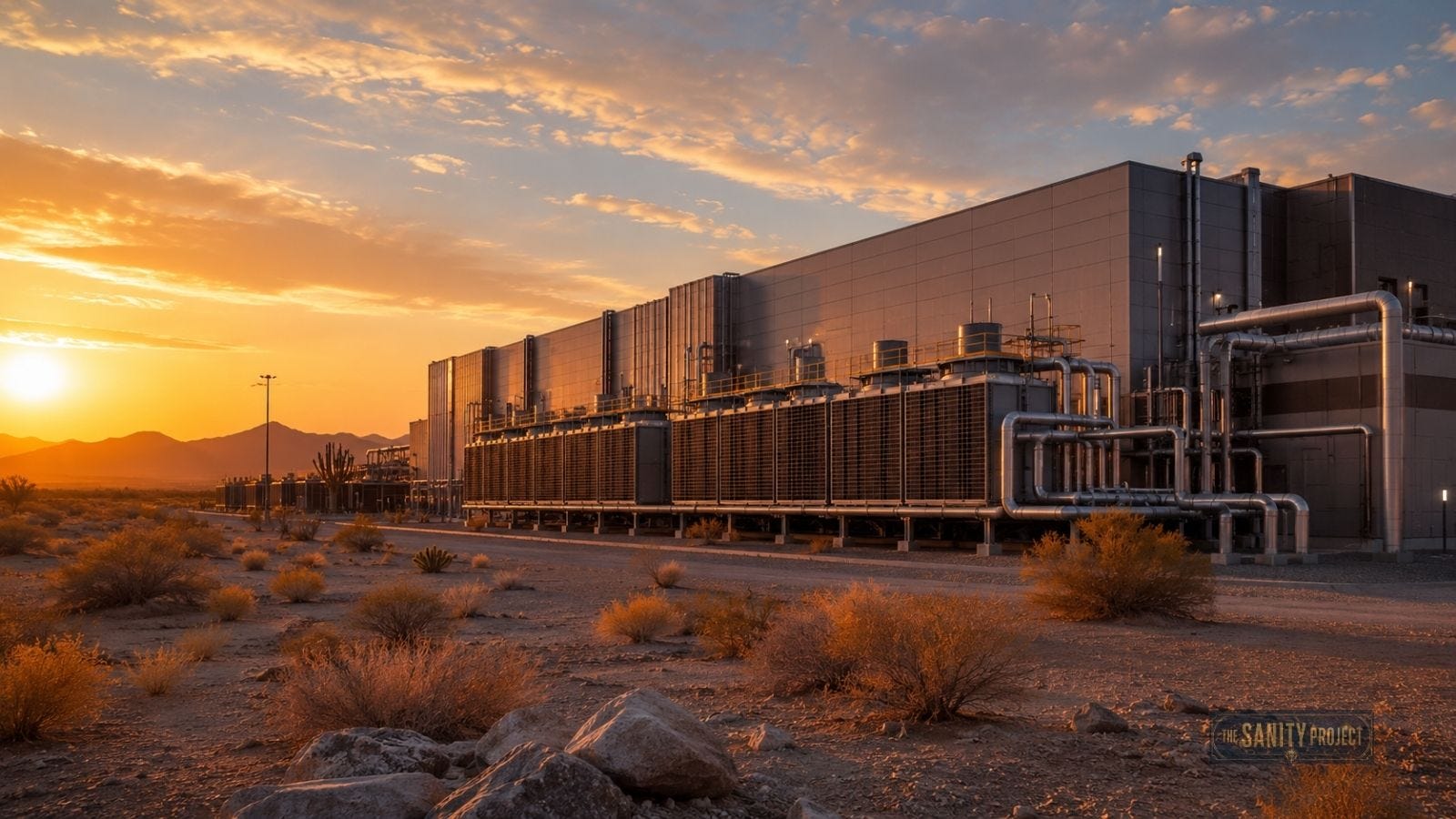
Here’s the part that actually matters if you’re trying to figure out which of these technologies is likely to show up near you. Look at where AI data centers are actually being built in North America right now: rural Iowa, west Texas, the Arizona desert, and increasingly rural Alberta and Quebec, chasing cheap land, cheap power, and enormous plots of empty space. Almost none of it is coastal, and even less sits near water deep enough and calm enough for a sealed pod on the seabed.
Microsoft’s closed-loop design doesn’t care where you build. It works in a desert as well as anywhere else, which is precisely why the company chose Phoenix, one of the driest, hottest, and most water-stressed major cities in North America, as its first real-world test.
China’s underwater approach is a legitimate answer to a real problem, and it deserves the attention it’s getting. But it’s an answer built for a specific kind of geography. For the vast majority of data centers actually rising across this continent right now, the boring, land-based, zero-water design is the one that’s actually going to show up in your watershed.
The better cooling technology isn’t the more dramatic one. It’s the one near your data center.
None of this means the water problem is solved. It means the technology to solve it already exists, in two very different shapes, and whether either one actually gets deployed depends on communities and regulators asking the question we raised in Part One: not where the power comes from, but where the water goes.
China proved the dramatic version works. Microsoft proved the boring version scales. If a data center gets proposed near you in the next few years, the honest question isn’t which of these technologies sounds more impressive. It’s whether the company building it is using either one at all, or just hoping nobody asks. So here’s one worth sitting with: if you had to bet on what shows up in a data center proposal near you in the next two years, chip-level closed-loop cooling or an actual underwater pod, which would you put money on, and why?
Editor’s View
Here’s my prediction: within three years, “zero-water” becomes a standard checkbox on every major North American data center proposal, the same way “renewable powered” became one over the last five. Not because every company suddenly develops a conscience about watersheds, but because Microsoft just proved it doesn’t cost much extra to do, and once one hyperscaler builds it into the default blueprint, competitors adopt it just to avoid the headline risk of being the one still evaporating water in a drought-prone region.
What I don’t expect anytime soon is underwater data centers scaling meaningfully in North America. We don’t have the same offshore wind buildout China does; the regulatory path for seabed infrastructure here is slower, and frankly, most of this continent’s AI boom is happening about as far from an ocean as you can get. China’s underwater approach might turn out to be a genuinely important technology. Just not one built for here.
Follow for more fact checks that cut through the noise.
Corrections and Updates
None yet. Check back here as this story develops.
Publications Consulted
DataCenterDynamics, Tom’s Hardware, TechRadar, China Daily, Microsoft, Tsinghua University (via China Daily), ESG News, Sustainability Magazine, Introl, International Energy Agency
Data Center Cooling Systems Are Outdrinking Toronto

Data Center Cooling Systems Are Quietly Outdrinking Toronto
Back in a prior life, I was in charge of my employer's IT department, among other things. We switched to Voice-Over-Internet-Protocol (VOIP) telephone systems, which in short, meant lots of extra network switches getting loaded into our broom-closet server room. The heat was tropical (and also unexpected in our planning - well, we did expect a heat rise, just not the furnace that resulted!). Ironically, I was also in charge of the office environment on the other side of the wall - where almost all of the clerks spent most of the year (winter, definitely), in layers of sweaters and personal desk area heaters.
I remember saying to the building's engineering staff, "gee, it's too bad we cant somehow put a water-based server rack cooling system in place here, and pump the heat into the other department. Win-win!" (though not sure it would have been so during the summer months, where some of the space heaters were replaced by cooling fans).
Unfortunately, that idea was easier said than done -- the one-time cost to do it would have been excessively high, though I did point out that our "4-year life" for all the network switches and servers would likely fail downward to about 2 years if we don't deal with the heat problem -- and that would be (back then) about a $20,000 cost. Every. Two. Years (or so).
I had shifted to other employment focuses a year or so later, so this became somebody else's problem.
The organization was mid-sized -- about 150 FT people, with about another 100 PT. Big for the 8,000 population of the community, but not exactly ginormous. And the heat in the server room, AFTER we did everything we could think of to cool the space, was at best around 35C.
This was amateur hour compared to what a modern small data centre would experience.
But the take-away for all of these modern centres that are using the closed-loop approach: That's not conceptually a new idea -- buildings have used "radiator heating" for well over a century now (before central air and electrical heating "modernized" buildings). Or dare I say, the cooling system for internal-combustion engines (like cars). The system is great until it breaks -- ask anyone who actually lives/works in such a heated environment. But my main point -- instead of chillers (or alongside the chillers), the main emphasis is how do you cool the water BEFORE pumping it back into the system. Answer: heat sink it to heat buildings, communities, greenhouses, vertical growing environments, etc., etc., At scale, this is back to the same problem I had in my earlier story -- theory is good, but how do you rewire (or rather, "re-pipe") entire cities so that you can heat everywhere with the data centre heat? (and what to do for the summer, when everyone needs air conditioning more than heat?). Not sure if heat-sinking this into the ground is practical -- and somehow drawing on that heat during winter (if the data centre heat isn't sufficient).
Lots of engineering questions!
Is there a good source to read more about the microsoft approach, i.e. basic explanation of the technology?