


Viola Desmond: The Woman Before Canada's $10 Bill
Viola Desmond was building futures for Black women long before she refused to give up her seat. Start with that work, not the theatre.
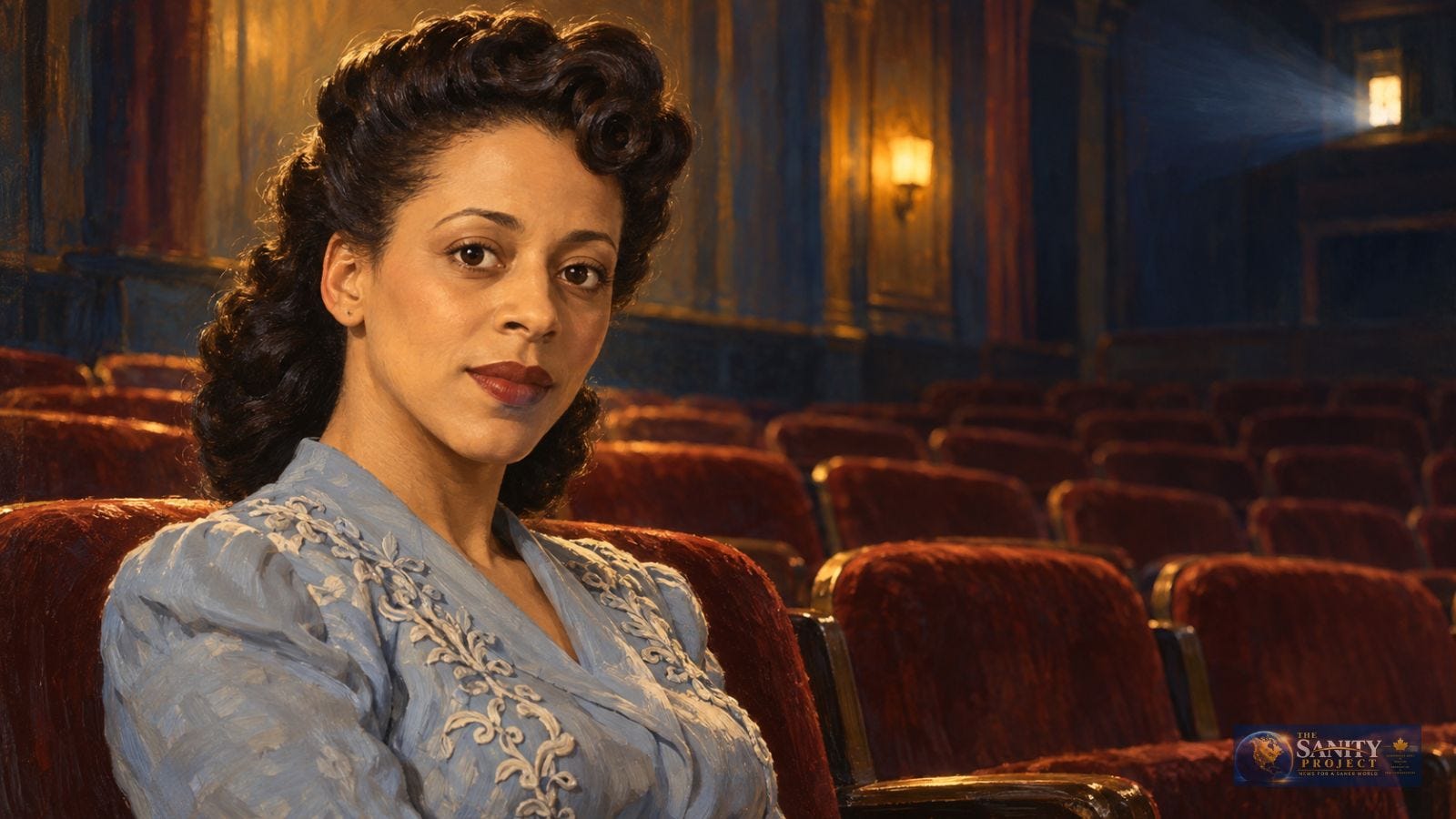
Viola Desmond had a business to run and a car that needed repairs. On November 8, 1946, she was travelling from Halifax toward Sydney when a breakdown stranded her in New Glasgow, Nova Scotia. With time to fill, she went to the movies.
At the Roseland Theatre, she asked for a main-floor ticket. The cashier sold her a balcony ticket instead. When Desmond tried to exchange it and pay the difference, she discovered the real rule: the theatre would not sell downstairs seats to Black customers.
She took a seat downstairs anyway. When the manager told her to move, she refused. Police and the manager forcibly removed her, and she spent the night in jail.
The next morning, the court convicted her over a one-cent difference in amusement tax. The businesswoman who had offered to pay for her seat now had a criminal record.
Nine years before Rosa Parks refused to give up her bus seat, Viola Desmond took her own stand in a Canadian theatre. Keep the comparison in view, but let her story reach beyond it.
By then, she had already built a salon, a school, and a product business. She was helping other Black women earn a living in a country that kept narrowing their options.
Before the theatre, there was a business—and that business shaped the story.
Born in Halifax in 1914, Viola Davis grew up in a middle-class family. She first worked as a teacher in segregated schools for African-Canadian children. Teaching was one of the limited professional paths available to her.
Beauty work offered another possibility. Black women needed skilled hair care and products suited to them, but Halifax’s beauty schools excluded Black students. Desmond had to leave the city to get her training.
She studied in Montréal and the United States, earning a diploma from the Apex College of Beauty Culture and Hairdressing in Atlantic City. Then she brought those skills home. In 1937, she opened Vi’s Studio of Beauty Culture in Halifax.
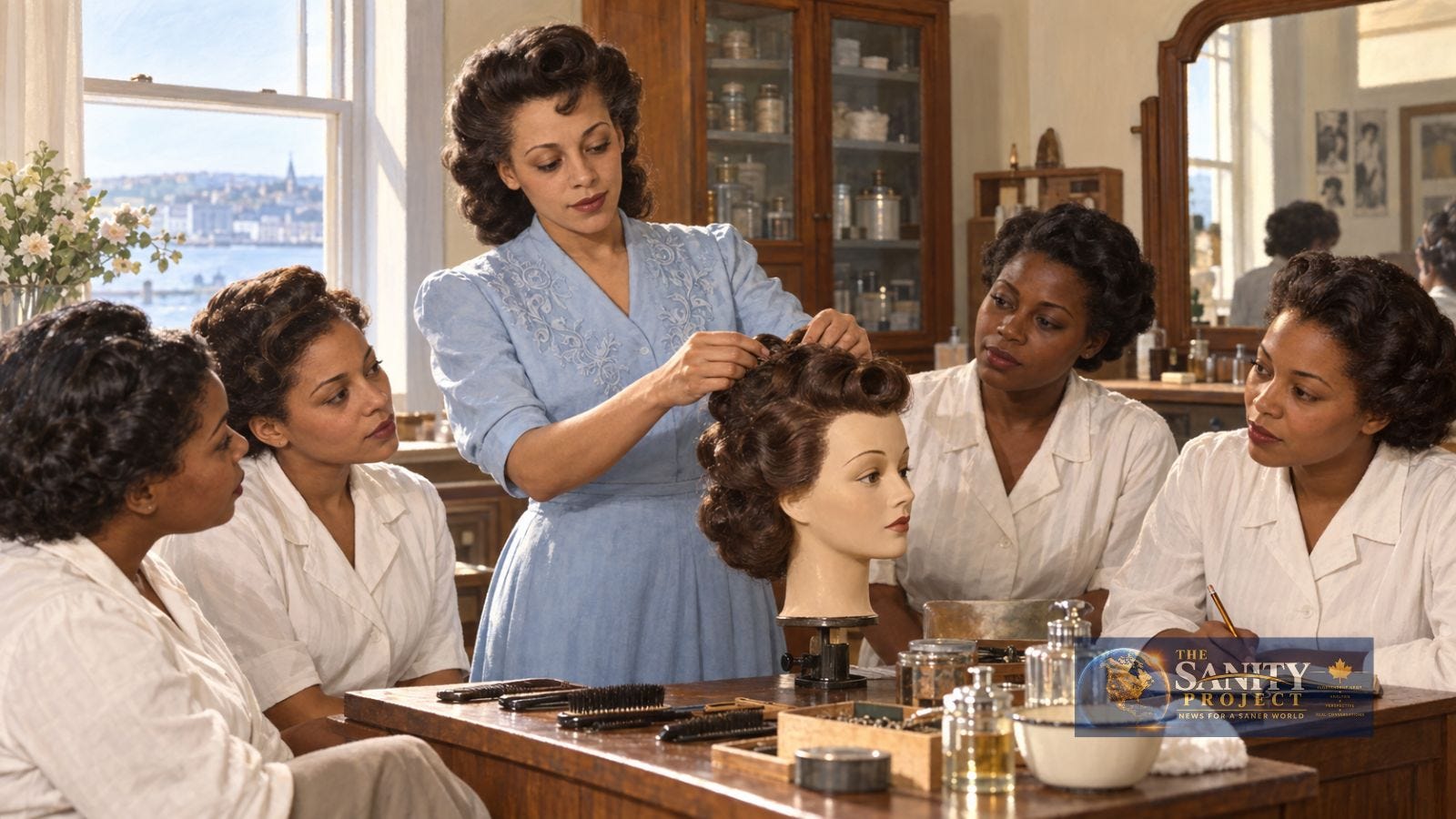
The salon turned into a gathering place for women in her community. Customers could buy services from a trained professional who understood their needs, while Desmond built the business that supported her independence.
She went further. Her Desmond School of Beauty Culture attracted students from Nova Scotia, New Brunswick, and Québec. Women facing barriers to training could now learn from someone who had dealt with those barriers herself.
Her first class graduated in 1945. The Canadian Museum for Human Rights preserves photographs of that class and another from 1947. Those women were earning qualifications before and after the night that would establish their teacher’s public legacy.
Graduates learned skills they could use to start their own businesses. Some also helped distribute her beauty products. A woman who came to Desmond for training could leave with a trade, a business opportunity, and a connection to a wider network.
The Nova Scotia Archives account of her work describes an enterprise that reached beyond a single salon. Desmond made and marketed her own products, filled orders, and travelled on business. That business travel is why she was on the road in November 1946, when a breakdown led her to New Glasgow and into the incident at the Roseland.

The woman in the notebook
A surviving powder compact gives that business a physical form. Its label identifies Viola Desmond’s Sepia Face Powder, one of the products she sold to customers that mainstream companies often overlooked.
Her business notebook, transcribed by the Bank of Canada Museum, brings us closer still. Its pages contain lessons on sanitation, product formulas, wig measurements, suppliers, and prices. There are instructions to keep a product’s scent consistent and reminders about cheaper ingredients.

One entry compares a fragrance costing $16 per pound with an imitation costing about $3. Another identifies a supplier on Sackville Street in Halifax. Alongside the technical knowledge sits the everyday arithmetic of keeping a business going.
These details let us see her at work. Before her face appeared on our money, she watched what things cost, learned her craft, and built something other women could use. That same business brought her onto the road in November 1946, and into the incident at the Roseland.
We have seen that practical determination in Elsie MacGill’s engineering career. The accomplishments deserve attention in their own right. Desmond’s salon, school, and products mattered before anyone knew what would happen at the Roseland.
A penny turned into a criminal record.
At the theatre, the boundary was clear. The theatre reserved the main floor for white customers and directed Black customers to the balcony—their ability or willingness to pay made no difference.
Desmond challenged that boundary by staying in her seat. The authorities then used the difference in taxes between the two ticket prices to prosecute her. Parks Canada’s historical account identifies that one-cent difference as the legal justification for her arrest and imprisonment.
She appeared in court without a lawyer. The penalty was a $20 fine and $6 in court costs, with thirty days in jail as the alternative. She paid the $26 and challenged the conviction.
The penny gave the prosecution its official explanation. The theatre’s refusal to sell her the ticket she wanted explains the injustice. Her business trip explains why she was there in the first place and how the arrest followed.
Canada gave her a criminal record. How did she end up on our money?
Viola’s arrest was only the beginning. Ahead, we follow the court fight, the sister who refused to let Canada forget, and the decades it took to clear a name that should never have needed clearing.
Subscribe for free to finish her story. The next time you reach for a $10 bill, you’ll have more than a familiar face looking back. You’ll know what it took for her to get there.
A Thanksgiving thank-you: 20% off annual support 🍁
Stories like Viola Desmond’s remind us how much Canada’s progress owes to people who refused to give up. This Thanksgiving, we’re grateful to the readers helping us share those stories.
For Thanksgiving weekend, we’re offering 20% off an annual Supporter subscription. Your support helps The Sanity Project research the facts, challenge misinformation, and celebrate the people and achievements that make Canada worth believing in.
If our work matters to you, we’d love your support. Become an annual Supporter this weekend and save 20%.
Thanks, Bo. It’s important for us to remember that Canada has its own history with segregation.