



Canada GDP Growth Accelerates in May 2026: What Statistics Canada’s Latest Report Means for You
Published July 31, 2026
Canada GDP growth posted its second consecutive monthly gain in May 2026, with real gross domestic product rising 0.3% as 13 of 20 industrial sectors expanded. Released by Statistics Canada on July 31, 2026, the report shows broad-based momentum building across energy, housing, manufacturing, and finance — and the numbers behind the headline tell a story that goes well beyond a single monthly print. Here’s what actually happened in May, and what it means if you work in, invest in, or simply live inside the Canadian economy.
Canada GDP Growth Hits 0.3% in May 2026: The Headline Numbers
Real GDP in Canada grew 0.3% in May 2026, marking back-to-back monthly growth for the first time this cycle, with gains spread across 13 of 20 industrial sectors.
According to Statistics Canada’s Table 36-10-0434-01, goods-producing industries expanded 0.6% in May while services-producing industries rose 0.2%. That combination matters: when both halves of the economy grow at the same time, it tends to signal a healthier, more durable expansion than growth concentrated in a single sector. As per the Stats Canada report, this marks the second straight month that growth has been this broadly distributed, which is one reason economists watching Canada economic growth trends are paying closer attention this summer.
Alberta GDP Growth Leads the Way as the Oil and Gas Sector Surges
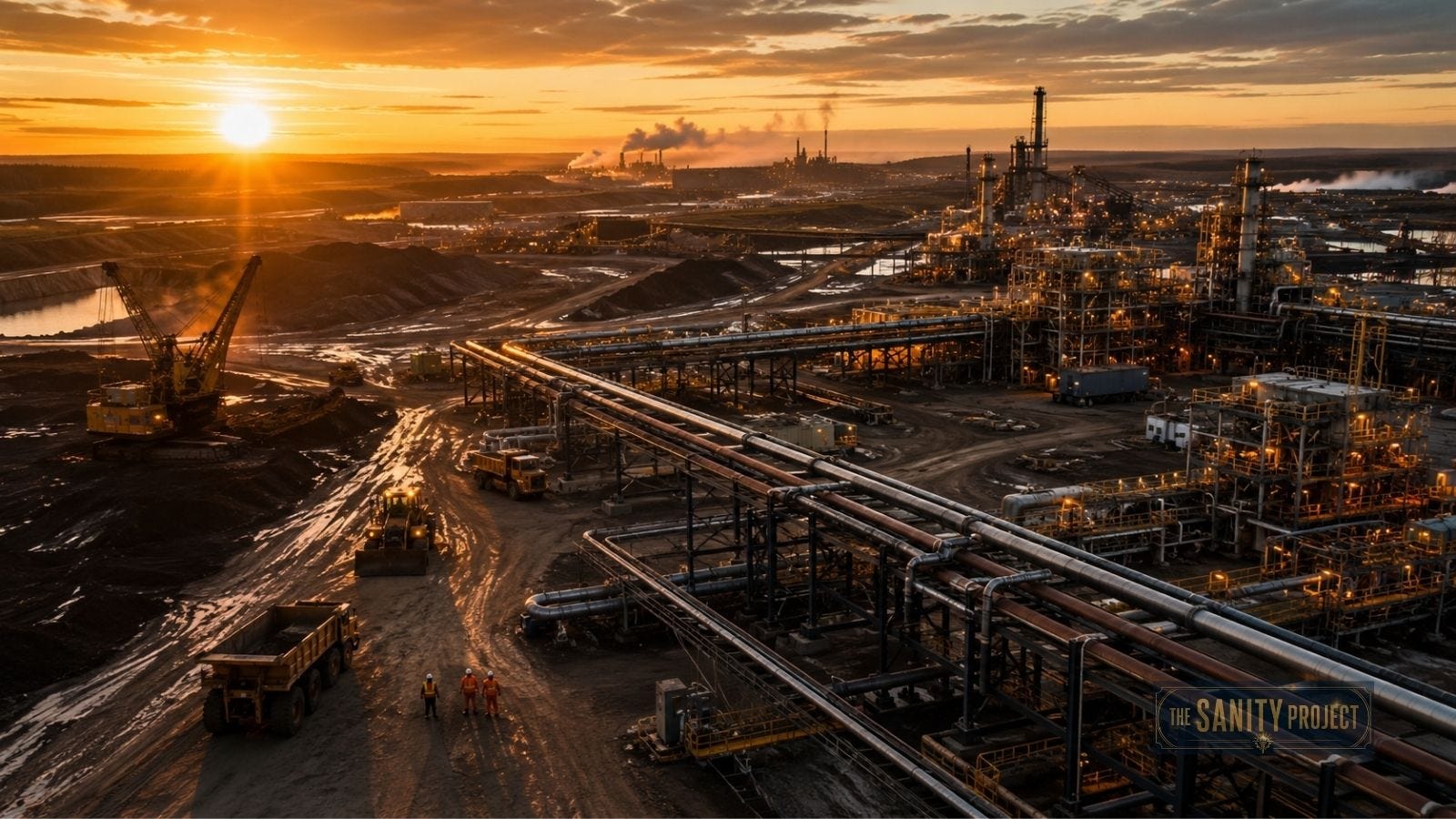
Mining, quarrying, and oil and gas extraction led all industrial sectors in May, expanding 1.0% for the second consecutive month, driven largely by explosive growth in oilfield support services.
Support Activities Drive the Surge
Support activities for mining and oil and gas extraction rose 7.3% in May — the seventh consecutive monthly expansion and the largest increase since March 2024. Support activities for oil and gas extraction specifically jumped 9.8%, and as per the Stats Canada report, this was the primary driver behind the subsector’s strength. In practical terms, this is the segment of Alberta GDP growth tied most directly to drilling contractors, maintenance crews, and oilfield service companies — the businesses that hire fast when activity picks up.
Oil Sands Extraction Climbs for a Second Month
The oil and gas extraction subsector itself rose 0.7%, powered by a 1.6% increase in oil sands extraction, led by higher crude bitumen extraction in Alberta. Notably, extraction activity was relatively elevated for May because some spring maintenance work was either completed earlier in the year or deferred — a detail worth watching, since it suggests part of this bump may not repeat every month. Mining and quarrying excluding oil and gas contracted 0.7%, as lower coal and non-metallic mineral mining outweighed gains in metal ore mining, a reminder that even a leading sector can contain very different stories underneath the surface.

Real GDP of Canada: How Construction and Real Estate Are Powering Growth
Construction expanded 0.8% in May, while real estate and rental and leasing grew 0.4% for a fourth consecutive month, with brokers posting their strongest month since October 2024.
Construction Adds New Supply
Every construction subsector contributed to the 0.8% gain, with engineering and other construction activities up 1.1% and residential building construction up 1.1%, driven primarily by apartment buildings. For an economy that has spent years grappling with housing supply constraints, growth concentrated in apartment construction is a meaningfully different signal than growth in single-family homes alone.
Home Resales Pick Up in Ontario and British Columbia
Real estate and rental and leasing rose across every comprising subsector in May. Offices of real estate agents and brokers and activities related to real estate jumped 5.1% — the sector’s largest monthly increase since October 2024 — reflecting a rise in national home resale activity, particularly in Ontario and British Columbia. If you’ve been watching either of those two markets for signs of a thaw, this is the real GDP of Canada data confirming that resale activity, and likely buyer confidence, is returning first in those provinces.
Canada GDP by Industry: Manufacturing, Public Sector, and Finance Breakdown
Manufacturing grew 0.3%, the public sector expanded 0.3%, and finance and insurance rose 0.3% in May — each driven by a distinct story worth understanding on its own.
Public Sector and the 2026 Census Effect
As per the Stats Canada report, the public sector aggregate — educational services, health care and social assistance, and public administration — expanded 0.3% in May, with every component growing. Public administration rose 0.6%, with provincial and territorial public administration up 0.9% and federal government public administration (excluding defence) also up 0.9%, an increase that coincided directly with activity tied to the 2026 Census. This is a useful distinction for anyone tracking GDP statistics Canada closely: census-linked hiring is a temporary boost, not a structural shift in government employment.
Manufacturing’s Pharmaceutical Rebound
Manufacturing grew 0.3% overall, with non-durable goods manufacturing up 1.0% for a fourth straight month. Chemical manufacturing rebounded 5.9% after three consecutive monthly declines, largely on a 9.4% jump in pharmaceutical and medicine manufacturing, which coincided with increased exports of pharmaceutical and medicinal products. Durable goods manufacturing contracted 0.2%, weighed down by declines in machinery manufacturing (-2.2%), miscellaneous manufacturing (-7.5%), and electrical equipment, appliance and component manufacturing (-4.0%), though fabricated metal product manufacturing (+2.5%) and motor vehicle manufacturing (+4.7%) helped offset the drag.
Finance and Insurance Ride Global Uncertainty
Finance and insurance increased 0.3% for a second consecutive month, led by other finance and insurance (+0.4%) and banking, monetary authorities and other depository credit intermediation (+0.2%). As per the Stats Canada report, this growth reflects heightened activity in the equity and bond markets amid the uncertainty associated with the conflict in the Persian Gulf. Transportation and warehousing also rose 0.3%, largely on a 2.7% increase in pipeline transportation as natural gas exports climbed, alongside a 0.7% gain in rail transportation driven by grain and wheat carloadings.
Canada GDP Forecast: What the June Advance Estimate Signals for Q2 2026
Statistics Canada’s advance estimate points to another 0.2% increase in real GDP for June 2026, putting the second quarter on track for 0.8% overall growth.
The advance estimate shows gains in wholesale, finance and insurance, and retail trade, partially offset by declines in utilities and in agriculture, forestry, fishing and hunting. This figure is preliminary and will be updated on August 28, 2026, alongside the official GDP by industry data for June and the official estimate of real GDP by income and expenditure for the second quarter. For anyone tracking the Canada GDP forecast into the back half of 2026, two consecutive months of broad, multi-sector growth — capped by an 0.8% quarterly estimate — is a meaningfully stronger signal than a single strong month would be on its own. Statistics Canada’s methodology for these figures, including how monthly data are benchmarked to annually chained volume indexes, is detailed in its guidance on economic accounts and macroeconomic statistics, and revisions to prior months are explained further in the agency’s ongoing GDP revisions coverage.
Canadian Economic Outlook: What It Means for You
Beyond the headline number, May’s data points to real momentum in energy services, a housing market waking back up in specific provinces, and financial markets absorbing global uncertainty rather than being derailed by it.
For anyone connected to Alberta’s energy sector, this was a strong month for hiring and contract work in oilfield services specifically, even if part of the bump reflects shifted maintenance schedules rather than a permanent step-change. For prospective home buyers or sellers in Ontario and British Columbia, a pickup in resale activity is an early signal worth watching over the next few reporting cycles. And for anyone with an RRSP, pension, or investment account, the finance and insurance sector’s growth is a direct reminder that geopolitical uncertainty overseas — in this case tied to the conflict in the Persian Gulf — tends to show up as trading activity at home, whether or not it feels that way from the headlines alone.
It’s also worth understanding what GDP by industry actually measures and how it’s constructed, since that context shapes how much weight to put on any single month. Statistics Canada’s own explainer on what gross domestic product measures and its notes on how tariffs are conceptually reflected in economic statistics are both useful background for anyone trying to separate one-month noise from a genuine trend. Seasonal adjustment methodology, which underpins every figure in this release, is documented in Statistics Canada’s guide to seasonal adjustment concepts.
The next official update lands August 28, 2026, when Statistics Canada releases June’s GDP by industry data alongside an advance estimate for July — along with the official second-quarter GDP figures that will confirm whether this momentum held.
Data source: Statistics Canada, “Gross domestic product by industry, May 2026,” released July 31, 2026.


