


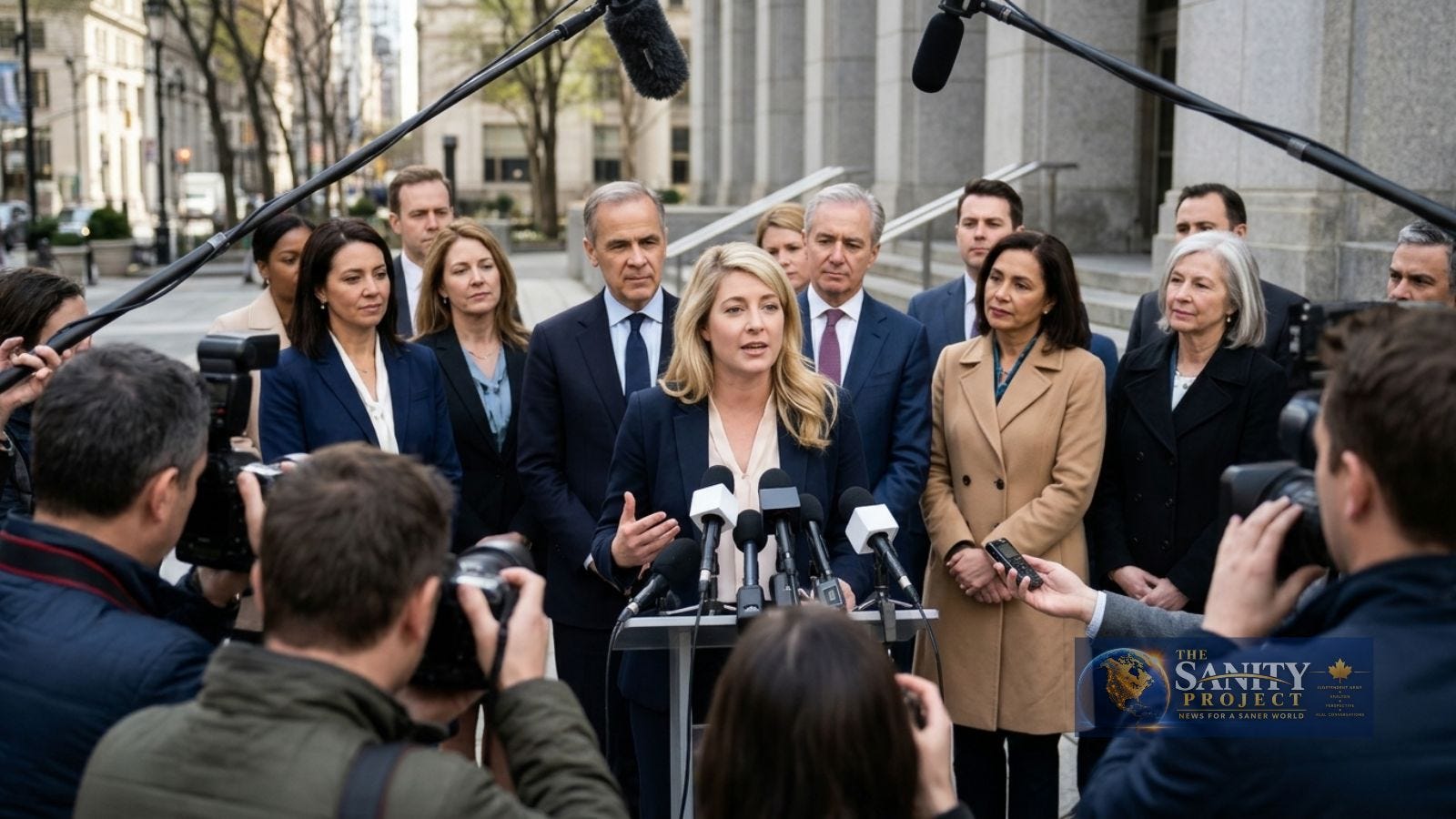
How Mélanie Joly Went From Netflix Punchline to the Minister Taking On Stelco
In the fall of 2017, a Montreal clothing shop started selling a T-shirt with one word on it: Mélanie.
It wasn’t a tribute. Mélanie Joly, then Canada’s heritage minister, had just announced a deal with Netflix that Quebec hated with the passion it normally reserves for construction season. Critics had already nicknamed her “la cassette” for repeating scripted answers no matter the question. The shirt was the punchline.
Nine months later, she was demoted.
Last Friday, that same woman asked Canada’s competition commissioner to investigate one of North America’s most powerful steel companies, whose CEO had admitted on national television that he bought a Canadian steelmaker to stop it competing with his American mills.
Nobody’s selling T-shirts this time.
Who Is Mélanie Joly? The Girl From Ahuntsic Nobody Saw Coming
Key Insight: Mélanie Joly grew up in Montreal’s Ahuntsic neighbourhood, studied law at Oxford, and founded her own party at 34 to run for mayor. She finished second, and people have underestimated her ever since.
Joly was born in Montreal in January 1979 and grew up in Ahuntsic, the north-end neighbourhood she now represents in Parliament. Many politicians move to a riding. She came home to hers.
She studied law at the Université de Montréal and went to Oxford on a Chevening scholarship. According to The Canadian Encyclopedia, she practised at two of Montreal’s big firms, then became a managing partner at the public relations firm Cohn & Wolfe.
Then she did something polished people don’t usually do. In 2013, with no party machine and no seat, she founded her own municipal party, largely with personal friends, and ran for mayor against Denis Coderre, a longtime Liberal MP and former federal cabinet minister.
She took 26.5 per cent and finished six points behind him.
That made her a star candidate. In 2015, she won Ahuntsic-Cartierville, and Justin Trudeau made her minister of Canadian Heritage. She rose fast, and she fell just as fast.
The Netflix Deal That Nearly Ended Mélanie Joly’s Career
Key Insight: In 2017, Joly announced a $500 million Netflix commitment with no binding guarantee for French-language content. Quebec revolted, and in July 2018 she was moved to a junior portfolio.
In September 2017, Joly unveiled the government’s new cultural policy, and with it a deal that came out of weeks of secret talks: Netflix would invest $500 million in Canadian production over five years.
It sounded great for about an afternoon.
Then Quebec read the fine print, and there wasn’t much of it. Netflix also promised $25 million to develop French-language content, but it had no contractual obligation to spend it. Quebec’s culture minister accused Ottawa of trusting “the invisible hand of the market” to protect francophone culture. The chat shows tore into her. A Montreal shop printed the shirts.
On July 18, 2018, Trudeau moved her to Tourism, Official Languages and La Francophonie. He insisted it wasn’t a demotion. Everyone understood what had happened.
What she did next is what stuck with me. She didn’t disappear, and she didn’t sulk in public. She called the demotion a “great opportunity” and told the Globe and Mail that “it would have been shrewder, in political terms, to go more slowly.”
Politicians almost never put that kind of admission on the record. Most would rather blame the weather.
Keep one detail in mind: the Netflix deal blew up because a huge American company made a promise nobody could enforce. It comes back later in this story.
From Demotion to Diplomat: Joly’s “Pragmatic Diplomacy” Years
Key Insight: Three years after her demotion, Joly became foreign affairs minister in October 2021, four months before Russia invaded Ukraine.
On October 26, 2021, Trudeau handed her Foreign Affairs, one of the most senior jobs in cabinet. Her tenure covered sanctions on Russia, a diplomatic crisis with India and a long freeze with China. In July 2024, she became the first Canadian foreign minister in seven years to visit Beijing.
She called her approach “pragmatic diplomacy” and summed it up plainly: “We need to work with countries that we don’t see eye-to-eye with.”
That can be hard to stomach, but it turned out to be good training. Countries have interests, and so do companies. Even a friendly partner will hurt you if it pays.
When Mark Carney named her minister of Industry on May 13, 2025, people called it a strange choice. But her job now is diplomacy with a factory attached, and thousands of Canadian jobs ride on how it goes.
Mélanie Joly vs. Stelco: The CEO Who Said the Quiet Part Out Loud
Key Insight: Cleveland-Cliffs CEO Lourenco Goncalves has said publicly that he bought Stelco partly to keep its steel out of the U.S. market. On November 6, 2026, Joly asked the Competition Bureau to investigate.
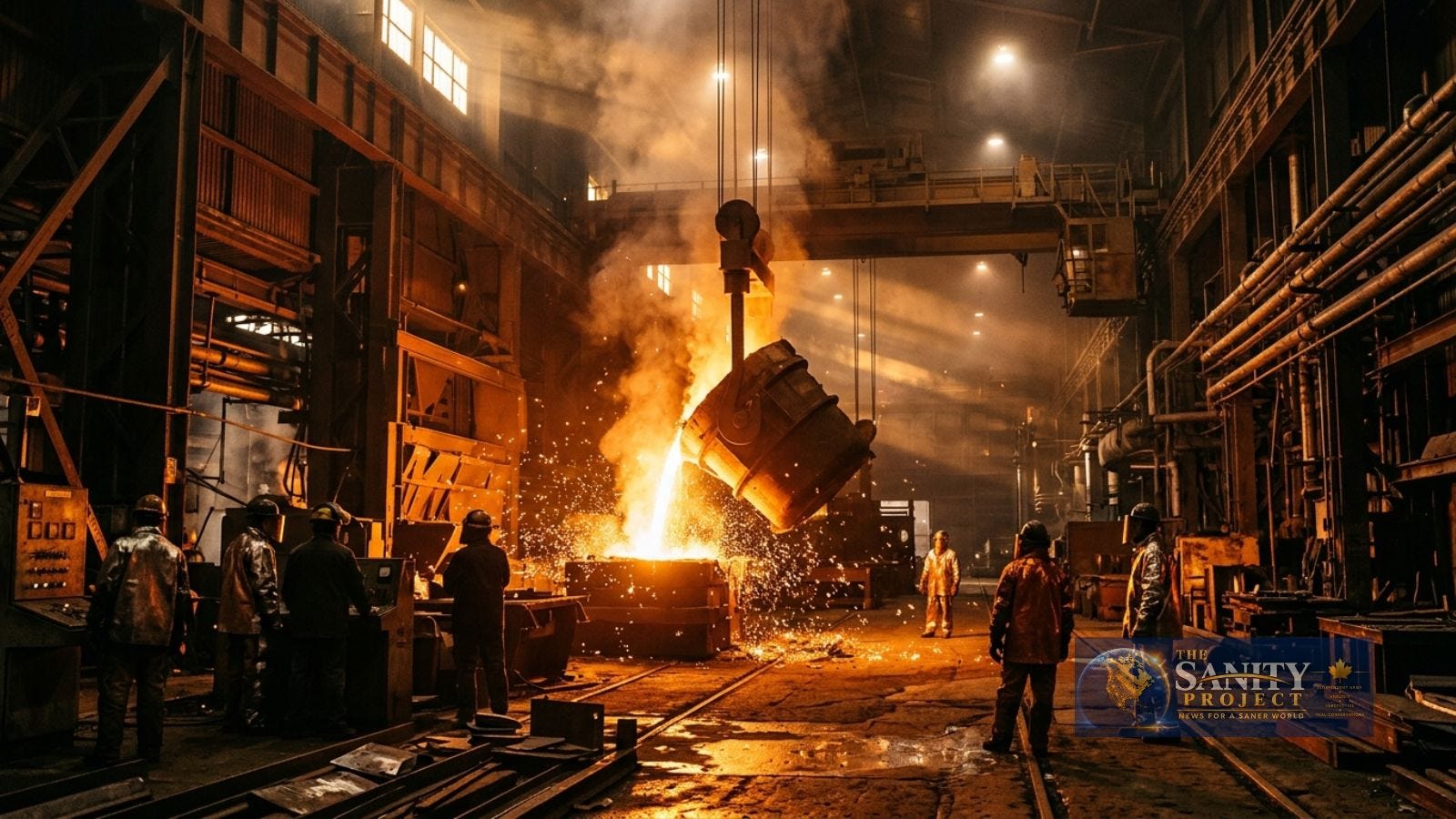
Steel has been made in Hamilton since 1910. Stelco’s Hamilton Works and Lake Erie Works in Nanticoke are as close as Canada gets to an industrial backbone.
When American steelmaker Cleveland-Cliffs bought Stelco in 2024, it made binding commitments under the Investment Canada Act, including keeping Canadian employment at an average of at least 1,766 jobs a year. (Those commitments are the trade-off for letting a foreign company buy something this important, which we dug into in our look at foreign investment in Canada.)
On September 28, 2026, Cliffs announced up to 500 layoffs, blaming U.S. tariffs, weak demand and cheap imports.
On October 22, Joly sent an 11-page letter accusing Cliffs of breaking six binding commitments and gave it 15 days to fix things or face court. She also pointed out that Goncalves had backed U.S. steel tariffs before Congress in January, and that Cliffs was the first company to sign an industry memo asking Donald Trump for them.
So he asked for the storm, then blamed the storm.
“Cleveland-Cliffs has repeatedly failed to demonstrate that it is compliant with its undertakings,” Joly wrote on X. “That is unacceptable.”
Then Goncalves went on CBC. He said he bought Stelco because it was flooding the U.S. market and undercutting his prices. He added that he planned to sell within about a year, since he was now, in his words, “persona non grata” in Canada.
Joly called those remarks “confessions.” (Editor: So Do We)
On Friday, as her deadline ran out, she asked the Competition Bureau to examine whether Cliffs broke the Competition Act, calling the CEO’s comments “a shocking admission.” If the job commitments aren’t met, Ottawa says it could seek a court order, penalties of up to $10,000 a day, or a forced sale of Stelco.
The minister who once took Netflix at its word now writes 11-page letters listing exactly which promises a company broke.

To be fair, Cliffs insists Stelco is fully compliant with all 34 undertakings and that 175 Hamilton workers are only temporarily laid off. A referral isn’t a verdict, and the Bureau would have to prove harm to Canadian prices. Critics call her a paper tiger. That’s a fair challenge, because warnings only count if they lead somewhere.
Still, a Canadian minister has forced an American steel giant to defend itself in public, using its own CEO’s words. Not long ago, that would have been unthinkable.
The Stelco fight is only half the story.
Below this line: the $15 billion Joly hasn’t paid Stellantis yet, and why that money may be the most powerful card Canada holds. Plus the quiet $1.75 billion bet that could decide whether the next great Canadian company stays Canadian.
And the ending you saw coming since that T-shirt.
Subscribe for free to keep reading. No credit card, just your email.
Related Reading From The Sanity Project
Sources
Mélanie Joly: background and career
Postmedia via PressReader: Netflix deal trips up Joly in Quebec (Oct. 5, 2017)
The Canadian Press via CFJC: Joly on Netflix and sales tax (Dec. 8, 2017)
The Globe and Mail: Mélanie Joly draws lessons from her cabinet demotion
CJAD: Joly recounts challenging political year in TVA interview
Stelco and Cleveland-Cliffs
CBC News: Joly asks Competition Bureau to investigate Cleveland-Cliffs (Nov. 6, 2026)
Yahoo Finance: Joly refers Stelco merger to Competition Bureau (Nov. 6, 2026)
Global News: Joly seeks Competition Bureau probe of Stelco (Nov. 6, 2026)
The Canadian Press via Castanet: Joly consults lawyers on Stelco owner’s “confessions”
CP24: Stelco given 15 days to make good on agreements (Oct. 22, 2026)
SteelOrbis: Canada gives Cleveland-Cliffs 15 days (Oct. 23, 2026)
Goldesel: Stelco reports compliance with all 34 undertakings (German)
Stellantis and Brampton
Global News: Ottawa launches dispute resolution against Stellantis
Allmind: Joly rejects Stellantis plan for Chinese EVs at Brampton
Venture and Growth Capital Plan
Government of Canada: Venture and Growth Capital Plan backgrounder
Digital Journal: Ottawa moves to strengthen venture and growth capital investment
The Sanity Project examines Canadian politics and public policy through evidence, context and independent analysis. If you value journalism that looks past the headline, subscribe for free.

She’s a great mix of lawyer problem-solving, personal integrity, and francophone stubbornness
My opinion of her has changed, too. She’s got strength and, now, hard-won experience. I think she’s got the right boss, as well, and that can make all the difference. I’m looking forward to seeing how this all plays out.